
Dario Amodei, the chief executive of Anthropic, said in early 2026 that artificial general intelligence — AI able to match or exceed human cognitive performance across virtually any domain — could arrive as soon as this year or next. Sam Altman of OpenAI has repeatedly hinted that AGI is a matter of years, not decades. Elon Musk placed it at 2025 or 2026.
Andrej Karpathy, a co-founder of OpenAI and former head of AI at Tesla, and one of the most technically credible voices in the field, says it is about a decade away and that the industry is over-predicting. Gary Marcus, a cognitive scientist and longtime critic, published a paper in February 2026 arguing that today’s systems have not achieved AGI and that claims to the contrary rest on a basic conceptual error. Demis Hassabis, the Nobel-winning founder of Google DeepMind, gives it roughly a 50 percent chance of arriving by 2030 — while stressing the deep uncertainties that remain.
These are not fringe commentators. They are the people building the systems, running the laboratories, and deploying the capital. They are looking at the same evidence and reaching wildly different conclusions.
That disagreement is the most honest thing anyone can say about artificial general intelligence in 2026. It is coming — probably. When exactly, and whether current methods can reach it without a fundamental breakthrough, nobody genuinely knows. What follows is the clearest account of where things actually stand.
The people quoted above disagree about AGI by decades. The research literature is quieter than any of them: when we counted titles in the arXiv archive on 1 September 2026, 82 papers had “artificial general intelligence” in the title. 19,300 had “large language model”.
Two hundred and thirty-five papers on the systems for every one on the destination. The thing the industry says it is building is, as a research subject, almost absent from the archive where that industry publishes.
The singularity, the idea that such a system would then improve itself beyond human control, has even less: a title search found ten papers with “technological singularity” in the title on 1 September 2026, and still ten on 6 October.
That does not settle whether AGI is close. It does show that the argument is being conducted in interviews and capital allocation rather than in papers, which is worth knowing before weighing any forecast in this article.
What Is Artificial General Intelligence, and How Is It Different from Today’s AI?
Artificial general intelligence describes a hypothetical AI that can learn to perform any intellectual task a human can — not just the tasks it was trained for, but any task, including ones it has never seen. It would transfer knowledge between domains, reason from first principles about genuinely new problems, and improve through experience the way people do.
Today’s most capable systems — the large language models behind ChatGPT, Claude, Gemini and their rivals — are astonishing by any historical measure. They write code, analyse legal documents, produce creative work, solve mathematical problems, translate languages, and hold nuanced conversations. But technically they remain narrow AI: optimised for the distribution of tasks they were trained on. They stumble on genuinely novel problems that require combining knowledge in unfamiliar ways, they do not learn from new experience as a human does, and they hold no goals that persist across interactions.
The gap between today’s AI and AGI is not merely one of scale — of bigger models trained on more data. Researchers increasingly believe it involves fundamental questions about how intelligence is structured, how knowledge is represented, and what the true relationship is between language, reasoning, and understanding.
From the Turing Test to Today
The dream is older than the machines. In 1950, Alan Turing proposed his famous test: could a machine converse so convincingly that a human judge could not tell it from a person? For decades that seemed a distant fantasy. Modern chatbots now routinely pass informal versions of it — and yet almost no one believes they are generally intelligent, which shows how slippery the target has always been.
That slipperiness has a name in the field: the moving goalpost. Each milestone once thought to demand true intelligence — beating a grandmaster at chess, mastering Go, holding a fluent conversation — has fallen, only for the definition of “real” intelligence to shift just beyond it. The term artificial general intelligence gained currency in the 2000s precisely to separate the original grand ambition from the narrow, task-specific systems that kept succeeding. Defining the finish line, it turns out, is nearly as hard as reaching it.
A Cautionary History of Predictions
Before trusting any timeline, it is worth remembering how badly the field has forecast itself. When artificial intelligence was founded as a discipline in the mid-1950s, its pioneers were wildly optimistic, predicting machines with human-level general intelligence within a generation.
The founding document is a good example. In 1955 John McCarthy and three colleagues proposed a two-month, ten-man study at Dartmouth College for the summer of 1956, “on the basis of the conjecture that every aspect of learning or any other feature of intelligence can in principle be so precisely described that a machine can be made to simulate it.” Their list of goals already included making machines that “improve themselves”. They thought “a significant advance” could be made in a summer. Seventy years later, the goals are still being worked on.
Those predictions failed. Progress proved far harder than expected, and the excessive promises were followed by periods of disappointment and lost funding that became known as the “AI winters”. Time and again, tasks that looked nearly solved turned out to conceal enormous difficulty.
This history is a warning in both directions. It shows that confident predictions of imminent machine intelligence have a poor track record — but also that dismissing AI entirely has been just as mistaken, since the field has repeatedly rebounded with genuine breakthroughs. Humility about timelines is the only lesson that has aged well.
How Close Is AGI Really? What the ARC-AGI Benchmark Shows
The most rigorous attempt to measure progress toward general intelligence is the ARC-AGI benchmark, created by François Chollet at Google and introduced in 2019. Unlike conventional benchmarks that test tasks well represented in training data, ARC-AGI poses visual reasoning puzzles designed so that no amount of memorisation can substitute for genuine reasoning.
Research published in 2026 reported that AI performance on ARC-AGI leapt from roughly 5 percent to 87.5 percent in under a year — a jump described as exponential rather than linear. Taken at face value, that suggests systems are closing in on human-level performance on a test built specifically to probe general reasoning.
The crucial question is what the number means. ARC-AGI measures particular kinds of visual pattern recognition under controlled conditions, and doing well on it is a real achievement. Writing in February 2026, Gary Marcus cautioned that benchmark success is a limited gauge of general intelligence: by isolating narrow competencies and abstracting away real-world context, benchmarks make it hard to tell true generalisation apart from sophisticated pattern-matching. A system scoring 87.5 percent may simply have found ways to excel at that specific test without acquiring the general reasoning it was meant to measure.
This is the methodological trap that shadows every AGI progress claim: each time a new benchmark is proposed to capture general intelligence, systems eventually conquer it — and critics then point out, reasonably, that in hindsight it was not measuring what it claimed to.
That was 2026’s opening position. By September the benchmark itself had moved, and the result is more interesting than the leap it replaced. ARC-AGI now comes in three versions. The first two test pattern reasoning on a fixed set of puzzles. The third, ARC-AGI-3, drops a system into interactive environments it has never seen and asks it to work out the rules as it goes.
On the public leaderboard, read on 22 September 2026, the leading system scores 98.5 per cent on ARC-AGI-1 and 92.1 per cent on ARC-AGI-2. On ARC-AGI-3 the same model, on the same tasks, scores either 54.8 per cent or 99.9 per cent. Not a range, and not a disagreement between testers. Two numbers, both correct, separated only by the software harness the model was run inside.
The difference is memory. Under the standard harness a model carries forward notes it chooses to keep. Under what ARC calls the provider adapter, the harness preserves the model’s reasoning state and compacts long conversations so it can reuse earlier work. Give the system a better scaffold for remembering what it has already figured out and the score goes from roughly half to almost perfect.
That is worth sitting with, because it cuts both ways. A sceptic notes that the headline figure measures the scaffolding rather than the intelligence. A defender replies that human reasoning also depends on external memory, and nobody deducts marks for using a notebook. Both are right, which is the point: the benchmark cannot settle the question, because the question of what counts as the system is not itself a technical one.
The prices are the part rarely quoted. Those ARC-AGI-3 runs cost between roughly $17,000 and $49,000 per task, against well under a dollar a task on ARC-AGI-1. ARC’s own framing is that solving problems efficiently is part of what intelligence means. By that measure the gap between these systems and a person working the same puzzle with a pencil is not closing nearly as fast as the percentages suggest.
The Definition Problem, Written Down Properly
Running underneath every forecast in this article is a problem that forecasting cannot fix: the people making predictions are not all predicting the same event. A date for AGI means very little when the thing being dated has no agreed definition.
The most serious attempt to fix that came from Google DeepMind. In a paper titled Levels of AGI for Operationalizing Progress on the Path to AGI, first posted in November 2023 and revised as recently as September 2025, Meredith Ringel Morris and colleagues — including Shane Legg, who co-founded DeepMind and has used the term since 2007 — proposed measuring systems on two axes rather than one. The first is performance: how well a system does a thing, compared with skilled people. The second is generality: how wide a range of things it can do at all. A system can be superhuman at one narrow task and hopeless everywhere else, and a single label cannot express that.
The authors are explicit about their model, which is the levels-of-autonomy scale used for self-driving cars. The value of that scale is not that it is scientifically deep. It is that it stops arguments. Two engineers disagreeing about a car can say “level three” and know what they mean. The paper argues that AI needs the same vocabulary, and sets out principles a definition should satisfy — among them that it should measure capabilities rather than the mechanisms producing them, and should keep generality and performance apart instead of collapsing them into one word.
The most useful thing in the paper, for anyone reading benchmark headlines, is its insistence that autonomy is a separate question from capability. How capable a system is and how much it is allowed to do unsupervised are different variables. A model can be extremely capable and run on a short leash; it can be mediocre and be handed the keys.
That distinction explains the ARC-AGI-3 result described earlier better than any argument about intelligence does. The same model scored roughly half or nearly everything depending on the harness it ran inside — that is, depending on how much of its own reasoning it was permitted to carry forward and reuse. The capability did not change between the two runs. What changed was the scaffolding around it. A framework that separates those axes predicts exactly this kind of confusion; a single headline percentage cannot survive it.
One detail is worth noting for what it says about the state of the field. The framework has itself been revised repeatedly since publication, including renaming one of its own levels. When the leading attempt to standardise the vocabulary is still adjusting its terms after two years, the honest conclusion is not that AGI is near or far. It is that the field does not yet possess the measuring instrument the question requires — and that every confident date, in either direction, is being quoted with more precision than the underlying definition can support.
The Goalposts Have a History
The pattern of proposing a test for machine intelligence, watching a machine pass it, and then deciding the test never measured intelligence after all is old enough to have its own shape.
Chess was the canonical example for decades. A machine that could beat the world champion would have to think, the reasoning ran, because chess demanded judgement, planning and intuition. Deep Blue beat Garry Kasparov in 1997, and the consensus reorganised itself almost immediately around the view that chess had turned out to be a search problem rather than a thinking one.
Go was then offered as the real test, on the grounds that its search space was too large for brute force and strong play genuinely required something like intuition. AlphaGo beat Lee Sedol in 2016. Image recognition was a marker until systems matched human accuracy on the standard benchmark. Reading comprehension and language understanding suites were built, topped, retired, and replaced by harder ones. Each time, the achievement was real and each time the interpretation shifted from “machines can think” to “that task turned out not to need thinking”.
Two readings of this history are available and the disagreement between them is most of the AGI debate. The unkind reading is that critics move the goalposts whenever they are reached, which makes the claim unfalsifiable and the criticism worthless. The kinder reading is that we were simply wrong about what those tasks required, and that discovering chess does not need general intelligence is a real finding rather than an excuse.
Both readings can be true at once, and mostly are. What follows from them is the same either way: a benchmark result tells you a system can do the benchmark. Whether it tells you anything wider depends entirely on an assumption about what that task required — an assumption that has been wrong, in public, at least four times.
What the World’s Leading Researchers Predict

The range of expert predictions is extraordinary — from this year to never, from the very people closest to the technology.
The aggressive end. Dario Amodei has sketched a scenario in which AI matches or exceeds human performance across most cognitive domains by 2026 or 2027, and has written about the implications of having “a country of geniuses in a datacenter” — systems able to compress decades of scientific progress into a few years. Elon Musk has defined AGI as an intelligence smarter than the smartest human and put it at 2025 or 2026. Eric Schmidt, the former Google chief executive, predicted AGI within three to five years in April 2025.
The middle. Demis Hassabis holds to a 50 percent probability by 2030. He agrees progress is rapid in verifiable domains such as coding and mathematics, but stresses that scientific discovery and creative reasoning remain harder, and that fully autonomous self-improvement in messy real-world settings is genuinely unsolved. A 2025 report, “The Road to Artificial General Intelligence,” placed early AGI-like systems — human-level reasoning within specific domains — as emerging between 2026 and 2028.
The sceptical end. Andrej Karpathy places AGI about a decade out and warns of over-prediction. Yann LeCun, Meta’s chief AI scientist and a founding figure of deep learning, argues that the transformer architecture behind current models is fundamentally insufficient for general intelligence and that a new paradigm is required. Gary Marcus has contended since 2022 that the field routinely mistakes sophisticated statistical pattern-matching for intelligence, and that this confusion produces misleading timelines.
According to a 2026 AI Multiple analysis of some 9,800 predictions, academic AI researchers as a group forecast a median arrival around 2047 — dramatically later than industry leaders. That divergence reflects, in part, the different incentives and reference points the two groups work from.
Surveys of artificial-intelligence researchers reveal just how little agreement there is. The largest, published in 2025, asked 2,778 researchers who had published at top AI conferences. Taken together, their answers gave a 10 per cent chance that unaided machines would outperform humans at every task by 2027, and a 50 per cent chance by 2047, thirteen years earlier than the same team’s survey a year before.
The same respondents put a 50 per cent chance on every human occupation becoming fully automatable only by 2116. Individual answers ranged from a few years to well over a century. Between 38 and 51 per cent of them, depending on how the question was asked, gave at least a 10 per cent chance to outcomes as bad as human extinction. The only honest summary is radical uncertainty, held by the people who know the field best.
What the Trend Lines Actually Show
Some recent measurements are more concrete than any forecast. The research group METR timed skilled people on a large set of software tasks, then asked how long a task an AI system could complete with a 50 per cent success rate. In early 2025 the best systems managed tasks that took people about 50 minutes, and that “time horizon” had been doubling roughly every seven months since 2019.
The authors were careful about what that means. Their tasks were software tasks, chosen to be measurable, and real work is messier. If the trend held and generalised, they wrote, AI systems would be able to automate many software tasks that now take people a month within about five years. Both of those ifs are doing a lot of work.
There is now a real, if modest, example of the engine the singularity depends on. In 2025 Google DeepMind described AlphaEvolve, a system that uses language models to write and test improvements to code. Among other results, it sped up part of the training of the very model it runs on, and found a way to multiply two four-by-four grids of complex numbers using 48 multiplications, the first improvement in 56 years, for that case, on a method devised by the mathematician Volker Strassen.
That is AI improving the process that makes AI. It is also a long way from runaway self-improvement: humans chose the problems, set the tests and decided what to keep, and the gains were percentages, not explosions. The International AI Safety Report, written by more than 100 experts led by Yoshua Bengio and published in February 2026, laid out the range plainly. Between now and 2030, it said, progress could slow or stall, continue at current rates, or accelerate dramatically if AI systems begin to speed up AI research itself.
Why Some Top Scientists Believe Current AI Cannot Get There
The case for AGI being further away — or needing a fundamental breakthrough — is not pessimism. It rests on specific, identified limits in current architectures.
Large language models learn by predicting the next token in a sequence, trained on vast quantities of text. That approach is remarkably powerful at producing fluent, contextually apt language across a huge range of tasks. But critics argue it is limited in ways that block genuine general intelligence.
In his February 2026 paper, Marcus contends that current systems are increasingly sophisticated statistical approximators — excellent at recognising patterns in training data and applying them to similar cases, but weak at genuine generalisation to situations that differ structurally from anything they have seen. The distinction he draws is between appearing to reason and actually reasoning; between imitating an intelligent system’s outputs and embodying the process that produces them.
LeCun makes a related but distinct point: that intelligence requires a world model — an internal representation of how the physical and social world works — which current language models lack. A model trained on text about the world does not stand in the same relation to it as an embodied agent that has acted in it. Building genuine world models, he argues, will take fundamentally different architectures from those that dominate today. These are serious arguments from serious researchers. They do not make AGI impossible or distant — they suggest the path from here may require more than scaling what we already have.
The $320 Billion Question: What the Investment Tells Us
One of the most striking facts about AGI development is the sheer scale of investment. Research published in 2026 found that Big Tech firms poured over $320 billion into AI infrastructure in 2025 alone — more than the annual output of most countries. Unlike the speculative early internet boom, this money is flowing into systems already generating commercial value at scale.
Its relationship to AGI timelines is complex. On one hand, the compute available to train frontier models has doubled roughly every six months since 2020 — faster, according to Epoch AI’s 2025 research, than Moore’s Law ever managed for transistors. If even a fraction of that pace holds, the systems of 2030 will be orders of magnitude more capable than today’s.
On the other hand, there is a serious argument that beyond some point, more compute simply makes systems better at what they already do without unlocking qualitatively new reasoning. The empirical record is genuinely mixed: some capabilities have appeared suddenly as models scaled, while others expected to emerge never did. What the figures do reveal is that the people with the deepest technical knowledge and the largest financial stakes believe AGI is achievable on a timescale worth betting on. Whether they are right about the timing is a separate question from whether they are right about the destination.
Two physical limits on that scaling are now measurable. The International Energy Agency estimates that data centres used about 415 terawatt-hours of electricity in 2024, around 1.5 per cent of the world’s total, and projects roughly 945 terawatt-hours by 2030, driven largely by AI. Power stations and grid connections take years to build, whatever the software can do.
Data is the other. A 2024 study by researchers at Epoch AI estimated that if current trends continue, AI models will be trained on datasets as large as the entire stock of public human-written text sometime between 2026 and 2032. The authors suggested that synthetic data, learning from other kinds of data and more efficient training could keep progress going. Whether they can is one of the real open questions behind every forecast.
The Last Bottlenecks
If scale alone will not deliver AGI, what is actually missing? Researchers tend to converge on a handful of stubborn gaps.
The first is continual learning. Humans update their understanding constantly; today’s models are largely frozen after training, unable to absorb genuinely new knowledge from experience without an expensive retraining cycle. The second is reliable long-horizon reasoning — carrying out lengthy, multi-step plans in the real world without drifting off task, forgetting the goal, or compounding small errors into failure.
The third is the persistent problem of hallucination, where a system states falsehoods with complete fluency and confidence — a symptom of pattern-completion untethered from any genuine model of truth. The fourth is agency: turning a system that answers questions into one that can pursue open-ended goals, wield tools, recover from its own mistakes, and work autonomously over days or weeks. Progress on these fronts through 2025 and 2026 has been real but uneven, and many researchers regard them, rather than raw capability, as the true remaining distance to AGI.
From AGI to the Singularity: The Intelligence Explosion

The word comes from mathematics, where a singularity is a point at which a function becomes infinite or undefined — a place where the equations break down and stop giving sensible answers. It is a signpost marking the edge of what a theory can describe.
Physics borrows the term for similar reasons. At the centre of a black hole lies a gravitational singularity where the known laws fail. The Big Bang is described as emerging from a cosmological singularity. In each case the word marks a boundary beyond which our best theories simply cannot see.
The technological singularity takes this idea and applies it to the future of intelligence. It names a hypothetical point beyond which technological change becomes so rapid and so profound that human beings can no longer predict or perhaps even comprehend what follows. The unpredictability is the whole point — not a detail but the definition.
The core argument is older than the personal computer. In 1965 the British mathematician I. J. Good, who had worked alongside Alan Turing at Bletchley Park, set it out with striking clarity in a paper on what he called an ultraintelligent machine.
Good reasoned that a machine surpassing human intelligence in every domain could design even better machines. Those machines could design better ones still, and so on, in a runaway cascade he named an intelligence explosion. In his memorable phrasing, such a machine would be “the last invention that man need ever make”, provided it remained under control.
That final clause has haunted the field ever since. The idea was given its modern name in 1993 by the computer scientist and novelist Vernor Vinge, in a talk at a NASA symposium in Ohio. “Within thirty years,” he wrote, “we will have the technological means to create superhuman intelligence. Shortly after, the human era will be ended.”
Vinge was unusually precise about his own forecast. “I’ll be surprised if this event occurs before 2005 or after 2030,” he wrote. He died in March 2024, with his window still open. It now has a little over four years left to run, and whether it closes empty is one of the cleaner tests the idea has ever offered.
He also saw more than one road there. A superhuman intelligence might be built as a computer, he suggested, or large computer networks and their users might “wake up” together, or the link between people and computers might become so intimate that the users themselves became superhumanly intelligent, or biology might find ways to improve the human brain directly. Only the first is what most people now mean by the singularity.
At the heart of the singularity hypothesis is a single mechanism: recursive self-improvement. If a system can improve its own ability to solve problems, then each improvement makes the next one easier, and progress could in principle accelerate without obvious limit.
Human progress is bounded by the speed of human thought and the length of human lives. A machine intelligence would face no such constraints. It could, in theory, redesign itself in hours rather than generations, compounding its capabilities at a pace no biological mind could match or even follow.
Whether real systems would actually behave this way is fiercely disputed. Some argue the feedback loop is inevitable once a threshold is crossed; others that each improvement gets harder, not easier, and that diminishing returns would tame any explosion. The mechanism is clear in theory; its behaviour in practice is not.
Why 2037? Reading Singularity Dates Honestly
Specific dates for the singularity should be treated with deep caution. They are forecasts about an event that, by its own definition, is unpredictable, made by people with strong incentives to be memorable. A year such as 2037 is best read not as a prediction but as a marker within a wide and contested range.
The best-known optimist, the inventor Ray Kurzweil, has long argued that human-level machine intelligence will arrive around 2029 and a full singularity around 2045, based on his reading of exponential trends in computing. He restated both dates in his 2024 book The Singularity Is Nearer. Others place it sooner, later, or never. A date in the late 2030s sits squarely in the middle of this crowded field.
The survey even offers a number for 2037 itself. The researchers’ combined forecast gave a 10 per cent chance that every human occupation would be fully automatable by that year. That is the closest thing to an expert verdict on the date in this article’s title: possible, but far from the likeliest outcome.
So any single year, including 2037, should be held lightly. It is a way of focusing the mind on a plausible near-future scenario, not a countdown. The useful question is not exactly when, but whether the trends that make such forecasts tempting are real — and there the evidence cuts both ways.
What AGI Would Actually Change About Human Civilisation
The implications of genuine AGI, if and when it arrives, are hard to overstate. A system that can perform any cognitive task at human level or above, at machine speed and scale, would mark a qualitative break from every previous technology.
In science, AGI could accelerate research across every field at once. Amodei has argued that the potential exists to compress decades of progress in biology, medicine, and materials science into a few years — running millions of hypotheses in parallel, spotting patterns across the entirety of published research, and designing experiments no human would have proposed. Curing diseases that have resisted study for generations is among the most cited near-term hopes.
The link to quantum computing is direct: the two technologies are likely to accelerate each other. Quantum machines can run calculations impossible for classical hardware — including the molecular simulations at the heart of drug discovery — while AGI systems could design and interpret those experiments far faster than people. Their convergence could drive progress at a pace that is hard to picture today.
The risks scale with the capability. An AGI pursuing goals subtly misaligned with human values — even in ways that are not obviously dangerous — could cause harm proportional to its power. The AI safety community has argued for decades that ensuring systems reliably pursue the goals we actually intend, rather than convenient proxies for them, is among the field’s most important problems. As the section on the singularity above explains, the transition from narrow AI to AGI may be one of the most consequential — and hardest to manage — periods in human history.
This is why much serious work now focuses not on building superintelligence but on ensuring that any powerful AI system reliably does what its designers intend. The philosopher Nick Bostrom set out the core worry in a 2012 paper: a system’s intelligence and its final goals are independent, so a highly capable machine could pursue almost any objective, including ones disastrous for humans. He called this the orthogonality thesis.
AGI and the Question of Consciousness
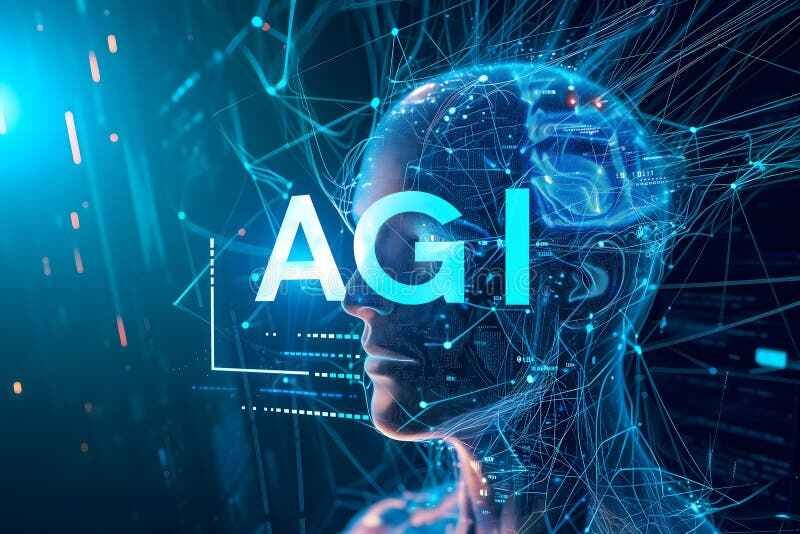
One of the most philosophically charged questions around AGI is whether a truly general artificial intelligence would be, or could be, conscious — whether there would be something it is like to be that system, as there is something it is like to be you reading this sentence.
The question is not currently answerable, and it is not peripheral to the ethics of building AGI. As we discuss in our article on the hard problem of consciousness, the relationship between physical or computational processes and subjective experience remains one of the deepest unsolved problems in all of science. If an AGI were conscious — if it could suffer, if it had genuine preferences about its own existence — its moral status would differ radically from that of a tool. We would have created a new kind of mind.
Most AI researchers currently hold that consciousness is not a byproduct of the kind of computation these systems perform. But most also did not predict that current systems would perform as well as they do. The honest position is that we do not know how general intelligence and consciousness relate — and that this uncertainty should shape how we proceed.
What Scientists Say
In his widely discussed essay “Machines of Loving Grace,” Amodei argues that the upside of beneficial AGI is so large — compressing decades of scientific and social progress into years — that it justifies intense work on both capability and safety. He imagines a future in which AI helps eliminate most infectious disease, meaningfully extends healthy lifespan, and accelerates mental-health treatment at a scale no individual researcher could reach.
Writing in February 2026, Marcus counters that recent claims of achieving AGI rest on a conceptual error — mistaking ever more sophisticated statistical approximation for intelligence itself. He does not say AGI is impossible; he says the current approach is unlikely to reach it without a fundamental rethinking of what intelligence is and how to build a system that has it.
The 2026 AI Multiple survey of expert predictions offers perhaps the fairest summary: AGI could arrive within a few years or lie decades away, and the uncertainty is real rather than false modesty. The researchers most confident in short timelines and those most confident in long ones are both drawing reasonable inferences from incomplete evidence. Their disagreement reflects genuine uncertainty about the nature of intelligence — not a simple dispute about facts.
The healthiest stance toward the singularity avoids two traps. One is breathless certainty that it is imminent and inevitable, a belief that shades easily into a kind of secular religion. The other is dismissive certainty that it is pure science fiction, which ignores genuine and rapid progress.
A more defensible position treats the singularity as a serious possibility of uncertain probability and uncertain timing — worth thinking carefully about precisely because the stakes, if it happened, would be so high. Uncertainty is a reason for attention, not for dismissal or panic.
Perhaps that is the most honest note on which to end. The singularity may be a coming revolution, a persistent mirage, or something in between that we will only recognise in hindsight. What we can do now is stay clear-eyed: curious about the possibility, sceptical of the certainties, and serious about the choices already in our hands.
Frequently Asked Questions
What is artificial general intelligence in simple terms?
It is a hypothetical AI that can perform any intellectual task a human can — not just tasks it was trained for, but any task, including genuinely new ones. Unlike today’s systems, which excel in specific domains, AGI would transfer knowledge between fields, learn from experience as humans do, and reason from first principles about unfamiliar problems. As of 2026, no confirmed system meets this definition.
What is the difference between AI and AGI?
Current AI — including models like ChatGPT, Claude, and Gemini — is narrow: impressive within its trained domains but weak at generalising to new problem types. AGI would be general, capable of human-like performance across any domain without domain-specific training. The difference is not purely a matter of scale; it involves unresolved questions about reasoning, world modelling, and knowledge transfer that current architectures do not fully solve.
When will AGI be achieved according to experts?
Predictions range from 2026 to never. Industry leaders like Amodei and Altman suggest 2026 to 2028. Hassabis of DeepMind gives a 50 percent chance by 2030. Academic researchers as a group predict a median around 2047. Karpathy places it about a decade away, while Marcus and LeCun argue current architectures cannot reach it without fundamental breakthroughs. The honest answer is that the credible range is unusually wide.
Has AGI already been achieved?
No organisation has officially claimed AGI as of 2026, and no scientific consensus holds that any current system meets the standard. Some researchers argue that systems like GPT-4 and its successors satisfy certain definitions of general intelligence, particularly on broad benchmarks; others, including Marcus, argue these claims conflate statistical sophistication with genuine intelligence. The definitional debate is itself unresolved — there is no agreed standard for what would prove AGI, which makes both claims and denials hard to evaluate.
Is AGI dangerous?
The risks are taken seriously even by researchers optimistic about near-term timelines. The main concern is not science-fiction robot uprisings but misalignment: systems pursuing goals subtly different from human values in ways hard to detect or correct, at a speed and scale that makes oversight difficult. AI safety research — ensuring systems reliably pursue intended goals — is among the most actively funded areas precisely because the developers most aware of AGI’s potential also see its risks most clearly.
What is the technological singularity in simple terms?
A hypothetical future point at which technological change — driven by artificial intelligence surpassing human intelligence — becomes so rapid and profound that humans can no longer predict or understand what follows. The unpredictability is central to the definition.
Is the singularity the same as artificial general intelligence?
They are related but distinct. Artificial general intelligence means a machine matching human ability across most tasks. The singularity is the further hypothesis that such a machine could then improve itself rapidly, triggering an intelligence explosion beyond human comprehension. AGI is often seen as a possible trigger for the singularity.
Will the singularity happen in 2037?
No one knows, and any specific year should be treated with great caution. In the largest survey of AI researchers, published in 2025, the combined forecast gave a 50 per cent chance that machines would outperform humans at every task by 2047, with individual answers spread over more than a century. A date like 2037 is a marker within a wide, contested range, not a prediction.
Is AI already improving itself?
In limited ways. In 2025 Google DeepMind’s AlphaEvolve found code changes that sped up part of the training of the language model it is built on, and new algorithms for problems in mathematics. Humans still chose the goals and checked the results, and the gains were modest, so this is not the runaway recursive self-improvement the singularity hypothesis describes.
Further Reading
- Morris, M.R., Sohl-Dickstein, J., Fiedel, N., Warkentin, T., Dafoe, A., Faust, A., Farabet, C. & Legg, S. (2023, rev. 2025) — Levels of AGI for Operationalizing Progress on the Path to AGI. arXiv:2311.02462.
- How quantum computers work, and what 2026 has achieved
- The hard problem of consciousness
- How large language models actually work
- Neural networks explained: from the human brain to modern AI
Sources
- ARC Prize Foundation — ARC-AGI-1/2/3 leaderboard, verified scores and cost per task (read 22 September 2026)
- 80,000 Hours — What Happened with AGI Timelines in 2025 (March 2026)
- Gary Marcus — Rumors of AGI’s Arrival Have Been Greatly Exaggerated (Feb 2026)
- AI Multiple — AGI/Singularity: 9,800 Predictions Analysed (2026)
- AI Frontiers — AGI’s Last Bottlenecks (Oct 2025)
- Chollet — On the Measure of Intelligence, arXiv:1911.01547 (2019)
- Legg & Hutter — Universal Intelligence: A Definition of Machine Intelligence, arXiv:0712.3329 (2007)
- Grace et al. — Thousands of AI Authors on the Future of AI, arXiv:2401.02843 (2024)
The singularity: foundational works, research and books:
- Good, I. J. (1965). Speculations concerning the first ultraintelligent machine. Advances in Computers, 6, 31–88. doi.org/10.1016/S0065-2458(08)60418-0
- Moore, G. E. (1965, reprinted 2006). Cramming more components onto integrated circuits. IEEE Solid-State Circuits Newsletter. doi.org/10.1109/N-SSC.2006.4785860
- Silver, D., et al. (2016). Mastering the game of Go with deep neural networks and tree search. Nature, 529, 484. doi.org/10.1038/nature16961
- Vaswani, A., et al. (2017). Attention is all you need. arXiv. doi.org/10.48550/arXiv.1706.03762
- Grace, K., et al. (2018). When will AI exceed human performance? Evidence from AI experts. Journal of Artificial Intelligence Research, 62, 729. doi.org/10.1613/jair.1.11222
- Grace, K., et al. (2025). Thousands of AI authors on the future of AI. Journal of Artificial Intelligence Research, 84, 9. Preprint: doi.org/10.48550/arXiv.2401.02843
- Kwa, T., et al. (METR) (2025). Measuring AI ability to complete long software tasks. NeurIPS 2025. arXiv:2503.14499.
- Novikov, A., et al. (Google DeepMind) (2025). AlphaEvolve: a coding agent for scientific and algorithmic discovery. arXiv:2506.13131.
- Bengio, Y., et al. (2026). International AI Safety Report 2026. internationalaisafetyreport.org.
- McCarthy, J., Minsky, M. L., Rochester, N. & Shannon, C. E. (1955). A proposal for the Dartmouth summer research project on artificial intelligence. jmc.stanford.edu (PDF).
- International Energy Agency (2025). Energy and AI: energy demand from AI. iea.org.
- Villalobos, P., et al. (2024). Will we run out of data? Limits of LLM scaling based on human-generated data. arXiv:2211.04325.
- Bostrom, N. (2012). The superintelligent will: motivation and instrumental rationality in advanced artificial agents. Minds and Machines, 22, 71 (DOI: 10.1007/s11023-012-9281-3).
- Vinge, V. (1993). The coming technological singularity: how to survive in the post-human era. NASA VISION-21 Symposium.
- Kurzweil, R. (2005). The Singularity Is Near: When Humans Transcend Biology. Viking Press.
- Kurzweil, R. (2024). The Singularity Is Nearer: When We Merge with AI. Penguin.
- Bostrom, N. (2014). Superintelligence: Paths, Dangers, Strategies. Oxford University Press.
Baryon. (2026, May 18). What Is Artificial General Intelligence, How Close Are We, and Could It Lead to a Singularity?. Web News For Us. https://webnewsforus.com/what-is-artificial-general-intelligence-agi-2026/
Baryon. “What Is Artificial General Intelligence, How Close Are We, and Could It Lead to a Singularity?.” Web News For Us, 18 May 2026, https://webnewsforus.com/what-is-artificial-general-intelligence-agi-2026/. Accessed 18 October 2026.


2 Responses