Genetic algorithms are routinely described as superseded. We checked the publication record year by year, and it says the opposite. Papers with “genetic algorithm” in the arXiv title: 30 in 2010, 42 in 2013, 32 in 2016, 63 in 2019, 75 in 2022 — and 105 in 2025.
The rate has more than tripled since 2010, and 2025 is the highest year on record. That growth happened through the entire deep-learning boom, in direct competition with the methods supposed to have replaced it. 2026, with 63 titled papers by early October, is running somewhat behind that record pace.
It is still a small field beside the 37,705 titled papers on neural networks. Small and growing is a different thing from obsolete, and the distinction is what this article is about.
In Tron: Legacy, the 2010 science fiction sequel to Disney’s cult classic, a programmer discovers that his computer system has spontaneously generated a new form of digital life.
These beings — called Isomorphic Algorithms, or ISOs — did not emerge from any line of code their creator wrote. They evolved from the system’s own complexity, unplanned and unpredicted, behaving in ways nobody had programmed and nobody fully understood.
The ISOs are fiction.
But the underlying intuition — that if you put evolutionary pressure inside a computer and let it run, genuinely novel solutions emerge that their own creators did not design and sometimes do not fully understand — is not fiction at all. It is the foundational idea behind one of the most productive and enduring fields in computer science. It is called the genetic algorithm.
Three things a genetic algorithm has already done
- Designed a spacecraft antenna that no human engineer proposed — and flew it in space in 2006
- Outperformed many deep-learning methods on drug-molecule design benchmarks in a 2023 Cambridge study
- Searched chemical spaces estimated at up to 1060 possible drug-like compounds — a number so large that physical lab screening could never explore even a visible fraction of it
This is the full story: the biology it was built from, the mathematics that made it real, the fifty-year history of a technique that keeps refusing to be superseded, and why it matters right now to the future of medicine and the science of life itself.
What Evolution Actually Is Before We Put It in a Computer
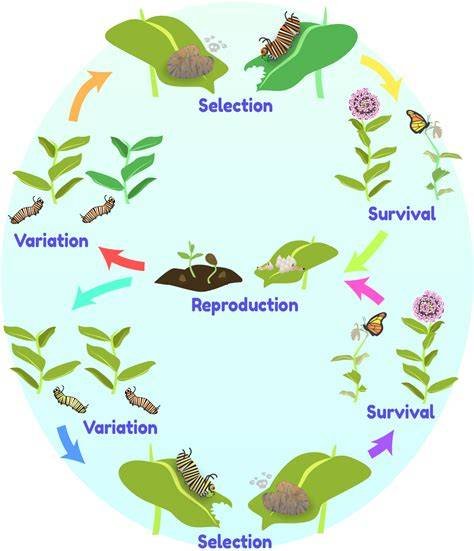
To understand a genetic algorithm, you first need a clear picture of what natural selection actually does, stripped of shorthand.
As the biologist Richard Lewontin set out in 1970, evolution by natural selection requires three conditions. Variation: individuals in a population must differ from each other. Heritability: offspring must tend to resemble their parents. Differential fitness: some variants must reproduce more successfully than others.
When all three conditions are present, the population changes over time — not randomly, but directionally. Traits that help an organism survive and reproduce become more common. Over enough generations, this simple, mindless process produces extraordinary complexity: the vertebrate eye, the immune system, the molecular precision of a single enzyme active site.
What Darwin showed — and what the mathematician John Holland at the University of Michigan understood more clearly than almost anyone — is that this mechanism is not specifically biological. The three conditions can be satisfied in any substrate. In a population of computer programmes. In a population of antenna designs. In a population of drug molecules. In any domain where you can generate variation, measure performance, and allow better performers to generate offspring.
Put those conditions into a computer, and you have a genetic algorithm.
Holland formalised this insight in his 1975 book, Adaptation in Natural and Artificial Systems — the founding text of the field, and one of the most quietly consequential books in twentieth-century computer science.
His central theoretical contribution was the schema theorem: a mathematical proof that short, high-fitness patterns tend to increase in frequency exponentially across generations, even when the algorithm has no explicit awareness of them. Evolution, in Holland’s formulation, is an implicit parallel search across millions of overlapping patterns simultaneously. It is extraordinarily efficient at finding good solutions in spaces too large and too complex to search in any other way.
The theorem has had its critics. It describes what happens to patterns, on average, from one generation to the next, and later researchers argued that it explains less about long-run success than its early admirers believed. The practical record, rather than the proof, is what has kept the method alive.
How a Genetic Algorithm Works: Step by Step
The procedure is the same across almost every application, whether the algorithm is designing an antenna or optimising a drug molecule.
Step 1 — Encode the problem as a chromosome. Every candidate solution is represented as a string of values — called a chromosome, borrowing the biological term deliberately. For an antenna, a sequence of numbers describing the shape, length, and angle of each wire. For a drug molecule, a SMILES string encoding the molecule’s chemical structure. The chromosome is the genome of your candidate solution.
Step 2 — Generate an initial population. Create a large batch of candidate solutions, typically at random. This is generation zero — the initial pool of variation on which selection will operate. A typical population might contain hundreds to thousands of individuals.
Step 3 — Evaluate fitness. Score every candidate using a fitness function — a rule that assigns a numerical value reflecting how well that candidate solves the problem. The fitness function is the environment that applies selection pressure. Getting this right is often the single most important design decision in any genetic algorithm application.
Step 4 — Select parents. Choose candidates from the current population to produce the next generation, with fitter candidates given a higher probability of selection. Too much selection pressure and the population converges prematurely, missing better solutions. Too little and the search loses direction.
Step 5 — Apply crossover. Combine pairs of parent chromosomes to produce offspring, swapping portions of their genetic material — the digital equivalent of sexual reproduction. Crossover is the primary mechanism by which useful traits from different parents are combined into a single descendant.
Step 6 — Apply mutation. Introduce small, random changes to some offspring. Mutation prevents the population from permanently converging on whatever region of the search space the initial population happened to land in. Without it, the algorithm can get permanently stuck.
Step 7 — Replace and repeat. The new generation replaces the old, and the cycle begins again. This continues until the population converges on a solution, or computational resources are exhausted. In practice, thousands of generations across hundreds of candidates can run on a laptop in minutes.
A Worked Example: Chromosome Crossover in Plain Numbers
Abstract descriptions can be hard to grip. Here is what genetic algorithm evolution actually looks like numerically, using a simplified antenna design as the setting.
Suppose you are representing an antenna design as a chromosome of five numbers, each representing the length of one wire segment in centimetres.
This winning offspring survives into the next generation. Repeat across thousands of generations and hundreds of simultaneous candidates, and the population converges on shapes no human engineer would have proposed.
A Timeline: Fifty Years of Refusing to Be Superseded
1975 — Holland’s founding text. Adaptation in Natural and Artificial Systems is published by the University of Michigan Press. Holland proves mathematically that evolutionary search performs implicit parallel processing across enormous pattern spaces. Most of computer science ignores it.
1992 — Second edition, mainstream attention. MIT Press reissues the book. More powerful hardware is approaching, engineering applications begin scaling, and the field acquires a community.
2006 — First evolved hardware in space. A NASA Ames Research Center team — Jason Lohn, Gregory Hornby, Derek Linden — flies an evolutionary-algorithm-designed antenna on the Space Technology 5 mission. The antenna looks like nothing any engineer drew, and in testing it beat the hand-designed antenna produced by the mission’s contractor.
2012 — Deep learning arrives. AlexNet wins the ImageNet competition by a margin that shocks the computer-vision world. Funding and talent flow overwhelmingly to neural networks, and genetic algorithms are widely assumed to be superseded.
2017 — Evolution trains deep networks. Researchers at Uber AI Labs show that a simple genetic algorithm, with no gradients at all, can train neural networks with more than four million parameters to play Atari games, competitive with the standard deep reinforcement-learning methods.
2018 — Evolution designs neural networks. A Google team evolves an image-recognition architecture, AmoebaNet, that surpasses hand-designed networks for the first time and sets a new accuracy record on the ImageNet benchmark.
2023 — Cambridge study: genetic algorithms beat many deep-learning methods at molecule design. Austin Tripp and José Miguel Hernández-Lobato publish Genetic Algorithms Are Strong Baselines for Molecule Generation at the University of Cambridge. Simple genetic algorithms outperform many sophisticated machine-learning methods on standard drug-molecule benchmarks, and the authors propose that any new method should have to beat a genetic algorithm before it is published.
2023–2025 — Evolution meets language models. Google DeepMind’s FunSearch, published in Nature, and its successor AlphaEvolve pair large language models with evolutionary selection, and produce new results in mathematics and computing.
The NASA Antenna That No Engineer Drew
The Space Technology 5 mission, launched in March 2006, required something engineers could not build by hand: a small, lightweight antenna satisfying an unusually demanding combination of specifications simultaneously — wide beamwidth, circular polarisation, wide bandwidth, and extreme compactness.
The genetic algorithm ran for thousands of generations. Candidate antenna shapes were encoded as chromosomes. Electromagnetic simulation software served as the fitness function, evaluating each design against the mission’s radiation pattern requirements without building a single physical prototype.
What emerged was not an antenna as anyone understood the word. It was an asymmetric, bent, visually chaotic tangle of wire. It bore no resemblance to any standard antenna geometry. An experienced radio engineer, presented with the design without context, would likely assume it was an error.
Built and tested, the evolved antennas outperformed the hand-designed antenna produced by the mission’s antenna contractor. When a change to the spacecraft’s orbit changed the requirements, the team adjusted the fitness function and evolved a new set of designs in less than a month. One of them flew on all three ST5 spacecraft, launched on 22 March 2006: the first computer-evolved hardware in space. Its creators — Lohn, Hornby, and Linden at NASA Ames — noted in their published work that evolutionary design found effective solutions that conventional methods would not ordinarily find, precisely because it was not constrained by human assumptions about what a good antenna should look like.
This is the real-world version of the Tron: Legacy intuition. Not conscious life emerging from a computer system. But a solution that genuinely surprised its creators, produced by a process of variation and selection with no concept of elegance or convention — only performance.
Genetic Algorithms vs Deep Learning: The Rematch Nobody Expected
Given the dominance of deep learning since 2012, it would be reasonable to assume that genetic algorithms had been quietly superseded. The research budgets, commercial interest, media coverage, and talent had all flowed decisively toward neural networks.
The assumption is incorrect.
In 2023, Austin Tripp and José Miguel Hernández-Lobato at the University of Cambridge published a paper whose title made the argument plainly: Genetic Algorithms Are Strong Baselines for Molecule Generation. They benchmarked simple genetic algorithms against an array of sophisticated deep generative models on standard drug molecule design benchmarks.
The genetic algorithms outperformed many of the deep learning approaches, despite needing no training data and far less engineering complexity. The authors went further, proposing a “GA criterion” for peer review: a new molecule-generation method should have to show a clear advantage over a simple genetic algorithm before it is published.
| Approach | Training Data | Compute | Strongest At |
|---|---|---|---|
| Genetic Algorithm | None required | Low | Novel chemical space exploration |
| Deep Generative Model (VAE, GAN) | Large dataset | High | Known chemical space interpolation |
| Reinforcement Learning | Reward signal | Very high | Sequential decision problems |
| Hybrid (GA + Neural Network) | Moderate | Moderate | Complex multi-objective drug design |
This pattern recurs throughout computational biology. AlphaFold2 — the DeepMind system developed by Demis Hassabis and John Jumper that transformed the fifty-year problem of predicting protein structures, and earned them a share of the 2024 Nobel Prize in Chemistry with David Baker — incorporates evolutionary information directly in its architecture. It trains on multiple sequence alignments encoding the evolutionary variation across related proteins.
AlphaFold2 did not replace evolutionary thinking. It absorbed it.
For the connection between this kind of AI and the architecture of large language models, see our article on neural networks explained: from the human brain to the architecture behind modern AI.
Searching the Space of All Possible Medicines
One of the most discussed applications of genetic algorithms is drug discovery, including the search for drugs against the diseases of ageing. And to understand why, you need to understand a number that is almost impossible to hold in the mind.
The estimated size of the chemical space of possible drug-like molecules is between 1033 and 1060 compounds.
For context: the number of atoms in the observable universe is estimated at approximately 1080. The number of compounds that physical laboratory screening could ever test — even with the most advanced high-throughput automation, running continuously for centuries — is measured in the billions. That is a fraction so small relative to the full chemical space that it is, mathematically, essentially zero.
The gap between these two numbers is why search methods matter. Genetic algorithms are one of several approaches, alongside generative models, reinforcement learning and Bayesian optimisation, that can explore a space this large without testing every candidate physically — and among the simplest of them.
The biology of ageing makes this problem even more complex. Effective longevity intervention means finding compounds that modulate multiple interacting pathways simultaneously — cellular senescence, telomere attrition, epigenetic drift, mitochondrial dysfunction — without introducing prohibitive toxicity.
This is precisely the kind of problem that genetic algorithms were built for: a search space too vast to explore exhaustively, a fitness function that can be computed without testing every candidate physically (using molecular docking simulation rather than laboratory synthesis), and a landscape where good solutions cluster in regions that share structural features.
Platforms like AutoGrow4, published by Spiegel and Durrant at the University of Pittsburgh in the Journal of Cheminformatics (2020), use genetic algorithms to evolve drug-like molecules by combining and mutating fragments, guided by molecular docking simulations as the fitness function. In the original paper, aimed at PARP-1, a DNA-repair enzyme targeted by cancer drugs, it produced compounds with better predicted binding than approved PARP-1 inhibitors. The same approach can be pointed at any protein target, including those involved in ageing, though predicted binding is only a starting point for laboratory work.
For the biology of why clearing senescent cells is one of the most promising approaches to extending healthy lifespan, see our article on senolytics: the science of clearing ageing cells.
Combinatorial problems of the same shape are emerging in epigenetic reprogramming, where the question is which combination of genes to switch on or off to shift a cell towards a younger state. For the story of how AI is decoding the regulatory genome that controls epigenetic state, see our article on decoding the dark DNA: how AlphaGenome is revolutionising genetic research.
Where Genetic Algorithms Are Working Right Now
Beyond drug discovery and hardware design, genetic algorithms are embedded in systems that touch daily life in ways most people never notice.
Airline scheduling. Assigning aircraft to routes, managing crew rosters across regulatory constraints, and building gate schedules across hundreds of airports is an NP-hard combinatorial problem. The industry’s workhorse is mathematical programming, but genetic algorithms and hybrids built on them have long been studied and used for parts of the problem, particularly where the rules are messy and a good-enough answer is needed fast.
Structural engineering. Evolutionary search is one of the methods used to generate optimised structural components — internal scaffolding for aircraft parts, automotive panels, and building components — that are lighter and stronger than designs a human engineer would sketch. The resulting structures frequently look organic: irregular, latticed, almost skeletal, as though rediscovering the weight-saving principles natural selection found in real bones.
Neural Architecture Search (NAS). Genetic algorithms are used to evolve the architecture of neural networks themselves — determining which layers are present, how many neurons each contains, and what connections exist between them. The neural network’s design is the chromosome. Its performance on a benchmark is the fitness function. Google’s evolved AmoebaNet reached 83.9 per cent top-1 accuracy on ImageNet in 2018, a record at the time, and evolution reached good designs faster than a comparable reinforcement-learning search on the same hardware.
Climate modelling. The physical parameters embedded in Earth system models — the coefficients controlling how cloud formation, ocean circulation, and ice sheet dynamics are mathematically represented — have been calibrated using genetic algorithms searching for parameter combinations that minimise the gap between model predictions and observed climate data.
Evolution Meets the Language Models
The newest chapter fuses evolution with the systems that were supposed to replace it. In December 2023, Google DeepMind described FunSearch in Nature: a large language model proposes small computer programs, an automatic evaluator scores them, and the best survive to be mutated again. Applied to the cap set problem, a long-standing puzzle in combinatorics, it found constructions larger than any previously known.
In May 2025 DeepMind went further with AlphaEvolve, an evolutionary coding agent. Among its results was a way to multiply two four-by-four matrices of complex numbers using 48 multiplications rather than 49, the first improvement in that setting since Volker Strassen’s algorithm of 1969. A scheduling rule it evolved for Google’s data centres was reported to recover about 0.7 per cent of the company’s worldwide computing capacity.
Holland’s loop is unchanged: generate variation, score it, keep the best, repeat. What has changed is the source of the variation. Instead of random flips in a string of numbers, the mutations now come from a model that has read most of the world’s code — evolution with a very well-read mutation operator.
Key Numbers
| Fact | Value |
|---|---|
| Year John Holland published the foundational framework | 1975 |
| Year the first evolved hardware flew in space (NASA ST5) | 2006 |
| Estimated size of drug-like chemical space | 1033 to 1060 compounds |
| Year GECCO, the field’s primary conference, was founded | 1999 (merging ICGA and the GP conference) |
| Cambridge 2023 benchmark: GA vs deep generative models | Outperformed many machine-learning methods |
In Their Own Words
“GAs are very strong algorithms for such tasks, outperforming many complicated machine learning methods: a result which many researchers may find surprising.”
— Austin Tripp and José Miguel Hernández-Lobato, Department of Engineering, University of Cambridge. Genetic Algorithms Are Strong Baselines for Molecule Generation (2023). arXiv:2310.09267
“Evolutionary design techniques can overcome these limitations by searching the design space and automatically finding effective solutions that would ordinarily not be found.”
— Jason Lohn, Gregory Hornby and Derek Linden, NASA Ames Research Center. An Evolved Antenna for Deployment on NASA’s Space Technology 5 Mission, in Genetic Programming Theory and Practice II, Springer (2005). doi.org/10.1007/0-387-23254-0_18
On John Holland: Holland’s central arguments — that evolutionary search implicitly processes far more information than the explicit solutions being evaluated, and that this implicit parallelism gives genetic algorithms their power — are developed across chapters 2 through 6 of Adaptation in Natural and Artificial Systems (University of Michigan Press, 1975; MIT Press second edition, 1992). The primary text is available via MIT Press.
Frequently Asked Questions
Further Reading on Web News For Us
- Neural Networks Explained: From the Human Brain to the Architecture Behind Modern AI
- How Large Language Models Actually Work: The Science Behind ChatGPT, Claude and Gemini
- Senolytics: The Science of Clearing Ageing Cells
- Decoding the Dark DNA: How AlphaGenome Is Revolutionising Genetic Research
- Why Do Some People Live Past 100? What Centenarian DNA Is Teaching Us About Longevity
- What Is CRISPR? The Gene Editing Revolution That Is Rewriting Human Medicine
Sources
- Holland, J. H. (1975). Adaptation in Natural and Artificial Systems. University of Michigan Press. Second edition (1992), MIT Press. mitpress.mit.edu
- Tripp, A. & Hernández-Lobato, J. M. (2023). Genetic algorithms are strong baselines for molecule generation. University of Cambridge. arXiv:2310.09267
- Lohn, J., Hornby, G. & Linden, D. (2005). An evolved antenna for deployment on NASA’s Space Technology 5 mission. In Genetic Programming Theory and Practice II. Springer. doi.org/10.1007/0-387-23254-0_18
- Spiegel, J. O. & Durrant, J. D. (2020). AutoGrow4: An open-source genetic algorithm for de novo drug design and lead optimization. Journal of Cheminformatics, 12, 25. doi.org/10.1186/s13321-020-00429-4
- Sanchez-Lengeling, B. & Aspuru-Guzik, A. (2018). Inverse molecular design using machine learning: Generative models for matter engineering. Science, 361(6400), 360–365. doi.org/10.1126/science.aat2663
- Jumper, J. et al. (2021). Highly accurate protein structure prediction with AlphaFold. Nature, 596, 583–589. doi.org/10.1038/s41586-021-03819-2
- Nobel Prize in Chemistry 2024 — Press Release, October 9, 2024. nobelprize.org
- Del Ser, J. et al. (2019). Evolutionary multi-objective optimisation: A historical view of the field. IEEE Computational Intelligence Magazine, 14(1), 28–50. doi.org/10.1109/MCI.2018.2890544
- Frontiers in Molecular Biosciences — AI-Driven Protein Structure Prediction (February 2026). frontiersin.org
- Hornby, G. S., Lohn, J. D. & Linden, D. S. (2011). Computer-automated evolution of an X-band antenna for NASA’s Space Technology 5 mission. Evolutionary Computation, 19(1), 1–23. doi.org/10.1162/EVCO_a_00005
- Lewontin, R. C. (1970). The units of selection. Annual Review of Ecology and Systematics, 1, 1–18. doi.org/10.1146/annurev.es.01.110170.000245
- Such, F. P., et al. (2017). Deep neuroevolution: genetic algorithms are a competitive alternative for training deep neural networks for reinforcement learning. arXiv:1712.06567. arxiv.org/abs/1712.06567
- Real, E., et al. (2019). Regularized evolution for image classifier architecture search. AAAI Conference on Artificial Intelligence. arXiv:1802.01548. arxiv.org/abs/1802.01548
- Romera-Paredes, B., et al. (2024). Mathematical discoveries from program search with large language models. Nature, 625, 468–475. doi.org/10.1038/s41586-023-06924-6
- Novikov, A., et al. (2025). AlphaEvolve: a coding agent for scientific and algorithmic discovery. arXiv:2506.13131. arxiv.org/abs/2506.13131
- Polishchuk, P. G., Madzhidov, T. I. & Varnek, A. (2013). Estimation of the size of drug-like chemical space based on GDB-17 data. Journal of Computer-Aided Molecular Design, 27, 675–679. doi.org/10.1007/s10822-013-9672-4
Baryon. (2026, July 27). Genetic Algorithms Explained: How Evolution Designs Medicine. Web News For Us. https://webnewsforus.com/genetic-algorithms-tron-evolutionary-computing/
Baryon. “Genetic Algorithms Explained: How Evolution Designs Medicine.” Web News For Us, 27 July 2026, https://webnewsforus.com/genetic-algorithms-tron-evolutionary-computing/. Accessed 24 October 2026.
1 Response