The body clock is one of the most heavily studied systems in medicine. We counted on 2 October 2026: ClinicalTrials.gov holds 1,242 registered studies mentioning circadian rhythm, 621 of them completed and 953 testing an intervention of some kind, from light boxes to melatonin to sleep schedules.
Only 80 use the word chronotherapy: deliberately timing a treatment to that clock. A further 294 study shift work, which is the clock being broken rather than used.
The Nobel-winning biology below explains what the clock is made of. The registry shows how little of that understanding has yet changed when a drug is given.
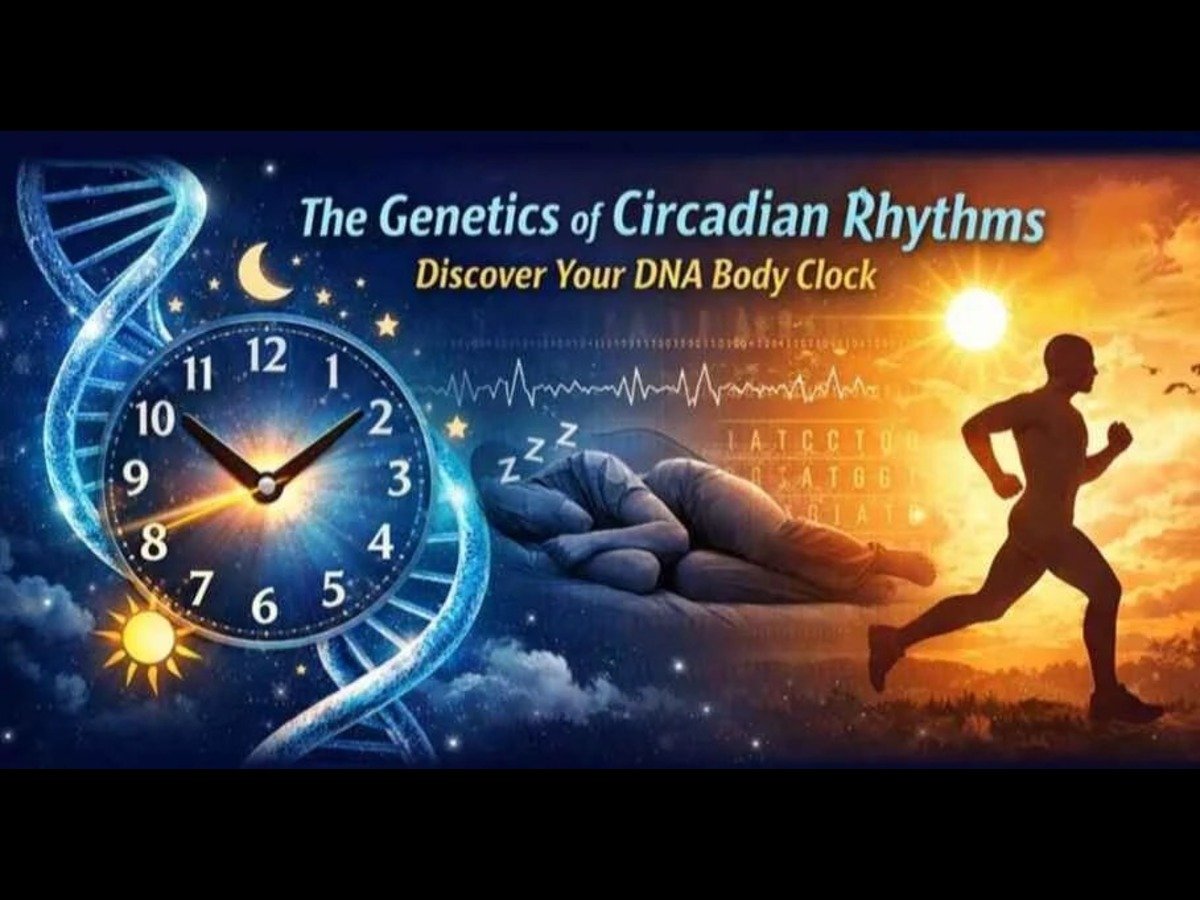
On October 2, 2017, the Nobel Assembly at the Karolinska Institute in Stockholm announced that the Nobel Prize in Physiology or Medicine would be awarded jointly to three American scientists — Jeffrey C. Hall, Michael Rosbash, and Michael W. Young — for discoveries explaining one of the most fundamental and least appreciated systems in biology: the molecular mechanism that controls circadian rhythm, the roughly 24-hour internal clock that governs sleep, hormone release, body temperature, and metabolism in most cells of the body.
The discovery answered a question that had puzzled biologists for over a century. Plants, animals, fungi, and even bacteria appear to anticipate the day-night cycle rather than simply reacting to it. A plant begins opening its leaves before sunrise. A person’s body temperature begins rising hours before they wake. This anticipatory behaviour suggested an internal clock — but for most of the twentieth century, nobody could explain what that clock was actually made of, or how it kept time with such precision using nothing but the chemistry inside a single cell.
Working with the common fruit fly, Drosophila melanogaster, Hall, Rosbash, and Young isolated the gene responsible and discovered the elegant molecular feedback loop by which it operates — a self-regulating cycle of protein production and degradation that repeats, with remarkable accuracy, roughly every 24 hours. Their work did not just solve a biological puzzle. It launched an entire field, chronobiology, that is now reshaping how medicine thinks about everything from cancer treatment timing to the genetics of aging itself.
The Century-Old Puzzle: Why Does Biology Run on a Clock?
The observation that living organisms follow daily rhythms is ancient — farmers and naturalists had noted it for thousands of years. The first rigorous scientific demonstration that this rhythm was internally generated, rather than simply a response to the rising and setting sun, came in 1729, when French scientist Jean-Jacques d’Ortous de Mairan observed that a mimosa plant continued opening and closing its leaves on a roughly 24-hour schedule even when kept in continuous darkness. Something inside the plant was keeping time without any external cue.
For the next two centuries, biologists confirmed this phenomenon across an enormous range of organisms — fungi, insects, birds, mammals, even single-celled algae — but the mechanism remained a complete mystery. The breakthrough that made a genetic explanation possible came in 1971, when Seymour Benzer and his graduate student Ronald Konopka, working at Caltech, identified fruit flies with mutations that disrupted their circadian rhythm entirely — some flies had no rhythm at all, others ran on a shortened or lengthened cycle.
They named the responsible gene period, or per. This was the first demonstration that a single gene could control an entire organism’s sense of time. But Konopka and Benzer could not isolate the gene itself or explain how it worked — the tools to do so did not yet exist.
1984: Isolating the Gene That Keeps Time
The decisive breakthrough came in 1984, when two independent research teams — Jeffrey Hall and Michael Rosbash working together at Brandeis University, and Michael Young working at Rockefeller University in New York — successfully isolated the period gene that Konopka and Benzer had identified thirteen years earlier.
Having the gene’s DNA sequence in hand allowed Hall and Rosbash to ask a far more powerful question: what does this gene actually do inside the cell, moment to moment, across a 24-hour cycle? In 1990, they published findings that would become the conceptual foundation of the entire field. They discovered that the protein encoded by the period gene — called PER — accumulates inside fly cells during the night and is broken down during the day, oscillating in a regular cycle that tracked the 24-hour rhythm precisely.
This observation led them to a remarkable hypothesis, one that turned out to be correct: PER protein, once it builds up to sufficient levels, travels back into the cell nucleus and blocks the activity of its own gene — shutting down its own production. As PER protein then gradually degrades, the inhibition lifts, the gene switches back on, and the cycle begins again.
This is a negative feedback loop, a concept borrowed from engineering and control theory, operating entirely within the chemistry of a single cell, with no external timekeeper required.
The Missing Piece: How Does PER Protein Get Into the Nucleus?
The feedback loop Hall and Rosbash described was elegant, but it left a critical gap. PER protein is produced in the cytoplasm of the cell — the fluid-filled space outside the nucleus. For it to block its own gene, it needs to physically travel into the nucleus, where the DNA is stored. What was controlling that journey, and why did it take so long — accumulating slowly enough to produce a roughly 24-hour cycle rather than a much faster one?
Michael Young’s laboratory at Rockefeller University answered this question in 1994 with the discovery of a second clock gene, which he named timeless, or tim. The protein it encodes, TIM, binds directly to PER protein. Only when bound together as a pair can the two proteins successfully enter the cell nucleus and shut down the period gene. This explained the missing mechanical step in the feedback loop — and also explained how the circadian clock could be reset by light, since TIM protein is rapidly broken down when exposed to light, allowing the clock to resynchronise with the external day-night cycle when needed, such as after crossing time zones.
Young’s laboratory then identified a third critical component in 1998: a gene called doubletime, encoding a protein called DBT, which delays the accumulation of PER protein, fine-tuning the speed of the entire cycle so that it runs close to 24 hours rather than completing much faster. Without this delaying mechanism, the feedback loop on its own would oscillate far too quickly.
From Fruit Flies to Humans: The Mammalian Clock

The genetics uncovered in Drosophila turned out to be evolutionarily ancient and remarkably conserved. Within a few years of Hall, Rosbash, and Young’s discoveries, researchers identified equivalent clock genes in mice and humans — confirming that the same fundamental negative feedback architecture, refined over hundreds of millions of years of evolution, runs the circadian clock in essentially every cell of the human body, not just in the brain.
A significant chapter often discussed alongside the 2017 prize involves Joseph Takahashi, then at Northwestern University, whose laboratory found a mouse mutant with a broken body clock in 1994 through a large genetic screen and cloned the responsible gene, Clock, in 1997. The Nobel Prize can go to at most three people, so essential contributors to the same body of work are inevitably left out.
In humans, the central clock sits in a small region of the hypothalamus, the suprachiasmatic nucleus, which receives direct input from light-sensitive cells in the retina. But nearly every cell in the body also keeps its own time, using mammalian versions of period together with genes such as Clock, Bmal1 and cryptochrome; in mammals, cryptochrome rather than timeless partners PER. Your liver, your heart, your skin and your immune cells each run their own clock.
The Reticular Activating System: The Brain’s Wakefulness Switch
Knowing what time it is, however, is not the same as being awake. The suprachiasmatic nucleus is a timer: it tells the body when wakefulness ought to happen. Producing the physical state of alertness is the work of a separate structure, the reticular activating system, a diffuse network of neurons running up through the brainstem into the thalamus. Experiments in 1949 established that wakefulness is not the brain’s default condition interrupted by sleep, but a state actively generated, moment to moment, by a specific circuit.
The two systems fail independently in ways a clinician can tell apart. Damage confined to the suprachiasmatic nucleus destroys the daily rhythm of sleep and waking without necessarily preventing wakefulness itself. Damage to the reticular activating system, or loss of the orexin-producing neurons that stabilise it, produces pathological sleepiness, narcolepsy or, after severe brainstem injury, coma. That dissociation is also why arousal and awareness are treated as separate problems, a distinction we take up in our piece on the hard problem of consciousness.
The Suprachiasmatic Nucleus: Anatomy of the Master Clock

The phrase “master clock” is used loosely in popular science writing, but the suprachiasmatic nucleus earns it in a precise anatomical sense. It is a small paired structure, roughly the size of a grain of rice on each side, sitting directly above the optic chiasm in the anterior hypothalamus — that is, immediately above the point where the optic nerves cross. The position is not an accident. It places the clock directly in the path of light information arriving from the eyes.
Each side holds thousands of neurons, and the genuinely remarkable fact is easy to skim past: every one of them contains its own copy of the molecular feedback loop, and every one can oscillate alone. Isolated, individual neurons drift out of phase with one another. What welds them into a single coherent tissue-level clock is chemical signalling between the cells, principally a peptide called vasoactive intestinal polypeptide together with vasopressin. The master clock is therefore not one timekeeping mechanism but thousands of identical ones held in step by conversation — a population rather than a device.
Light reaches it along a dedicated route, the retinohypothalamic tract, first traced in the early 1970s. What was recognised only in the early 2000s is where that route begins: not at the rods and cones but at a small separate class of retinal cells carrying their own light-sensitive pigment, melanopsin. This is why some people who have lost all rod and cone function, and are blind in the ordinary sense, can still entrain their body clock to the light-dark cycle. It also settled a puzzle first noticed in the 1920s, when mice bred without working rods and cones were found to keep their light-driven pupil reflexes.
In January 2026 researchers described, in a preprint not yet peer reviewed, a laboratory model of that human pathway, fusing retinal organoids with hypothalamic organoids into a connected assembloid. The point is translational: rodents, the standard model for circadian biology, are nocturnal, and their light-response physiology differs from ours.
The Pineal Gland and Melatonin: How Darkness Becomes a Hormone
If the suprachiasmatic nucleus is the clock, the pineal gland is what broadcasts its verdict to the rest of the body in chemical form. It is a small pinecone-shaped structure deep in the centre of the brain, and its function was obscure for centuries. The answer proved less mystical than the speculation and, in its own way, just as remarkable: the pineal is the body’s primary site of melatonin production, and melatonin is the signal by which the clock’s sense of time becomes a body-wide instruction.
The route connecting the two is oddly indirect and took decades of neuroanatomical tracing to map. The signal leaves the suprachiasmatic nucleus, passes through the hypothalamus, descends the spinal cord and re-enters the head by way of a nerve cluster in the neck before arriving at the pineal. That detour is a fossil of evolutionary history. In many non-mammalian vertebrates the pineal is directly light-sensitive itself, a literal third eye; mammals lost the photosensitivity and kept the wiring.
Melatonin is built from tryptophan, the amino acid popularly blamed for post-lunch drowsiness, by way of serotonin. The enzyme that sets the pace of the whole pathway is itself under direct circadian control, its activity climbing sharply at night and falling during the day, which is why melatonin is sometimes called the hormone of darkness. Light falling on the retina at night suppresses its release directly: the clock’s chemical output can be switched off by a lamp.
Once in the bloodstream, melatonin acts on two receptor types distributed widely through the body, including back on the suprachiasmatic nucleus itself, where it appears to reinforce the very rhythm that produced it. That dual role, output and feedback at once, is why melatonin supplements taken at the right time can help reset timing after jet lag or in delayed sleep phase disorder, and why the same dose taken at the wrong time can push the clock further out of step.
A 2025 review in the journal Molecules describes declining nighttime melatonin as a feature of ageing and sets out evidence that melatonin acts as an antioxidant and anti-inflammatory agent in the brain, which would make its loss one more strand linking a weakening clock to neurodegenerative disease.
Why Sunlight Matters So Much: Photoentrainment and the Modern Light Environment
The technical term for synchronising an internally generated rhythm to an external cue is entrainment, and for the circadian clock light is overwhelmingly the dominant cue. Left without any light cues at all — in experiments where volunteers lived for weeks with no clocks, no windows and no scheduled light — the human clock does not stop. It free-runs on its own natural period, which in most people is slightly longer than 24 hours.
Photoentrainment is the daily correction that keeps internal time locked to the rotation of the Earth: morning light advances the clock, evening light delays it. The retinal cells carrying that information are most sensitive to light of about 480 nanometres, in the blue-green part of the spectrum.
That sensitivity has an obvious modern consequence. The light-emitting diodes in phone, tablet and computer screens, and in most energy-efficient household lighting, emit a strong blue component close to the wavelengths the clock is most sensitive to. Evening screen use is therefore not simply a matter of being mentally stimulated; it is a timing signal.
The clinical application of this is most developed in seasonal affective disorder, a depressive condition linked to reduced winter light, for which carefully timed bright light treatment is an established therapy.
Body Temperature, Cortisol, and the Other Rhythms Your Clock Controls
The sleep-wake cycle is the most obvious circadian rhythm but far from the only one, and the others explain why circadian disruption produces such wide-ranging effects rather than simply making people tired.
Core body temperature follows a robust daily rhythm independent of activity, reaching its minimum in the early hours of the morning, roughly two hours before habitual waking. Because the suprachiasmatic nucleus generates this largely independently of the sleep-wake cycle itself, that temperature minimum is one of the most reliable physiological markers of underlying clock phase, and is used as such both clinically and in research.
The body’s central stress-hormone system is under the same control. Cortisol follows one of the most pronounced rhythms in human physiology, driven by direct neural projections from the suprachiasmatic nucleus to the hypothalamic neurons that govern the axis. The same genetic clock machinery first found in fruit flies by Hall, Rosbash and Young therefore reaches all the way to the hormone that gets you out of bed.
Beyond this central control, the peripheral clocks present in essentially every organ are entrained not only by the master clock but by feeding. When food timing and light exposure agree, central and peripheral clocks stay synchronised. Under shift work, jet lag or irregular eating they separate — and that internal desynchrony, rather than lost sleep alone, is increasingly understood to be where the metabolic harm originates.
Why This Discovery Matters: The Biology Beneath Jet Lag, Shift Work, and Disease
The practical significance of circadian genetics becomes obvious the moment you have experienced jet lag, pulled an all-nighter, or worked a rotating shift schedule. The disorientation, the impaired concentration, the disrupted appetite and digestion — these are not vague feelings of tiredness. They are the measurable, molecular consequence of your body’s cellular clocks falling out of synchronisation with each other and with the external environment.
The scale is the point. A 2014 atlas of 12 mouse organs found that 43 per cent of protein-coding genes follow a 24-hour rhythm in at least one of them, and that most best-selling drugs and World Health Organization essential medicines act on the products of rhythmic genes. A large share of the genome, and of the pharmacy, is time-aware.
The harm can be produced on demand. In a 2009 laboratory study, ten healthy adults lived on a 28-hour day for ten days, so that they ate and slept at every point of the body clock. When their meals and sleep fell about 12 hours out of phase, blood glucose rose 6 per cent despite 22 per cent more insulin, the daily cortisol rhythm reversed, and three of the eight participants with enough data showed glucose responses in the range typical of prediabetes.
Shift workers, whose circadian clocks are chronically misaligned with their behavioural schedules, show measurably elevated rates of metabolic syndrome, cardiovascular disease, and certain cancers — associations strong enough that the World Health Organization’s International Agency for Research on Cancer has classified night shift work as a probable carcinogen, a judgement resting on epidemiology, animal studies and evidence that disrupting the body clock disturbs hormones and cell cycles.
Chronotherapy: Timing Medicine to the Body’s Clock

One of the most active and clinically promising areas of current research built on the 2017 Nobel-winning discoveries is chronotherapy — the principle that the same drug, given at different times of day, can have meaningfully different efficacy and toxicity, because the cellular machinery it interacts with is itself rhythmic.
The evidence is still thinner than the enthusiasm. A December 2025 study in npj Precision Oncology combined experiments on glioblastoma cells with a pharmacological model and found that sensitivity to the chemotherapy drug temozolomide depends on time of day and on the cells’ clock genes; its authors note that clinical results for timed temozolomide have so far been inconsistent. A randomised trial in lung cancer reporting that morning immunotherapy infusions sharply improved survival, published in Nature Medicine in February 2026, was retracted in July 2026.
Beyond cancer, researchers have begun engineering circadian biology directly into therapeutics. A February 2025 study in Nature Communications built a “chronogenetic” gene circuit around Period2, a mammalian version of the fly period gene, into tissue-engineered cartilage designed to release an anti-inflammatory drug at the time of day when rheumatoid arthritis is typically worst. Once implanted in mice, the constructs kept a circadian rhythm: a practical descendant of feedback-loop biology first worked out in fruit flies.
Circadian Genetics and the Biology of Aging
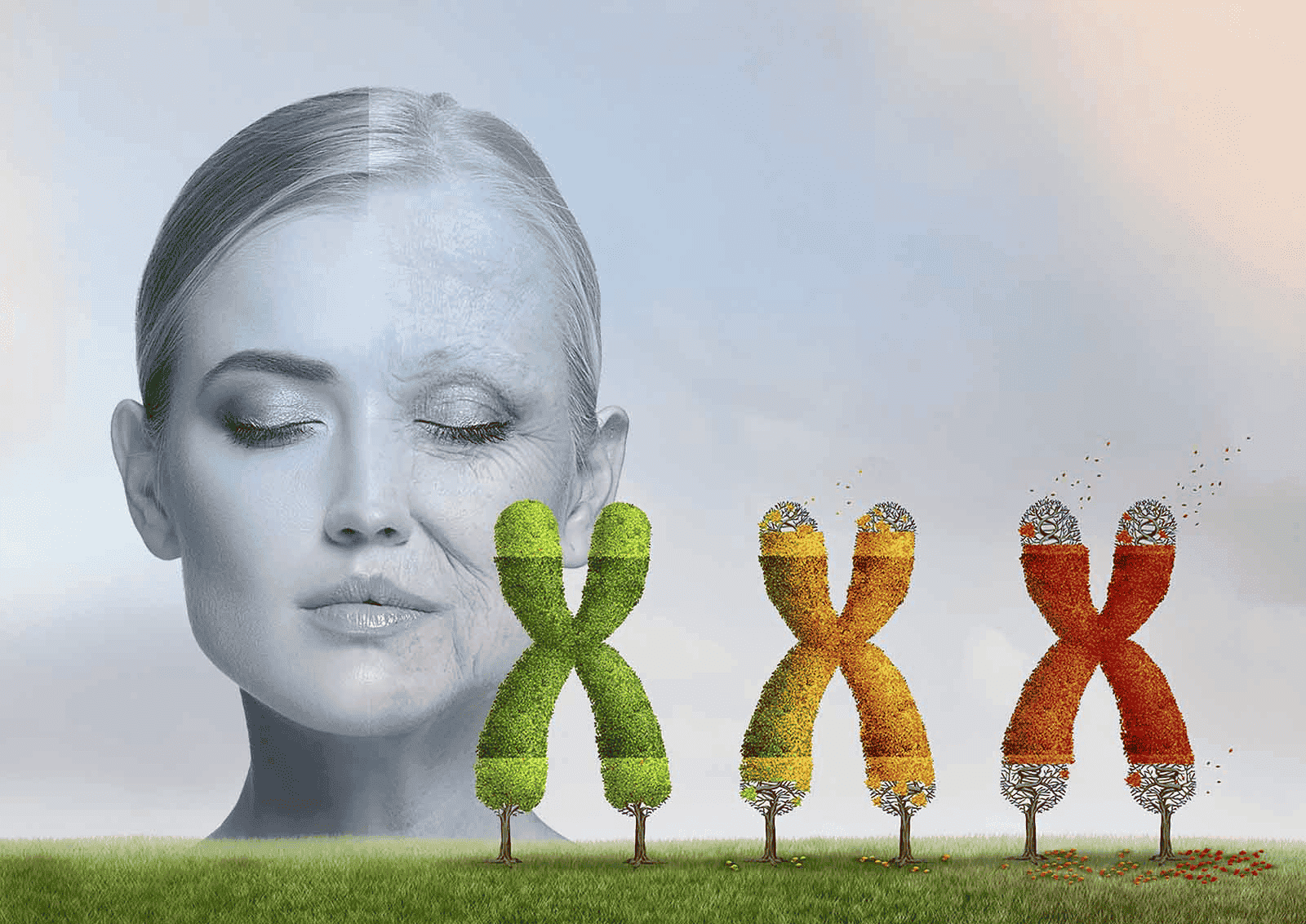
Daily rhythms in sleep, hormones and body temperature tend to flatten with age, and nighttime melatonin declines. That is one thread connecting the clock to the biology of ageing, the territory of our coverage of telomeres and cellular aging and genetics of exceptional longevity, though how much a weakening clock drives ageing, rather than reflects it, is not settled.
What Genetic Variation in Your Own Clock Genes Means
Not everyone’s circadian clock runs identically. Some people are naturally early risers; others are night owls — a trait with a substantial genetic basis, including variants in core clock genes.
Researchers at Baylor College of Medicine’s Translational Research Institute for Space Health are cataloguing the human genetic variants behind individual differences in 24-hour rhythms. The work matters for astronauts, whose clocks are disrupted in orbit, but the same variants bear on everyone’s sleep timing, jet lag and shift-work risk.
This individual variation is also central to the emerging field of chrononutrition — the study of how meal timing interacts with an individual’s circadian genotype to affect metabolic health — and to broader efforts in personalised medicine that aim to time medical interventions, from medication dosing to light exposure therapy, to each patient’s specific circadian genetics rather than a generic daily schedule.
A large attempt to map that variation was published in eBioMedicine in July 2026. Working with 312,935 UK Biobank participants, the team built a Circadian Imbalance Index, a 0 to 5 score combining evening chronotype, unusually short or long sleep, high neuroticism, atypical coffee intake and low vitamin D, and found 27 genetic regions mapping to 72 genes. The index was genetically correlated with insomnia, mood swings, body mass index, type 2 diabetes and coronary artery disease. Susceptibility to a disordered clock is polygenic, and the finding describes populations, not any individual reader.
Frequently Asked Questions
Further Reading on Web News For Us
Sources
Primary peer-reviewed research and the official Nobel record:
- The Nobel Prize (October 2, 2017) — The Nobel Prize in Physiology or Medicine 2017: Press Release
- The Nobel Assembly at Karolinska Institutet (2017) — Scientific Background: A 24-Hour Molecular Clockwork
- Konopka, R.J. & Benzer, S. (1971) — Clock Mutants of Drosophila melanogaster. PNAS 68(9):2112-6.
- Hardin, P.E., Hall, J.C. & Rosbash, M. (1990) — Feedback of the Drosophila period Gene Product on Circadian Cycling of Its Messenger RNA Levels. Nature 343(6258):536-40.
- Price, J.L., Blau, J., Rothenfluh, A., Abodeely, M., Kloss, B. & Young, M.W. (1998) — double-time Is a Novel Drosophila Clock Gene That Regulates PERIOD Protein Accumulation. Cell 94(1):83-95.
- Żebrowska, M. et al. (21 July 2026) — Genetic Architecture of a Circadian Imbalance Index: Genome-Wide Association, Phenome-Wide Association and Mendelian Randomisation Analyses. eBioMedicine 130:106380.
- Nature Reviews Genetics (May 15, 2026) — Time Matters: Circadian Genetics and the Molecular Logic of Human Health and Disease
- npj Precision Oncology (December 12, 2025) — Personalized Chronotherapy in Glioblastoma
- Nature Communications (February 7, 2025) — A Synthetic Chronogenetic Gene Circuit for Programmed Circadian Drug Delivery
- Baylor College of Medicine (August 12, 2025) — Genetics and Circadian Rhythms
- Ma, M.A., Morrison, E.H. (2026) — Neuroanatomy, Nucleus Suprachiasmatic. StatPearls, National Library of Medicine
- bioRxiv (January 23, 2026) — Functional Human Retinohypothalamic Tract Assembloid Model
- Fagiani, F. et al. (April 2025) — Circadian Rhythm Disruption, Melatonin, and Neurodegenerative Diseases. Molecules 30(9), 1888
- Graham, D.M., Wong, K.Y. — Melanopsin-Expressing ipRGCs. Webvision, University of Pittsburgh
- Zhang, R. et al. (2014) — A circadian gene expression atlas in mammals: implications for biology and medicine. PNAS 111(45):16219-24.
- Scheer, F.A.J.L. et al. (2009) — Adverse metabolic and cardiovascular consequences of circadian misalignment. PNAS 106(11):4453-8.
- Czeisler, C.A. et al. (1999) — Stability, precision, and near-24-hour period of the human circadian pacemaker. Science 284:2177-81.
- Nature Medicine (July 2026) — Retraction Note: Time-of-day immunochemotherapy in non-small cell lung cancer: a randomized phase 3 trial
Baryon. (2025, June 9). Circadian Rhythm Genetics: The 2017 Medicine Nobel Prize Explained. Web News For Us. https://webnewsforus.com/circadian-rhythm-genetics-2017-nobel-prize/
Baryon. “Circadian Rhythm Genetics: The 2017 Medicine Nobel Prize Explained.” Web News For Us, 9 June 2025, https://webnewsforus.com/circadian-rhythm-genetics-2017-nobel-prize/. Accessed 21 October 2026.