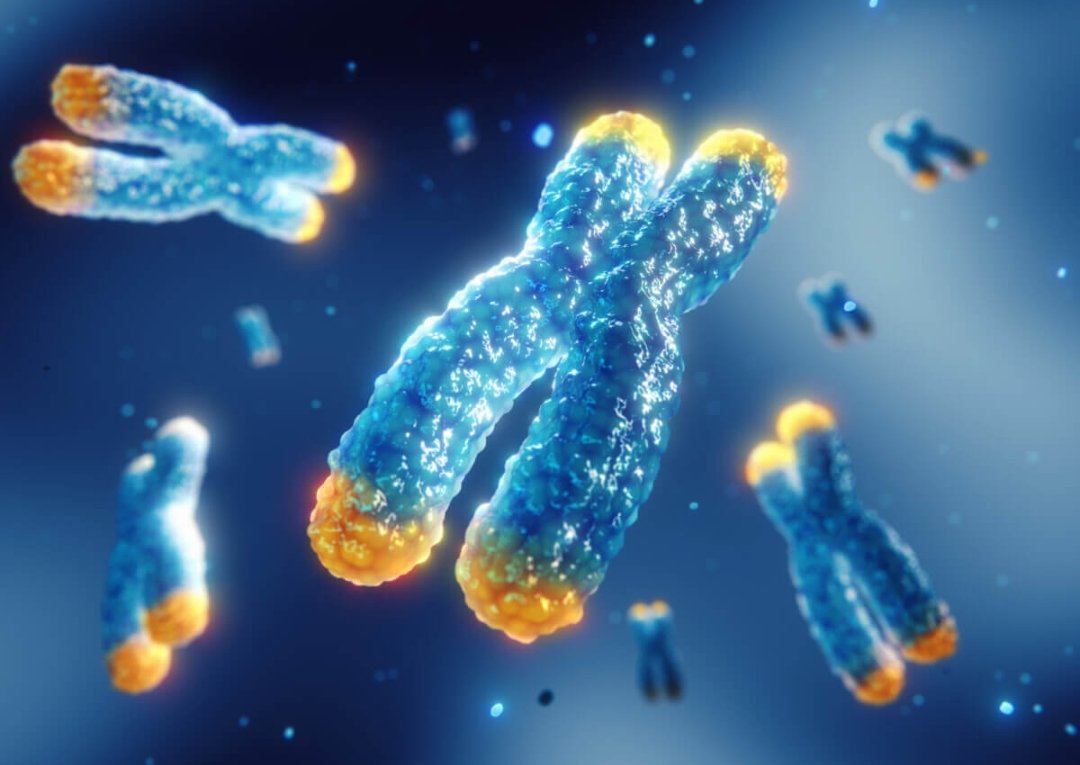
The popular version of telomere science says something simple: your chromosome caps shorten as you age, so lengthening them should slow ageing. An industry of supplements and mail-order tests has been built on that sentence.
So we counted what medicine is actually doing about telomerase, the enzyme that rebuilds those caps. Searching ClinicalTrials.gov on 6 October 2026 returns 188 registered studies that mention telomerase. Of those, 103 involve cancer against 35 involving ageing or cellular senescence. More pointedly: 12 test the telomerase-blocking drug imetelstat, and more than 20 test vaccines that train the immune system to attack telomerase-carrying cancer cells, while only 11 test something meant to raise telomerase.
Clinical medicine is roughly three times more interested in switching this enzyme off than on. That is not an oversight. It is the single most important thing to understand about telomeres, and it is why this article spends as much time on cancer as on ageing.
There is a clock inside every cell of your body, and it has been running since before you were born.
It does not measure minutes or years. It measures divisions — the number of times a cell has copied itself — and it keeps that count in a length of DNA at the very tips of your chromosomes. Each time the cell divides, the clock ticks down a little. When it runs out, the cell stops dividing for good.
These end-caps are called telomeres, and they are one of the closest things biology has to a physical record of aging written into the genome itself. A telomere is a repetitive sequence of DNA — in humans, the six letters TTAGGG repeated thousands of times — that caps the end of each chromosome and protects the genetic information inside from fraying, fusing with its neighbours, or being mistaken for broken DNA by the cell’s repair machinery. The common comparison is to the small plastic or metal sleeve at the end of a shoelace, the aglet, that stops the lace unravelling.
Every time a cell divides, its telomeres grow a little shorter. Once they reach a critically short length, the cell permanently stops dividing — a state called cellular senescence. This is one of the central mechanisms of biological aging, and understanding it has become one of the most active frontiers in genetics research — a story that runs directly into our coverage of whether aging itself can be reversed and why some people live past 100.
The Discovery That Started It All: Blackburn, Greider, and Telomerase
The foundational work on telomeres was done by a trio of scientists whose findings would eventually win the 2009 Nobel Prize in Physiology or Medicine. Elizabeth Blackburn, Carol Greider, and Jack Szostak discovered that chromosomes are protected by telomeres, identified the specific DNA sequence that makes them up, and — crucially — discovered the enzyme that builds and maintains them: telomerase.
The key experiments are precisely dated. In 1961 Leonard Hayflick and Paul Moorhead reported that normal human cells grown in the laboratory divide only a limited number of times and then stop, a ceiling now called the Hayflick limit. In 1973 the Soviet biologist Alexei Olovnikov proposed why: because of the way DNA is copied, the very ends of a chromosome cannot be fully duplicated, so a little is lost every time a cell divides. In 1982 Jack Szostak and Elizabeth Blackburn showed that telomere sequences from one organism could protect artificial chromosomes in yeast, proving that telomeres are a working cap and not just leftover DNA. In 1985 Carol Greider and Elizabeth Blackburn described the enzyme, telomerase, in extracts of a single-celled pond organism called Tetrahymena. In 1988 a team led by Robert Moyzis showed that human telomeres are built from the repeated letters TTAGGG, a sequence that turned out to be shared across vertebrates.
Telomerase is a remarkable molecular machine. It can add new TTAGGG sequences onto the ends of chromosomes, effectively lengthening telomeres and counteracting the shortening that occurs with each cell division. In most adult human cells, telomerase is switched off — which is why telomeres shorten with age. In certain cells where continuous division is essential — stem cells, immune cells, and the cells lining the gut — telomerase remains active, allowing these cell populations to renew themselves throughout life.
In cancer cells, telomerase is also active — and this is one of the keys to cancer’s ability to divide without limit. By maintaining telomere length, cancer cells escape the cellular senescence that would normally stop their proliferation. In a landmark 1994 study, telomerase activity turned up in 90 of 101 tumour samples and in none of 50 samples of normal body tissue. This makes telomerase one of the most studied targets in cancer research — a tension explored in depth in our article on the genetics of cancer.
How Telomere Shortening Causes Aging

The connection between telomere shortening and aging is not simply correlational. Researchers have mapped several mechanisms through which short telomeres actively drive the biological processes we associate with growing old.
When telomeres become critically short, the cell’s DNA damage response is triggered. A study published in Molecular Cell in December 2025, from a laboratory in New York, showed that replicative senescence — the permanent arrest of cell division caused by telomere shortening — depends on a single signalling protein, ATM kinase, which the cell uses to respond to DNA breaks. A few critically short telomeres look like broken DNA ends, activate ATM and trigger senescence even though the chromosomes themselves are intact. Blocking ATM allowed senescent cells to divide again.
Senescent cells do not simply stop dividing and become inert. They enter what researchers call the senescence-associated secretory phenotype — a state in which they release inflammatory molecules, growth factors, and enzymes that affect surrounding tissue. This chronic, low-grade inflammation driven by accumulating senescent cells contributes to conditions including cardiovascular disease, neurodegeneration, metabolic disorders, and elevated cancer risk. The therapeutic response to this — drugs that selectively clear senescent cells — is covered in our article on senolytics.
Studies consistently show that individuals with shorter telomeres have higher rates of age-related diseases across multiple organ systems. Telomere shortening has been linked to changes in brain scans associated with Alzheimer’s disease, with shorter telomeres in blood cells correlating with markers of neurodegeneration in the brain. This connection between peripheral telomere length and brain aging has made telomere measurement an increasingly studied biomarker for cognitive decline risk.
Telo-seq: Seeing Individual Telomeres for the First Time
For most of the history of telomere research, scientists could only measure the average telomere length across all chromosomes in a sample — a number that conceals enormous variation. Individual chromosomes within a single cell can have dramatically different telomere lengths, and those differences may matter significantly for aging and disease. Until recently, measuring them individually was technically impossible.
In June 2024, scientists at the Salk Institute published research in Nature Communications describing a new tool called Telo-seq — developed in collaboration with Oxford Nanopore Technologies — that can measure the length of individual telomeres on specific chromosome arms with unprecedented resolution.
“Previous methods for measuring telomere length were low resolution and rather inaccurate. We could hypothesize about how individual telomeres might play a role in aging and cancer, but it was simply impossible to test those hypotheses. Now we can.”
— Jan Karlseder, senior author, chief science officer and Donald and Darlene Shiley Chair for Research on Aging, Salk Institute. Salk Institute / ScienceDaily, 18 June 2024.
Telo-seq has already revealed that within a single human cell, each chromosome arm can have a different telomere length, and that these lengths can vary significantly in their shortening rates. This means that overall telomere length measurements — the kind used in most epidemiological studies — may be missing important information. A cell might have some very short telomeres on specific chromosomes while its average length appears normal. The short ones, research suggests, may be what actually drives senescence. The technique can also reliably distinguish between telomerase-positive and ALT-positive cancer cell lines, a clinically useful distinction discussed later in this article.
Telomere Inheritance: How Your Chromosome Caps Are Set Before Birth
A study published in Current Biology in 2025, from the University of Pennsylvania, revealed something unexpected about how telomere length is passed on. Working in mice, the researchers crossed strains with different telomere lengths and found that telomeres grew longer in the early embryo only when the mother’s telomeres were short and the father’s were long. In the reverse cross they did not. Which parent a long telomere comes from, not just which genes are inherited, helps set the length a new animal starts life with.
This finding has significant implications for understanding why some individuals are born with longer telomeres than others, and why telomere length — which is substantially heritable — varies so much across the population. It also connects telomere biology to epigenetic research, which has similarly shown that critical developmental windows in early embryogenesis shape biological outcomes that persist for a lifetime.
Whether the same parent-of-origin effect operates in human embryos has not been tested, and any idea of intervening at that stage remains distant and ethically complex.
Can Telomeres Be Lengthened? What the Evidence Actually Shows

This is the question that drives most public interest in telomeres, and it deserves an honest, carefully qualified answer rather than a headline.
For decades, the prevailing assumption was that telomere shortening in adults moves in only one direction: down. Telomeres shorten with each division, and nothing short of cancer-like telomerase reactivation was thought to reverse it. That assumption has been gently challenged by several lines of evidence, though none of them yet amounts to a proven, safe intervention.
A number of lifestyle factors have been associated, in observational studies and some small trials, with slower telomere shortening: regular aerobic exercise, diets rich in antioxidants, stress-reduction practices, and adequate sleep. The effect sizes are generally modest and the evidence is not always consistent, but the direction is encouraging and the interventions are, at worst, harmless.
The clearest evidence that telomeres can be lengthened in people comes from a group who badly need it. In a 2016 trial at the US National Institutes of Health, patients with inherited telomere diseases took danazol, a synthetic hormone, for two years. The trial was stopped early because telomere loss slowed in all 12 patients who could be assessed, and 11 of the 12 actually gained telomere length, by an average of 386 DNA letters. Blood counts improved in 10 of the 12 patients assessed at two years. It was not a healthy-ageing trial, and danazol has side effects, but it showed the enzyme can be nudged in human beings.
The mechanism by which metabolic drugs might affect telomeres is not fully understood. SGLT2 inhibitors work primarily by blocking glucose reabsorption in the kidneys, lowering blood sugar. One hypothesis is that their broader effects on metabolic health could secondarily slow telomere shortening. When we searched PubMed on 6 October 2026, we found no randomised trial reporting that these drugs lengthen telomeres. Confirming whether any of this translates into a reliable anti-aging effect will require considerably more evidence.
Telomeres, Cancer, and the Double-Edged Biology of Telomerase

The relationship between telomeres and cancer illustrates one of the most elegant and frustrating trade-offs in all of biology: the same mechanism that protects us from cancer in the short term contributes to aging in the long term.
Cellular senescence — triggered by short telomeres — is one of the body’s most powerful cancer-suppression mechanisms. When a cell’s telomeres shorten to a critical length, senescence stops it from dividing further, preventing the accumulation of mutations that drive cancer. This is why very short telomeres can, paradoxically, be protective against certain cancers: they trigger the cell-cycle arrest that prevents malignant transformation.
Human genetics backs this up. Some people inherit gene variants that give them slightly longer telomeres throughout life, a natural experiment that researchers can study across hundreds of thousands of people. A 2017 analysis of this kind found that genetically longer telomeres were linked to a higher risk of several cancers, including glioma, lung adenocarcinoma and melanoma, and to a lower risk of coronary heart disease. For most psychiatric, autoimmune and diabetic conditions it found little evidence of any link at all. Longer is not simply better; it trades one set of risks for another.
But cancer cells that escape senescence — typically by reactivating telomerase, or through a mechanism called alternative lengthening of telomeres (ALT) — become effectively immortal. ALT enables a subset of high-risk cancers to maintain telomere length without telomerase, making them resistant to telomerase-targeting therapies and associated with particularly poor outcomes. This is the cruel symmetry at the centre of telomere biology: the cell that refuses to stop dividing is both the engine of cancer and the thing that keeps tissues young.
As discussed in our article on gene editing in 2026, the tools now available for targeting specific genetic mechanisms — including CRISPR-based approaches — are being investigated as ways to selectively disable telomere maintenance in cancer cells without harming healthy tissue. The precision required is considerable, but the therapeutic logic is compelling.
What Medicine Is Actually Doing About Telomerase
If lengthening telomeres were a straightforward route to a longer life, the clinical pipeline would show it. We first searched the public trial registry on 22 August 2026 and repeated the count on 6 October 2026, downloading every record and classifying it by its conditions and treatments. The results point almost entirely in the opposite direction to the popular story.
- 374 registered studies mention telomeres. Of these, 138 are purely observational — they measure telomere length as a marker and give no treatment at all.
- 188 studies involve telomerase. 103 of them concern cancer, against 35 concerning ageing or senescence.
- 12 test the inhibitor imetelstat and more than 20 test telomerase-targeting cancer vaccines. Eleven test activators. Roughly three attempts to suppress the enzyme for every one attempt to boost it.
The reason is the biology described in the previous section, taken to its logical conclusion. Telomerase is what allows a cell to divide without limit. In a healthy adult, most cells switch it off, and that shutdown is one of the body’s defences against cancer. The overwhelming majority of tumours reactivate telomerase precisely because they need it to keep dividing. An enzyme that grants unlimited replication is exactly what a cancer cell is looking for.
So the largest organised effort around telomerase in human medicine is an effort to block it, as a cancer therapy. The much smaller activator programme is concentrated not on healthy ageing but on rare inherited telomere-biology disorders such as dyskeratosis congenita and certain bone-marrow failure syndromes, where telomere maintenance is genuinely broken and the risk calculation is different.
That effort has now produced a medicine. On 6 June 2024 the US Food and Drug Administration approved imetelstat, sold as Rytelo by Geron, the first telomerase inhibitor approved by the FDA, for adults with lower-risk myelodysplastic syndromes, a group of bone-marrow cancers, who depend on blood transfusions. In the IMerge trial of 178 patients, 40 per cent of those given imetelstat went at least eight weeks without a transfusion, against 15 per cent on placebo. Most patients on the drug had serious drops in white cells or platelets, a reminder that blocking telomerase is powerful and not gentle.
There is a second problem the registry exposes. The largest single category of telomere research is observational — studies measuring telomere length as an outcome of something else, such as exercise, diet or stress. That reflects how telomere length is genuinely used in science: as a population-level marker, averaged across many people. Individual telomere measurement is noisy, varies substantially between tissues and between laboratories, and does not carry a reliable prognosis for one person. A direct-to-consumer test reporting your “biological age” from a cheek swab is quantifying something real, but not with the precision the number on the certificate implies.
None of this makes telomeres unimportant. They remain one of the clearest mechanistic links between cellular wear and the diseases of old age. It does mean the popular framing has the arrow pointing the wrong way: for most adults, most of the time, the body has good reason to keep telomerase switched off.
Telomeres and the Brain
One of the more surprising directions in telomere research has been the growing evidence linking telomere length to brain health and cognitive aging. Shorter telomere length in circulating blood cells — a proxy for telomere length in other tissues — has been associated with increased risk of cognitive decline, Alzheimer’s disease, and depression.
If senescent cells in the brain — including senescent glial cells and possibly some neurons — contribute to neuroinflammation and cognitive decline in the way they contribute to aging in other tissues, then telomere- and senescence-targeting interventions could eventually have neurological applications. This remains an active and unsettled area of research rather than an established therapeutic route.
A study from the University of Wisconsin–Madison, published in Science in October 2025, identified a new partner for telomerase. A protein complex called RPA, best known for protecting DNA during copying, turned out to help telomerase add many repeats in one go. Mutations in telomerase linked to inherited short-telomere diseases weakened this help, offering a new explanation for how those diseases arise.
Telomeres and the Hallmarks of Aging
Telomere attrition is one of the twelve hallmarks of aging listed in an influential 2023 review in the journal Cell — the shared cellular processes that drive biological decline across nearly all organisms. But telomere biology may be more central than that list suggests. Reviews of the field have argued that telomere dysfunction does not act as one isolated pathway among many, but as a node that amplifies or accelerates several of the other hallmarks at once: feeding chronic inflammation, impairing stem-cell renewal, and interacting with the mitochondrial and metabolic decline that accompanies age.
The December 2025 Molecular Cell study described earlier also helps explain a long-standing puzzle: why human cells grown in ordinary laboratory air, about 20 per cent oxygen, stop dividing sooner than cells grown at the 3 per cent oxygen found inside the body. At body-like oxygen levels, the researchers found, reactive oxygen molecules lock pairs of ATM proteins together in a form that responds weakly to damage, so cells tolerate short telomeres for longer. This has real implications for how laboratory studies of aging are conducted and how their results should be interpreted — a useful reminder that even our measurements of aging can distort what they measure.
Frequently Asked Questions
Further Reading on Web News For Us
Sources
- Schmidt, T.T., Tyer, C. … Karlseder, J. (2024). High resolution long-read telomere sequencing reveals dynamic mechanisms in aging and cancer. Nature Communications, 15. doi.org/10.1038/s41467-024-48917-7
- Salk Institute / ScienceDaily (18 June 2024). Unveiling Telo-seq: A Breakthrough in Telomere Research on Aging and Cancer. sciencedaily.com
- Phys.org (December 2025). Scientists Can Finally Answer an Old Question About Cellular Aging (Molecular Cell, ATM kinase and replicative senescence). phys.org
- Phys.org (September 2025). Biologists Reveal Telomere Length Inheritance Patterns in Early Embryos (Current Biology). phys.org
- Liao, P., Yan, B., Wang, C. & Lei, P. (2023). Telomeres: Dysfunction, Maintenance, Aging and Cancer. Aging and Disease. PMC11567242
- University of Wisconsin–Madison news coverage of Agrawal et al., Science (October 2025), human RPA as a telomerase processivity factor. sciencedaily.com
- Blackburn, E.H., Greider, C.W., Szostak, J.W. — The Nobel Prize in Physiology or Medicine 2009. nobelprize.org
- Nature — Telomeres Research Hub (continuously updated peer-reviewed collection). nature.com/subjects/telomeres
- ClinicalTrials.gov — registered telomerase and telomere studies (retrieved 22 August 2026)
- Hayflick, L. & Moorhead, P. S. (1961). The serial cultivation of human diploid cell strains. Experimental Cell Research, 25, 585 (DOI: 10.1016/0014-4827(61)90192-6).
- Olovnikov, A. M. (1973). A theory of marginotomy. Journal of Theoretical Biology, 41, 181 (DOI: 10.1016/0022-5193(73)90198-7).
- Szostak, J. W. & Blackburn, E. H. (1982). Cloning yeast telomeres on linear plasmid vectors. Cell, 29, 245 (DOI: 10.1016/0092-8674(82)90109-X).
- Greider, C. W. & Blackburn, E. H. (1985). Identification of a specific telomere terminal transferase activity in Tetrahymena extracts. Cell, 43, 405 (DOI: 10.1016/0092-8674(85)90170-9).
- Moyzis, R. K., et al. (1988). A highly conserved repetitive DNA sequence, (TTAGGG)n, present at the telomeres of human chromosomes. PNAS, 85, 6622 (DOI: 10.1073/pnas.85.18.6622).
- Kim, N. W., et al. (1994). Specific association of human telomerase activity with immortal cells and cancer. Science, 266, 2011 (DOI: 10.1126/science.7605428).
- Stuart, et al. (2025). Attenuation of ATM signaling by ROS delays replicative senescence at physiological oxygen. Molecular Cell, 85, 4667 (DOI: 10.1016/j.molcel.2025.11.006).
- Jeon, Levine & Lampson (2025). A parent-of-origin effect on embryonic telomere elongation determines telomere length inheritance. Current Biology, 35, 5081 (DOI: 10.1016/j.cub.2025.08.052).
- Agrawal, et al. (2025). Human RPA is an essential telomerase processivity factor for maintaining telomeres. Science, 390, 495 (DOI: 10.1126/science.ads5297).
- Townsley, D. M., et al. (2016). Danazol treatment for telomere diseases. New England Journal of Medicine, 374, 1922 (DOI: 10.1056/NEJMoa1515319).
- Haycock, P. C., et al. (Telomeres Mendelian Randomization Collaboration) (2017). Association between telomere length and risk of cancer and non-neoplastic diseases: a Mendelian randomization study. JAMA Oncology, 3, 636 (DOI: 10.1001/jamaoncol.2016.5945).
- Platzbecker, U., et al. (2024). Imetelstat in patients with lower-risk myelodysplastic syndromes who have relapsed or are refractory to erythropoiesis-stimulating agents (IMerge). The Lancet, 403, 249 (DOI: 10.1016/S0140-6736(23)01724-5).
- US Food and Drug Administration (2024). FDA approves imetelstat for low- to intermediate-1 risk myelodysplastic syndromes with transfusion-dependent anemia. fda.gov.
- López-Otín, C., et al. (2023). Hallmarks of aging: an expanding universe. Cell, 186, 243 (DOI: 10.1016/j.cell.2022.11.001).
Baryon. (2026, August 27). Telomeres and Aging: The Science of the Genetic Clocks Inside Every Cell in Your Body. Web News For Us. https://webnewsforus.com/telomeres-and-aging-the-genetic-clocks/
Baryon. “Telomeres and Aging: The Science of the Genetic Clocks Inside Every Cell in Your Body.” Web News For Us, 27 August 2026, https://webnewsforus.com/telomeres-and-aging-the-genetic-clocks/. Accessed 21 October 2026.
2 Responses