In 2000, as the Human Genome Project neared its first draft, researchers ran an informal sweepstake on how many genes they would find. Most bets clustered above 50,000. Many went past 100,000. The reasoning felt sound: humans are complicated, and complicated things need more instructions.
They were wrong, and they have been getting more wrong every year since. We checked the current figures directly against GENCODE, the reference annotation of the human genome used by Ensembl and the wider genomics community. In release 50, the number of protein-coding genes in the human genome stands at 19,442.
That is fewer protein-coding genes than a grapevine. It is roughly the same number as a nematode worm one millimetre long. And the count has drifted downwards across successive releases as annotation improved and predicted genes turned out not to be genes at all. Understanding why that is not embarrassing — why it is in fact the most interesting thing about your genome — is what this article is for.
Right now, inside almost every cell of your body, there is a molecule so long that, uncoiled, it would stretch about two metres. Your body holds tens of trillions of cells, though most are red blood cells, which carry no DNA. Laid end to end, the DNA in all the rest would still reach the Sun and back many times over.
And yet it fits inside a nucleus a few millionths of a metre across, folded so intricately that scientists are still mapping its three-dimensional architecture. It is copied with roughly one mistake per billion letters, and it has been replicating, repairing and regulating itself in one form or another for more than three and a half billion years.
This molecule is deoxyribonucleic acid. DNA. It is the instruction manual for building and running a living organism, and the archive of its evolutionary history.
What DNA Is Made Of: The Four-Letter Alphabet of Life
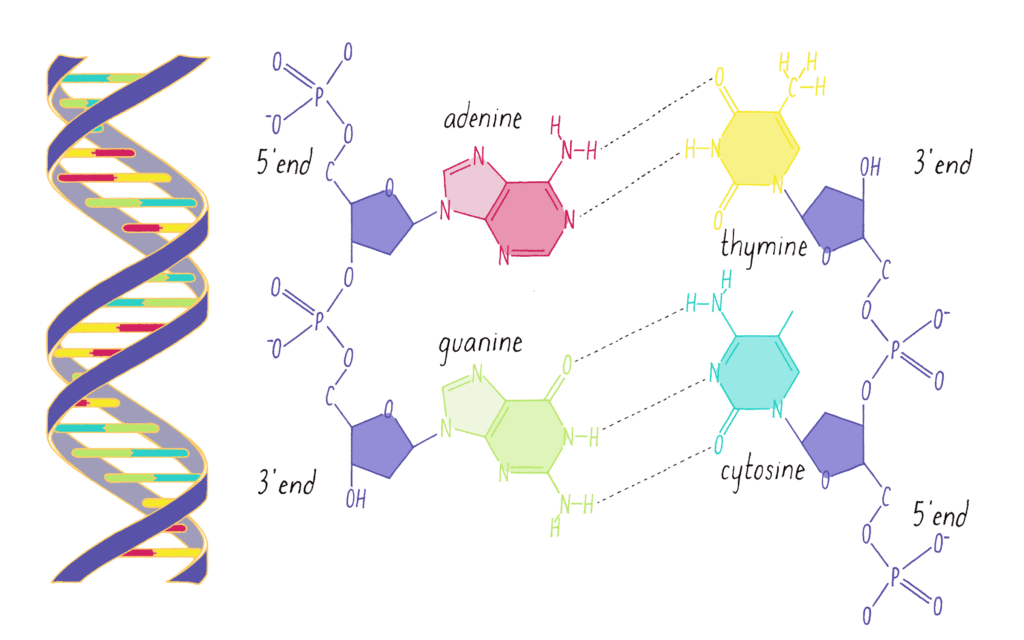
DNA is a polymer, a long chain built from repeating units called nucleotides. Each nucleotide has three parts: a sugar called deoxyribose, a phosphate group, and one of four bases: adenine (A), thymine (T), guanine (G) and cytosine (C). Every instruction for building a protein, and much of the information about when and where to build it, is written in the order of those four letters.
The molecule is double-stranded: two chains running in opposite directions, held together by hydrogen bonds between the bases. Adenine pairs with thymine and guanine with cytosine. In the late 1940s the biochemist Erwin Chargaff noticed that in any DNA sample the amount of A equals the amount of T and G equals C; the double helix later explained why. These complementary pairs are the key to almost everything DNA does.
The complementarity of the two strands means that each strand carries the same information as the other, in complementary form. This is how DNA replicates: when a cell divides, the double helix unzips, and each strand serves as a template for building a new complementary strand. The result is two identical double helices where there was one. The information is preserved.
The human genome contains about 3.2 billion base pairs in each set of chromosomes. Most of it was first read by the Human Genome Project, a 13-year international effort declared complete in 2003, involving researchers from the United States, the United Kingdom, France, Germany, Japan and China, at a cost of about three billion dollars. Today a whole human genome can be read in a day or two for a few hundred dollars.
The Discovery of the Double Helix: Science, Rivalry, and a Stolen Glimpse
DNA was first identified in 1869 by the Swiss chemist Friedrich Miescher, who isolated it from white blood cells in surgical bandages — a material he called “nuclein.” For decades its role in heredity was not suspected. Proteins were considered more likely candidates for the genetic material, being more chemically varied.
The case for DNA shifted in 1944 when the American microbiologist Oswald Avery and his colleagues at the Rockefeller Institute demonstrated that DNA, not protein, was responsible for transforming the characteristics of bacteria — the first direct evidence that DNA carried genetic information. The finding was initially controversial and only gradually accepted.
By the early 1950s, several groups were racing to determine the three-dimensional structure of DNA. At King’s College London, the physicist Maurice Wilkins and the X-ray crystallographer Rosalind Franklin were producing X-ray diffraction images of DNA fibres of extraordinary quality. At Cambridge, James Watson and Francis Crick were building physical models of possible structures, guided by Chargaff’s ratios, by Linus Pauling’s model-building techniques, and — crucially — by Franklin’s X-ray data.
The story of how that data reached Watson and Crick is one of science’s most enduring controversies. Photograph 51 — Franklin’s clearest X-ray image of DNA, showing unmistakably the features of a helix — was shown to Watson without Franklin’s knowledge by Wilkins, her estranged colleague. Watson has acknowledged that seeing it was a turning point. He and Crick published their model of the double helix in Nature on 25 April 1953. Franklin’s contribution received only a brief acknowledgment.
In 1962, Watson, Crick, and Wilkins received the Nobel Prize in Physiology or Medicine. Rosalind Franklin had died of ovarian cancer in 1958, at the age of 37. Nobel Prizes are not awarded posthumously. She did not receive one. Franklin’s work paved the way for Watson and Crick’s breakthrough, and the question of whether she was adequately credited has been debated ever since.
The double helix paper was immediately recognised as a landmark. It did not just describe a structure — it explained a mechanism. In one of the most famous understatements in the history of science, Watson and Crick noted in their 1953 paper:
“It has not escaped our notice that the specific pairing we have postulated immediately suggests a possible copying mechanism for the genetic material.”
— James Watson and Francis Crick, “Molecular Structure of Nucleic Acids,” Nature, 25 April 1953.
The complementary base pairing meant that replication was self-evident. The structure explained the function.
How DNA Is Organised: From Nucleotides to Chromosomes
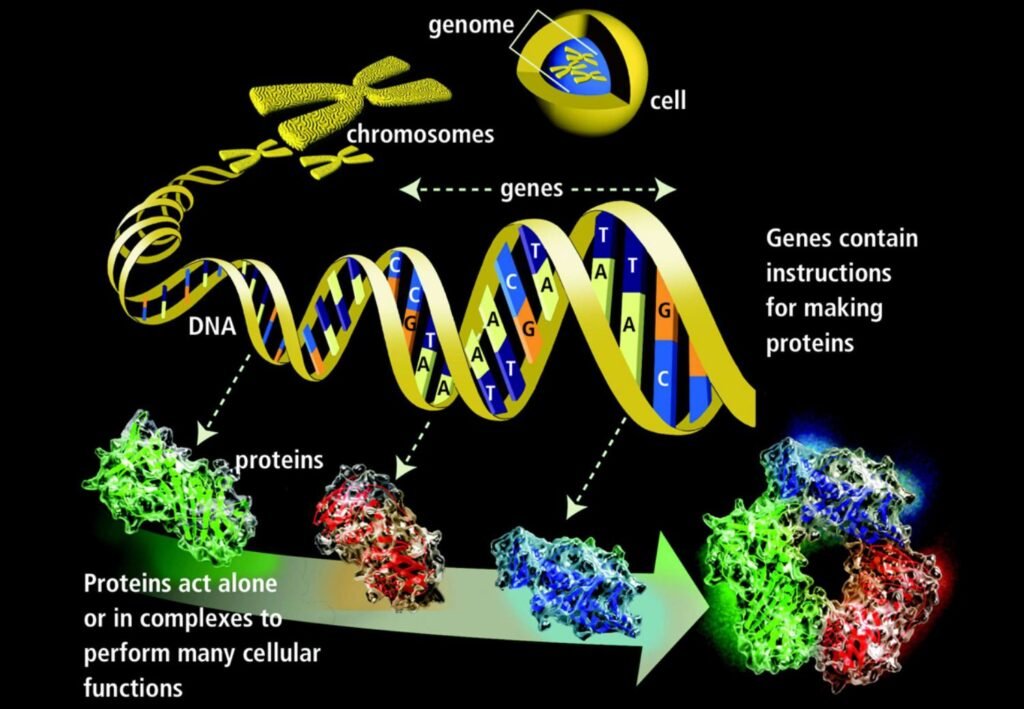
The first level of packaging involves proteins called histones. DNA wraps around histone protein complexes — groups of eight histone proteins — like thread around a spool, forming structures called nucleosomes. Each nucleosome contains about 147 base pairs of DNA wrapped roughly twice around the histone octamer. The nucleosomes are connected by linker DNA, giving the arrangement the appearance of beads on a string when viewed under an electron microscope.
The beads are then folded into progressively higher-order structures, up to the fully condensed chromosomes visible under a light microscope when cells divide. Packing is not uniform: tightly packed heterochromatin tends to keep genes silent, while loosely organised euchromatin leaves them accessible.
This packaging is regulatory as well as structural. Chemical marks on histones and on DNA itself form a layer of gene control above the sequence, called epigenetics, where environment and experience can leave marks without changing a letter. We explore it in our article on epigenetics: how your environment shapes the way your genes work.
Human DNA is organised into 23 pairs of chromosomes — 46 in total in most cells — held in the cell nucleus. Twenty-two pairs are autosomes, carrying the general instructions for building the human body. The 23rd pair are the sex chromosomes: XX in females, XY in males. Each chromosome is a single continuous DNA molecule, extraordinarily long, accompanied by the proteins needed to package and regulate it.
The Central Dogma: How DNA Becomes Life
The double helix explained how genetic information is stored and copied. How that information actually does anything was worked out over the next two decades, in what Francis Crick called the central dogma of molecular biology: information flows from DNA to RNA to protein.
The first step is transcription. When a gene needs to be expressed, the relevant section of DNA is unwound and an enzyme called RNA polymerase reads the DNA sequence and produces a complementary molecule of messenger RNA (mRNA) — a single-stranded copy of the gene written in the closely related four-letter alphabet of RNA (with uracil replacing thymine). The mRNA carries the genetic message out of the nucleus and into the cytoplasm.
The second step is translation. In the cytoplasm, ribosomes read the mRNA and use it as a template to assemble proteins, chains of amino acids whose sequence determines their shape and function. The correspondence between three-letter codons and amino acids, the genetic code, was cracked chiefly by Marshall Nirenberg and Har Gobind Khorana between 1961 and 1966; they shared the 1968 Nobel Prize in Physiology or Medicine with Robert Holley, who determined the structure of transfer RNA.
The central dogma was once understood as a strict one-way flow. Reality is more complex. Retroviruses such as HIV use an enzyme called reverse transcriptase to copy their RNA genome back into DNA, which integrates into the host cell’s chromosomes, and some regulatory RNAs feed back to modify DNA packaging and gene expression.
Much of the genome once dismissed as junk is transcribed into non-coding RNAs, some of which clearly do regulatory work. The central dogma is not wrong; it is a simplified model of a richer reality. For RNA’s expanding role, see our article on RNA: the forgotten molecule that controls everything.
DNA Replication: Copying Three Billion Letters with Extraordinary Fidelity
Every time a cell divides, it must copy its entire genome — all 3.2 billion base pairs — with sufficient accuracy that the daughter cells function correctly. This is DNA replication, and it is one of the most remarkable molecular processes in biology.
Replication begins at specific locations in the genome called origins of replication. In humans, there are tens of thousands of these origins, allowing replication to proceed simultaneously from multiple starting points — essential given that copying the entire genome from a single origin would take far too long. At each origin, the double helix is unwound by enzymes called helicases, creating a replication bubble with two replication forks moving in opposite directions.
DNA polymerase — the enzyme that synthesises new DNA — reads the exposed template strand and adds complementary nucleotides one by one, building the new strand in the 5′ to 3′ direction. Because the two strands of DNA run antiparallel, one new strand (the leading strand) is synthesised continuously, while the other (the lagging strand) must be synthesised in short fragments called Okazaki fragments that are later joined together.
The error rate of DNA polymerase is approximately one mistake per 100,000 nucleotides — already impressively low. But additional proofreading mechanisms, built into the polymerase itself and supplemented by mismatch repair pathways that scan freshly replicated DNA for errors, reduce the final error rate to approximately one mistake per billion base pairs. Over the entire genome, that means only a handful of errors per cell division — a level of fidelity that allows accurate transmission of genetic information across billions of cell divisions and thousands of generations of organisms.
When these repair mechanisms fail — as they do in certain cancers and inherited disorders — the mutation rate rises, DNA damage accumulates, and cells begin to malfunction. Understanding replication fidelity is central to understanding cancer at the molecular level. For the connection between DNA repair failures and cancer biology, see our article on the genetics of cancer: how DNA mutations drive the disease.
Telomeres: The End of the Chromosome — and a Clock for Ageing
Every time a linear chromosome is replicated, there is a problem at the very ends. DNA polymerase cannot copy the last few nucleotides of a linear template — a consequence of how it synthesises DNA — which means that chromosomes become slightly shorter with each cell division. Left unchecked, this progressive shortening would eventually erode essential genes and cause cellular dysfunction.
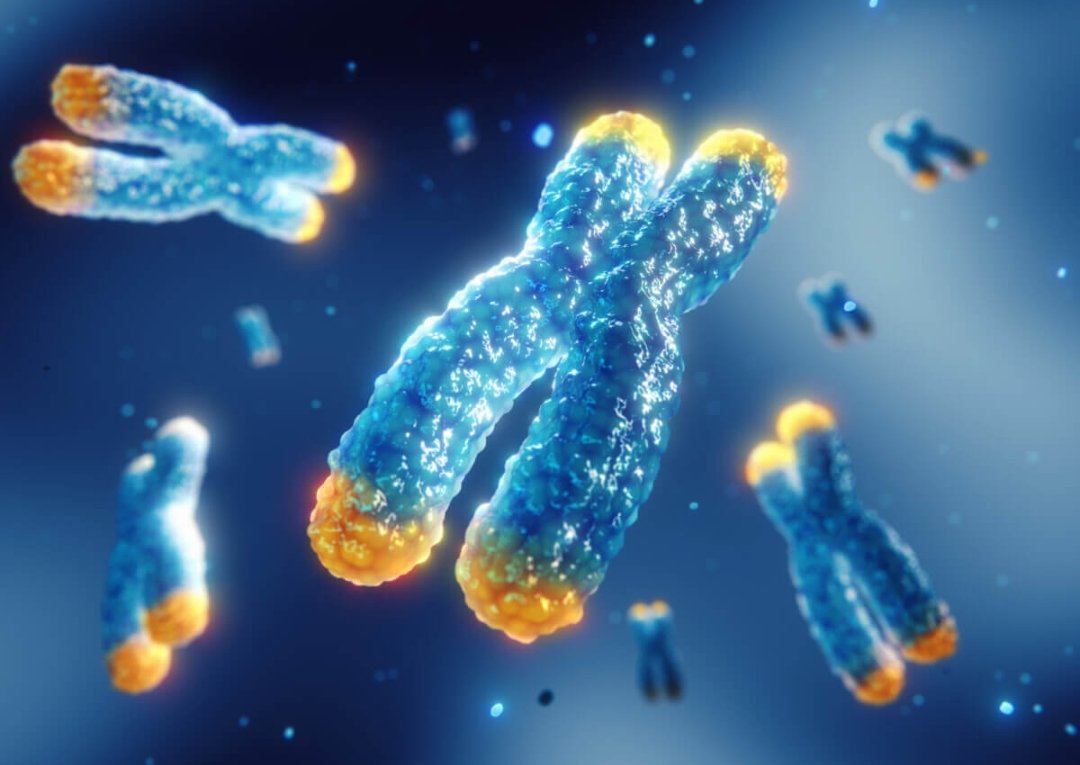
The solution is telomeres: repeated sequences of DNA — TTAGGG in humans, repeated thousands of times — that cap the ends of chromosomes like the plastic tips on shoelaces. Telomeres are not genes. Their loss does not immediately damage functional DNA. Instead, they act as buffers, sacrificing their own length to protect the coding regions of chromosomes. When telomeres become critically short, the cell receives a signal to stop dividing — entering a state called senescence — or to undergo programmed cell death.
In 1961 Leonard Hayflick showed that normal human cells can divide only a limited number of times, the Hayflick limit; telomere shortening was later identified as one of its main causes and is now counted among the hallmarks of ageing. The enzyme telomerase can extend telomeres, resetting the counter. It is active in stem cells and germ cells, but largely absent from most adult tissues.
Cancer cells exploit this. Telomerase reactivation is a key step in the immortalisation of cancer cells, allowing them to maintain their telomeres and continue to proliferate indefinitely. Approximately 85 to 90 percent of human cancers show evidence of telomerase reactivation. The remaining 10 to 15 percent use an alternative mechanism called the ALT pathway — Alternative Lengthening of Telomeres — which relies on homologous recombination rather than telomerase.
A December 2025 study in Nature Communications found that filaments of actin inside the nucleus help telomerase hold on to chromosome ends, a process regulated by the kinases ATR and mTOR. For the full story of telomeres and ageing, see our article on telomeres and ageing: the genetic clocks inside every cell.
What Only 2% of DNA Does — and What the Other 98% Is For
One of the most important revisions in genomics of the past two decades concerns what most of the genome actually does. When the Human Genome Project was completed in 2003, one of the most startling findings was that only about 2 percent of the human genome codes for proteins — the sequences that carry instructions for building the molecular machines of life. The rest, initially labelled “junk DNA,” appeared to have no function.
That conclusion was too hasty. In 2012 the ENCODE project reported that at least 80 per cent of the genome shows some biochemical activity, such as binding by proteins or production of RNA, but many researchers argued that activity is not the same as function. Evolution offers a stricter test: a 2023 comparison of 240 mammal genomes by the Zoonomia consortium found that at least 10.7 per cent of the human genome is unusually conserved, most of it outside protein-coding genes. Non-coding DNA is clearly not all junk; how much of it matters is still argued over.
The non-coding genome contains regulatory sequences — enhancers, silencers, insulators, and promoters — that control when and where protein-coding genes are expressed. It contains the instructions for thousands of types of non-coding RNA molecules: microRNAs that silence specific mRNAs after transcription, long non-coding RNAs that scaffold regulatory complexes and modulate chromatin structure, ribosomal RNAs that form the structural and catalytic core of ribosomes, and transfer RNAs that carry amino acids to the ribosome during translation. It contains the origins of replication and the centromeres and telomeres essential for chromosome stability. And it contains evolutionary fossils — remnants of ancient viruses, transposable elements, and sequences from our deep evolutionary past whose precise functions are still being discovered.
DeepMind’s AlphaGenome, released in 2025, represents the most powerful computational attempt yet to decode this regulatory genome — predicting how any DNA sequence influences gene expression across different cell types. The same transformer architecture that powers modern language models is now being trained to read the grammar of the genome, a convergence explored in our article on how large language models actually work — the AI systems that learned to read text are now learning to read DNA.
DNA Damage and Repair: The Genome’s Defence Systems
DNA is not chemically inert. It is under constant assault from sources both external — ultraviolet radiation, ionising radiation, environmental chemicals — and internal — reactive oxygen species produced by the cell’s own metabolism, errors in replication, and spontaneous chemical reactions that modify bases. Estimates suggest that each cell sustains between 10,000 and 100,000 DNA lesions per day.
The vast majority of these are repaired before they cause harm, by an array of DNA repair pathways of remarkable sophistication:
Base excision repair (BER) corrects small chemical modifications to individual bases — oxidised bases, deaminated cytosines, alkylated bases — by excising the damaged base and resynthesising the correct sequence.
Nucleotide excision repair (NER) removes bulkier distortions in the double helix, including the pyrimidine dimers caused by ultraviolet radiation. Defects in NER cause xeroderma pigmentosum, a condition in which extreme sensitivity to sunlight leads to very high cancer rates.
Mismatch repair (MMR) corrects base pair mismatches and insertion-deletion loops that escape polymerase proofreading during replication. Defects in MMR dramatically increase mutation rates and are associated with Lynch syndrome, which predisposes to colorectal and other cancers.
Double-strand break repair addresses the most dangerous form of DNA damage — breaks in both strands of the helix simultaneously. Two major pathways exist: homologous recombination, which uses the sister chromatid as a template for accurate repair, and non-homologous end joining, which is faster but error-prone. The BRCA1 and BRCA2 proteins, mutations in which dramatically increase breast and ovarian cancer risk, are key components of the homologous recombination pathway.
When damage outpaces repair, or repair systems themselves fail, mutations accumulate. Most are harmless and some kill the cell, but a few change its behaviour in ways that can lead to uncontrolled growth: cancer. For how gene-editing tools now build on this knowledge, see our article on what is CRISPR? the gene editing revolution rewriting human medicine.
How Many Genes Do You Actually Have?
Most explanations of DNA quietly avoid this question, because the honest answer keeps changing. Here is the current state of the reference annotation, taken directly from GENCODE release 50, the gene set that underpins Ensembl and most human genomics work:
- Protein-coding genes: 19,442. The genes that carry instructions for building proteins — the classic definition of a gene.
- Long non-coding RNA genes: 35,885. Nearly twice as many as protein-coding genes. These are transcribed into RNA that never becomes a protein.
- Small non-coding RNA genes: 7,608. Including the microRNAs that regulate which genes are switched on.
- Pseudogenes: 14,702. Broken copies of genes that no longer function — genomic fossils of your evolutionary history.
- Total annotated genes: 78,733. Of which only a quarter code for proteins at all.
The first thing to notice is that the majority of your genes do not make proteins. For most of the twentieth century, a gene was defined as a stretch of DNA that specifies a protein. By that definition, three quarters of what we now annotate as genes would not count. The definition has had to change to fit the evidence, which is usually a sign that something important was misunderstood.
The second is more surprising. Those 19,442 protein-coding genes produce 278,455 protein-coding transcripts, and ultimately 172,117 distinct proteins. More than 16,000 genes — over 80 per cent of them — make more than one protein. A single gene is read, cut and reassembled in different combinations depending on the cell type, the moment, and the signal it receives.
This is why the gene-count disappointment of 2000 was a misreading of the question. Complexity in the human genome does not come from having many instructions. It comes from how flexibly a modest set of instructions is used. A grapevine has more protein-coding genes than you do and cannot read this sentence. The difference is not inventory, it is regulation — some of which the tens of thousands of non-coding RNA genes may be doing.
One honest caveat: these are annotation figures, not physical constants. They shift with each release as evidence accumulates; the protein-coding count has slowly fallen while the non-coding count has climbed. Anyone quoting a fixed number for human genes, including the widely repeated 20,000, is quoting a snapshot of an ongoing argument.
The Genome Was Not Actually Finished in 2003
There is a detail most popular retellings leave out. The Human Genome Project did not finish the genome. It finished the parts that the technology of the time could read, and the distinction matters.
What was declared complete in 2003 was the euchromatic fraction — the loosely packed, gene-rich regions where sequencing worked well. Roughly 8 per cent of the genome was left unfinished. These were not trivial leftovers. They included every centromere, the dense repetitive cores that chromosomes are pulled apart by during cell division; the short arms of all five acrocentric chromosomes; and long stretches of recently duplicated sequence. They were omitted because they consist of the same motifs repeated thousands of times, and short-read sequencing cannot reassemble a passage that looks identical to a thousand other passages.
That gap stayed open for nineteen years. It was closed in 2022, when the Telomere-to-Telomere Consortium published a genuinely gapless sequence of a human genome, called T2T-CHM13: 3.055 billion base pairs, complete for every chromosome except Y. It added close to 200 million base pairs that had never been read, containing 1,956 predicted genes, of which 99 are predicted to code for protein. It also corrected errors that had been sitting in the reference, uncorrected, for two decades.
The second limitation is arguably more important. A reference genome is a single sequence assembled largely from a few donors, so human variation gets recorded as deviation from a handful of people, which is scientifically awkward and, for whose genomes are well understood, not neutral.
The answer to that is the pangenome. In 2023 the Human Pangenome Reference Consortium published a first draft built from 47 phased, diploid assemblies of genetically diverse individuals, rather than one composite sequence. Relative to the existing reference it added 119 million base pairs of previously missing sequence and 1,115 gene duplications, most of the extra material arising from structural variation — large insertions, deletions and rearrangements that a single linear reference is poorly equipped to represent.
The practical effect is measurable rather than rhetorical. Analysing the same short-read data against the pangenome instead of the old reference cut errors in small-variant discovery by 34 per cent and roughly doubled the number of structural variants detected per haplotype. For anyone whose ancestry is poorly represented in the original reference, that is the difference between a diagnostic test that works and one that quietly does not.
The Human Genome Project and What It Changed
The Human Genome Project, launched in 1990, was one of the most ambitious scientific undertakings in history, and its reference sequence became the foundation for nearly all later genomics.
Its immediate consequences were large. On the information available in 2003 it put the count at about 20,000 to 25,000 protein-coding genes, far fewer than many scientists had predicted. It provided the reference against which individual genomes could be compared, and it drove the sequencing technology that made genomes cheap.
The ENCODE project, the 1000 Genomes Project, UK Biobank, the All of Us Research Program and many national genomics initiatives all built on it. Genome-wide association studies have linked thousands of genetic variants to hundreds of diseases, and newborn screening programmes now test for dozens of genetic conditions.
The tools of gene editing, from the CRISPR system behind Casgevy, the first approved CRISPR-based therapy, to the base and prime editors moving through clinical trials, all depend on knowledge of DNA structure, function and repair that the project and the science it enabled provided. The same knowledge underpins our understanding of what DNA reveals about true human origins and where gene editing stands in 2026.
Frequently Asked Questions
Further Reading on Web News For Us
Sources
- Watson, J.D. & Crick, F.H.C. (1953). Molecular structure of nucleic acids. Nature, 171, 737–738. doi.org/10.1038/171737a0
- Nature Education — Discovery of DNA Structure and Function: Watson and Crick
- Science History Institute — Crick, Franklin, Watson and Wilkins
- NIH Profiles in Science — The Discovery of the Double Helix
- PMC / NCBI — Celebrating 70 Years of DNA Discovery (2024)
- Journal of Biological Chemistry — Noncoding RNAs Orchestrating the Central Dogma (2025)
- International Journal of Molecular Sciences — The RNA Revolution in the Central Dogma (2024)
- Nature Communications — Nuclear Actin and Telomerase Recruitment (December 2025)
- National Human Genome Research Institute — Human Genome Project
- NCBI — Human Genome Resources
- Broad Institute — Human Genome Project Overview
- GENCODE release 50 — human gene annotation statistics, EMBL-EBI (checked 2 October 2026)
- Sender, R., Fuchs, S. & Milo, R. (2016) — Revised estimates for the number of human and bacteria cells in the body. PLoS Biology 14(8):e1002533.
- Christmas, M.J. et al. (Zoonomia Consortium, 2023) — Evolutionary constraint and innovation across hundreds of placental mammals. Science 380:eabn3943.
- 1000 Genomes Project Consortium (2015) — A global reference for human genetic variation. Nature 526:68-74.
Baryon. (2026, June 9). What Is DNA? The Complete Guide to the Molecule of Life. Web News For Us. https://webnewsforus.com/what-is-dna-complete-guide/
Baryon. “What Is DNA? The Complete Guide to the Molecule of Life.” Web News For Us, 9 June 2026, https://webnewsforus.com/what-is-dna-complete-guide/. Accessed 13 October 2026.
9 Responses