
Every statement of the Fermi paradox begins the same way: the galaxy contains billions of planets, so where is everybody? We decided to check the first half of that sentence against the catalogue.
The NASA Exoplanet Archive currently lists 6,375 confirmed planets. Filter that down to worlds that are both rocky — smaller than 1.6 Earth radii — and receiving roughly Earth-like starlight, and the number falls to 30.
Thirty. Not thirty billion, not thirty million. Thirty individual objects that we have actually found and that could plausibly hold liquid water. The billions are a statistical extrapolation from a heavily biased sample, and the distinction between what we have counted and what we have inferred is the sharpest tool available for thinking clearly about this question.
Picture this. You are sitting in a cafeteria in 1950, having lunch with some of the greatest physicists alive, and someone makes a casual joke about aliens. You laugh — and then a thought hits you so hard it stops the conversation cold. If the universe is as vast and old as we know it to be, filled with billions of stars and countless planets, some of which must have hosted life long before Earth even formed — then where is everybody?
That was the moment Enrico Fermi — the physicist who once ranked Ettore Majorana among the rare geniuses of history, alongside Galileo and Newton — asked the question that would become one of the deepest unsolved problems in science. We call it the Fermi Paradox. And more than 75 years later, we still do not have an answer.
Where the Question Came From
The Fermi Paradox did not begin as a formal theory. In the summer of 1950, over lunch at Los Alamos with colleagues including Edward Teller, Fermi was discussing a spate of flying-saucer reports when he suddenly asked, in effect, “But where is everybody?” The question was half a joke — and half a devastating observation about the emptiness of the sky.
Fermi was one of the most formidable estimators in the history of physics, and he could see at a glance that the numbers did not fit. Decades later, the astronomers Michael Hart and Frank Tipler turned that lunchtime remark into a rigorous argument: if interstellar travel is possible at all, a single expanding civilisation should have reached every corner of the galaxy long ago. Their work is why the Fermi Paradox is treated today as a genuine scientific problem rather than idle speculation.
The Scale of the Problem
To understand why the silence of the universe is so strange, you need to sit with some numbers. Our galaxy contains somewhere between 200 and 400 billion stars. Astronomers now estimate that most of them host planets — meaning there could be tens of billions of Earth-like worlds in the Milky Way alone.
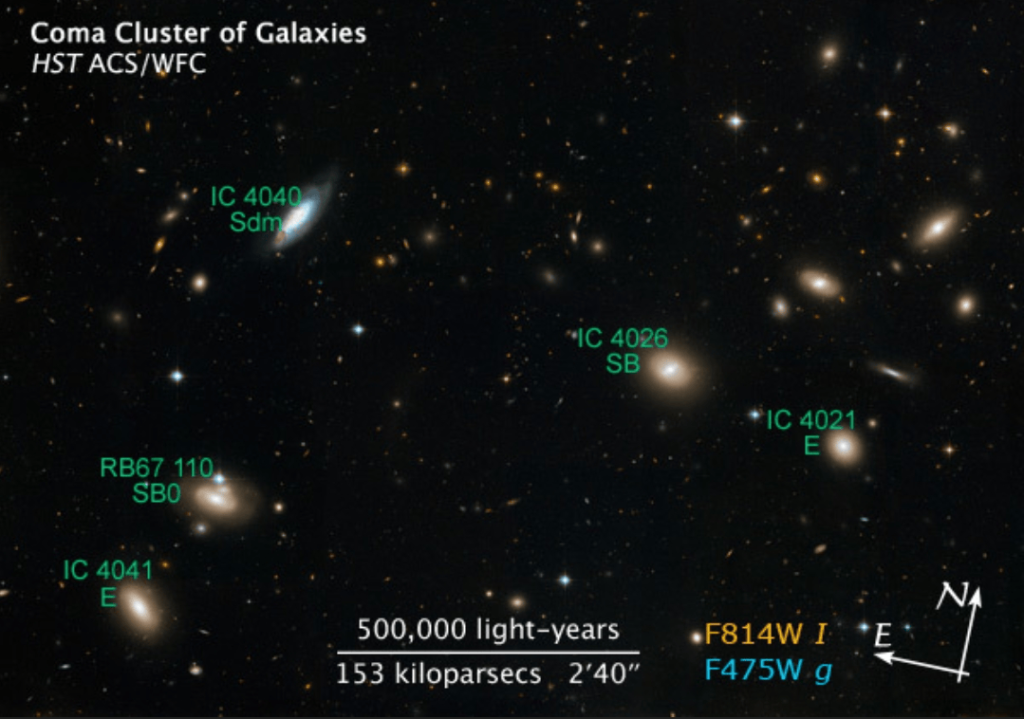
The galaxy is roughly 13.5 billion years old. Earth is only 4.5 billion years old — meaning civilisations had billions of years to arise before we ever appeared. If even a tiny fraction survived long enough to build radio technology or launch probes across the stars, the galaxy should be humming with signals, artefacts, and evidence of intelligent activity.
It is not. The sky is quiet. Our searches have found nothing. That gap between what we would expect and what we actually find is the Fermi Paradox.
The Paradox at Its Sharpest: Self-Replicating Probes
The most unsettling version of the Fermi Paradox does not even require aliens to travel far. In the 1940s, the mathematician John von Neumann showed that a machine could, in principle, build copies of itself from raw materials. A single civilisation that launched one such self-replicating probe could, in only a few million years — a heartbeat against the galaxy’s age — seed every star system with its descendants.
A few million years is nothing next to the billions available. So even if star travel is slow and no civilisation ever ventures far in person, their machines should already be here. That our solar system shows no sign of them is what makes the silence so much harder to explain away.
The Drake Equation: Putting Numbers to the Mystery
In 1961, astronomer Frank Drake tried to estimate how many communicating civilisations might exist in our galaxy right now. His equation multiplies a chain of factors: how often stars form, how many have planets, how many of those planets can support life, how often life actually starts, how often it becomes intelligent, how often intelligence becomes technological, and how long such civilisations last.
The trouble is that most of these terms are guesses. Depending on the numbers you choose, the answer ranges from less than one civilisation to millions. The equation does not solve the paradox. It clarifies exactly where our ignorance lies — which is, in its own way, valuable.
In 2018 three researchers at the University of Oxford’s Future of Humanity Institute, Anders Sandberg, Eric Drexler and Toby Ord, took that ignorance seriously. Instead of plugging a single best guess into each term, they carried the full range of scientific uncertainty through the equation, including models of how hard the origin of life might be. The result changed character completely: a substantial probability that there is no other intelligent life in the observable universe at all. On that reading the silence is not a paradox but roughly what we should expect. Their paper is a widely discussed preprint rather than a settled result, but it shows how much of the paradox depends on treating guesses as if they were measurements.
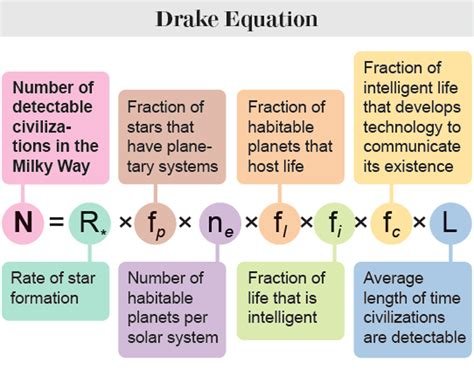
What the Drake Equation does establish is that the question of whether we are alone is not mystical — it is scientific, with a definite answer. Either civilisations are extraordinarily rare, or they exist in numbers and are choosing not to, or cannot, communicate. The universe is giving us one of those two answers. We just do not know which.
What We Have Actually Found
The Drake equation above multiplies estimates together. It is worth setting alongside it the plain count of what has been observed, because the two are often blurred in discussions of this paradox.
Querying the NASA Exoplanet Archive on 8 October 2026 returns 6,375 confirmed planets. Applying two conditions that any Earth-like world would need to satisfy — a radius below 1.6 Earth radii, which is roughly where planets stop being rocky and start being gas-enveloped, and stellar heating between 0.35 and 1.75 times what Earth receives — leaves 30, under half of one per cent of the total.
Look closer at the thirty and the list narrows further. Twenty-seven orbit red dwarfs, stars cooler than about 4,000 degrees; not one orbits a star like the Sun. Twelve were found by the wobble they cause in their star rather than by passing in front of it, so their sizes have never been measured; the archive estimates them from their masses. The nearest, Proxima Centauri b, is just over four light-years away. The furthest are hundreds of light-years off, known only as faint dips in a star’s light.
Those thirty are not thirty Earths. They are thirty objects whose size and received starlight do not immediately rule out surface liquid water. We generally do not know their atmospheres, their compositions, whether they have magnetic fields, or whether they are tidally locked. Most orbit red dwarfs, which flare violently in ways that may strip atmospheres away. The filter is a rough sieve, not a verdict.
The sample is also deeply biased, and in a direction that matters. Both dominant detection methods favour large planets orbiting close to their stars: transits need a planet to pass in front of its star from our viewpoint and to block a detectable fraction of its light, while radial velocity needs a planet massive enough to visibly tug the star. An Earth-sized world in an Earth-like orbit around a Sun-like star is close to the hardest possible target for either technique. Our catalogue is not a census of the galaxy; it is a census of what our instruments can currently see.
This cuts both ways for the paradox, which is exactly why it is worth stating precisely. The bias means the true number of temperate rocky worlds is certainly far higher than thirty — the extrapolation to billions is reasonable. But it also means that the confident opening premise of every Fermi discussion rests on inference rather than observation, while the silence on the other side of the equation is a direct measurement. We have inferred the planets. We have observed the silence.
The Leading Explanations
The Great Filter
One of the most sobering ideas is the Great Filter, proposed by the economist Robin Hanson. Somewhere along the path from simple chemistry to a galaxy-spanning civilisation, there may be a step so difficult that almost no species makes it through.
The optimistic reading says the filter is behind us — perhaps the origin of life itself, or of complex cells, was the near-impossible leap, and we are among the rare survivors. The terrifying reading says the filter lies ahead: that advanced civilisations routinely destroy themselves through war, engineered pathogens, runaway artificial intelligence, or something we have not yet imagined. In that version, the silence is a warning, and we are simply next in a long line of civilisations that did not make it.
The Rare Earth Hypothesis
A related idea holds that simple life may be common but complex, intelligent life vanishingly rare. The Rare Earth hypothesis argues that our existence depended on an improbable stack of lucky conditions: a stable star, a planet in the habitable zone, plate tectonics, a large stabilising Moon, and a giant like Jupiter to shield us from comets.
If even a few of those ingredients are genuinely uncommon, the galaxy could teem with microbes and yet hold almost no one to talk to. Under this view, there is no paradox at all — just a universe where bacteria are ordinary and minds are miracles.
The Zoo Hypothesis
A more hopeful possibility is that advanced civilisations are out there but have deliberately chosen not to contact us — watching us develop in isolation, the way a nature reserve shields wildlife from interference. We have not been contacted, in this view, not because no one is there, but because we are not yet ready.
The weakness is that it requires every advanced civilisation to hold to the same non-interference policy, without exception, across billions of years. Even among humans, a unanimous global agreement is essentially impossible. It seems unlikely that countless independent civilisations would all stay silent forever, without a single rogue actor breaking ranks.
The Dark Forest
Darker still is the Dark Forest hypothesis, popularised by the novelist Liu Cixin. It imagines the universe as a forest at night in which every civilisation is a hunter. Because no one can be sure whether a stranger is friendly or lethal, and because the cost of guessing wrong is annihilation, the safest strategy is to stay silent and, if you detect anyone else, to strike first.
If this logic holds, the silence is not empty but deliberate — a galaxy full of listeners, none daring to speak. It is speculative, but it captures why broadcasting our location, as humanity has occasionally done, strikes some scientists as reckless.
Perhaps We Are Simply Early
There is also a quietly radical answer: maybe no one is out there yet because we are among the first. The universe is still young, and star formation will continue for trillions of years. Some cosmologists argue that early-arriving civilisations like ours should expect an empty sky, simply because the great wave of intelligence has barely begun.
The idea has been worked through with numbers. In 2016 Avi Loeb and colleagues calculated that, unless planets around small, long-lived red dwarfs are hostile to life, life is most likely to exist near such stars ten trillion years from now, which would make us extraordinarily premature. In 2021 the economist Robin Hanson and colleagues turned the same observation into a model of “loud” aliens, civilisations that expand and visibly change the regions they occupy. Their fit suggests that more than 99 per cent of advanced life should appear after today, and that if loud aliens grow out of quiet ones, quiet civilisations must be rare too, which they called bad news for SETI.
If that is right, the silence is not a warning or a mystery but a matter of timing — and the galaxy we find empty today may be crowded a billion years from now.
They Are Talking — We Just Cannot Hear

Perhaps the most practical explanation is simply that our detection technology is inadequate. We have listened mainly for radio waves for less than a century — an eyeblink in cosmic time. Advanced civilisations may communicate by means we have not discovered: neutrino beams, gravitational waves, or physics we do not yet possess.
This is less comforting than it sounds, because it means the absence of detected signals tells us very little. We might be a civilisation in 1800, holding up a candle and concluding that no city on Earth uses electricity.
Or They Simply Turned Inward
A final possibility is that mature civilisations lose interest in the stars. The transcension hypothesis suggests advanced societies migrate inward — into virtual worlds, miniaturised computation, or physics we cannot picture — rather than outward across the galaxy. A civilisation living inside its own simulated universe would have little reason to broadcast and little need to expand.
Combined with the sober likelihood that some civilisations simply destroy themselves, this paints a galaxy where intelligence arises, flares briefly, and then vanishes or disappears from view. Every proposed answer to the Fermi Paradox, in the end, is really a claim about how common minds are and how long they last.
Technosignatures: Dyson Spheres and the Kardashev Scale
If aliens are not sending messages, they might still leave fingerprints — technosignatures, the physical traces of large-scale engineering. In 1964, the astronomer Nikolai Kardashev proposed ranking civilisations by the energy they command: a Type I harnesses the power of its planet, a Type II the full output of its star, and a Type III the energy of an entire galaxy.
To capture a whole star’s energy, physicist Freeman Dyson suggested a civilisation might build a vast shell or swarm of collectors around it — a Dyson sphere. Such a structure would swallow visible light and re-radiate waste heat as infrared, so astronomers have searched for stars glowing strangely in the infrared as possible signs of cosmic engineering. None has survived scrutiny, but the hunt for technosignatures has become a serious branch of the search — and by definition, we are not yet even a Type I civilisation.
The most thorough recent hunt shows how such searches usually end. In 2024 Project Hephaistos, led from Uppsala University, sifted five million stars in data from the Gaia, 2MASS and WISE surveys and flagged seven red dwarfs with puzzling infrared excess. Within weeks other astronomers pointed out that dusty background galaxies lying almost exactly behind some of the stars could produce the same glow. High-resolution radio imaging in 2025 showed that one candidate sits in front of a distant active galaxy. A July 2026 review, written with members of the original team, found contamination in most of the nine candidates then on the list, while two still lacked any obvious explanation. That is how technosignature science should work: candidates are published, attacked and whittled down in the open.
The Wow! Signal
On 15 August 1977, a volunteer astronomer named Jerry Ehman was reviewing data from the Big Ear radio telescope at Ohio State University. He saw a signal so strong and so perfectly matched to what a transmission from space should look like that he circled it on the printout and wrote “Wow!” in the margin.
The Wow! signal lasted 72 seconds — the full window Big Ear could observe a fixed point as Earth rotated. It was never detected again, despite decades of follow-up. It remains the strongest candidate for an alien signal ever recorded, and it remains unexplained.
Part of what made it so tantalising was its frequency: close to 1420 megahertz, the natural emission line of hydrogen, the most abundant element in the universe. That is exactly the frequency many scientists had argued a civilisation might choose for a beacon, precisely because any radio astronomer anywhere would already be watching it.
In recent years, researchers have offered a natural explanation. In a paper posted in 2024, Abel Méndez of the University of Puerto Rico at Arecibo and colleagues reported narrowband signals near the hydrogen line in Arecibo data that come from small, cold clouds of hydrogen gas, and proposed that the Wow! signal was a sudden brightening of such a cloud, triggered by a burst of radiation from something like a magnetar. A follow-up in 2025, drawing on decades of previously unpublished Ohio State records, revised the signal’s strength to more than 250 janskys, refined its frequency to 1420.726 megahertz and narrowed its position. None of this is confirmed, and the debate continues. But for 72 seconds in 1977, something in the direction of Sagittarius broadcast exactly what we would expect from another civilisation. Then it was gone.
The Search Today
The search for extraterrestrial intelligence — SETI — has produced genuine scientific value even without a confirmed detection. Radio technology built for it has advanced astronomy broadly; the mathematics of imagining alien communication has sharpened information theory; and the exercise of picturing a truly alien mind has clarified what knowledge might be universal.
For most of its history SETI has run on very little public money. NASA launched a ten-year search, the High Resolution Microwave Survey, in October 1992, but Congress cancelled it in September 1993 after an amendment by Senator Richard Bryan, and the agency has largely avoided the subject since. Private money filled the gap. In 2015 the Breakthrough Listen initiative committed one hundred million dollars over a decade to the most comprehensive search yet, sweeping the nearest million stars with the world’s great radio dishes.
The searches are getting smarter. In 2023 a team led by Peter Ma, then an undergraduate at the University of Toronto, ran a deep-learning system over 480 hours of Green Bank Telescope observations of 820 nearby stars that had already been searched by conventional methods. It found eight signals of interest that earlier software had missed. Follow-up observations have yet to detect any of them again, which is the usual fate of SETI candidates and the reason the field insists on repetition.
Curiosity spiked again in 2017, when the first known interstellar object, ʻOumuamua, tumbled through the solar system on a strange trajectory. A handful of scientists wondered aloud whether it could be artificial; most concluded it was a natural fragment, but the episode showed how hungry we are for a genuine sign. The limitation remains that we have searched only a sliver of the sky, in a narrow band of frequencies, guided by assumptions about intelligence that may be entirely wrong.
The pattern repeated in 2025 with the third interstellar visitor, 3I/ATLAS. When the James Webb Space Telescope examined it, the object was surrounded by a cloud of gas dominated by carbon dioxide, behaving like an unusually carbon-dioxide-rich comet rather than a machine.
A frequently cited comparison, made by the astronomer Jill Tarter, likens all our listening to dipping a single drinking glass into the ocean, finding no fish, and concluding the sea is lifeless. In 2018 Jason Wright and colleagues at Penn State recalculated the comparison across eight dimensions of a radio search, such as distance, frequency and sensitivity. The searched fraction had grown, but only to about a large hot tub or small swimming pool against all of Earth’s oceans. The Fermi Paradox can feel like a verdict, but our sample is still far too small to call the universe empty with any confidence — here, absence of evidence is genuinely not evidence of absence.
A Question About Time, Not Space
What the Fermi Paradox ultimately forces us to confront is not really a question about space — it is a question about time. Civilisations that arose a billion years before us would, by now, have had time to cross the entire galaxy many times over, even at a fraction of the speed of light.
The fact that we see no trace of this is one of the strongest arguments that either intelligence is extraordinarily rare, or it does not last. Neither answer is easy to sit with. The first makes us precious beyond imagination. The second makes us a warning that no one may ever read.
The Next Decade
The coming years may finally begin to narrow the possibilities. The James Webb Space Telescope is already reading the atmospheres of exoplanets for biosignatures — chemical hints of biological processes — though the rapid rebuttal of a 2025 claim about the planet K2-18 b showed how hard that will be. Next-generation instruments such as the Square Kilometre Array, set to become the largest radio telescope ever built, will scan the sky with sensitivity that dwarfs anything before.
Artificial intelligence is transforming the search itself, sifting astronomical data at speeds no human team could match and hunting for subtle patterns that would otherwise stay invisible. If a signal is hiding in data we have already gathered, an algorithm may be the one to find it.
And if we do find something — even a whisper, even an ambiguous trace like the Wow! signal — it will be the most consequential discovery in human history. Not only scientifically, but philosophically and psychologically. The knowledge that we are not alone would change everything about how we understand our place in the cosmos. The nearest place to start looking is Alpha Centauri, our closest stellar neighbour.
Frequently Asked Questions
What exactly is the Fermi Paradox?
It is the contradiction between the high probability that extraterrestrial civilisations exist — given the vast size and age of the universe — and the complete absence of any evidence for them. It is named after physicist Enrico Fermi, who articulated the question in 1950.
Has SETI ever detected a real alien signal?
No confirmed detection has ever been made. The Wow! signal of 1977 remains the most compelling candidate, but it was never repeated or verified. Other signals of interest have been investigated over the decades, and all have been explained as natural phenomena or instrument errors.
What is the Great Filter, and should we be worried?
It is the hypothesis that there is an extremely difficult step in the development of civilisation that almost no species survives. Whether that filter is behind us or ahead of us is unknown — and which answer is correct has enormous implications for humanity’s future.
Are there planets like Earth in other solar systems?
Yes, though not many that we know of yet. As of October 2026 the NASA Exoplanet Archive lists 6,375 confirmed exoplanets, but only about 30 are both small enough to be rocky and receive roughly Earth-like starlight. Twenty-seven of those orbit red dwarfs, and none orbits a Sun-like star, largely because Earth twins around Sun-like stars are the hardest planets for current instruments to find. Statistical extrapolations still suggest billions of such worlds in the galaxy.
Could we ever communicate with an alien civilisation?
If one existed within a few hundred light-years, in theory yes — radio or laser signals could reach them within a human lifetime or two. The challenge is knowing where to point and what to say. Several messages have already been sent, including the Arecibo Message of 1974. Whether anyone is listening is the question we cannot yet answer.
Why haven’t aliens just visited Earth?
If self-replicating probes are possible, some argue the galaxy should already be full of alien machines, so their absence is itself a clue. Explanations range from humanity being among the first civilisations, to a Great Filter that stops civilisations before they can spread, to the possibility that we are deliberately being left alone. No single answer to the Fermi Paradox has been confirmed.
Conclusion
The universe is some 93 billion light-years across, 13.8 billion years old, and contains more stars than there are grains of sand on every beach on Earth. By every reasonable calculation, it should be full of life. That we have found nothing — not a signal, not a probe, not a shadow — is either the most important clue about our own future, or the most spectacular evidence that we are extraordinarily rare.
Either way, the silence demands an answer, and the search for it — patient, rigorous, open-minded — may be the most important project our species has ever undertaken. If we are alone, we carry the full weight of consciousness in this universe. If we are not, then something out there is waiting to be found. Sometimes, to understand who we are, we have to look outward — as far as the eye can see.
Further Reading
Sources
- SETI Institute — The Drake Equation
- NASA — Exoplanet Exploration
- Breakthrough Listen — SETI Initiative
- NASA Exoplanet Archive — confirmed planet counts and parameters (queried 8 October 2026)
- Price et al. — The Breakthrough Listen Search for Intelligent Life: Observations of 1327 Nearby Stars, The Astronomical Journal 159, 86 (2020)
- Sandberg, Drexler & Ord — Dissolving the Fermi Paradox, arXiv:1806.02404 (2018)
- Wright, Kanodia & Lubar — How Much SETI Has Been Done? Finding Needles in the n-Dimensional Cosmic Haystack, The Astronomical Journal 156, 260 (2018)
- Méndez et al. — Arecibo Wow! I: An Astrophysical Explanation for the Wow! Signal, arXiv:2408.08513 (2024)
- Méndez et al. — Arecibo Wow! II: Revised Properties of the Wow! Signal from Archival Ohio SETI Data, arXiv:2508.10657 (2025)
- Suazo et al. — Project Hephaistos II: Dyson sphere candidates from Gaia DR3, 2MASS and WISE, Monthly Notices of the Royal Astronomical Society (2024)
- Ren, Garrett & Siemion — High-resolution imaging of the radio source associated with Project Hephaistos Dyson Sphere Candidate G, MNRAS Letters 538, L56 (2025)
- Ren et al. — Archival diagnostics for potential background contaminants of Project Hephaistos Dyson Sphere candidates, MNRAS (2026)
- Ma et al. — A deep-learning search for technosignatures of 820 nearby stars, Nature Astronomy (2023)
- Loeb, Batista & Sloan — Relative likelihood for life as a function of cosmic time, Journal of Cosmology and Astroparticle Physics (2016)
- Hanson et al. — If Loud Aliens Explain Human Earliness, Quiet Aliens Are Also Rare, The Astrophysical Journal 922, 182 (2021)
- Wright — Searches for Technosignatures: The State of the Profession, Astro2020 white paper, arXiv:1907.07832 (2019)
Baryon. (2026, May 27). The Fermi Paradox: If the Universe Has Billions of Worlds, Why Is It So Silent?. Web News For Us. https://webnewsforus.com/the-fermi-paradox-if-the-universe/
Baryon. “The Fermi Paradox: If the Universe Has Billions of Worlds, Why Is It So Silent?.” Web News For Us, 27 May 2026, https://webnewsforus.com/the-fermi-paradox-if-the-universe/. Accessed 9 October 2026.
1 Response