Our galaxy is not sitting still. Along with thousands of others, the Milky Way is being pulled across space toward something vast — and astronomers have just discovered that the “something” is far bigger than anyone realised.
The finding reshapes our sense of home. It suggests the boundaries we drew around our corner of the universe were far too modest, and that our galaxy is bound into a flow of truly cosmic proportions.
An international team led by Aurélien Valade, with University of Hawaiʻi astronomer Brent Tully among the authors, has mapped a colossal cosmic structure called a basin of attraction. It may be roughly ten times the volume of Laniakea, the supercluster our galaxy was thought to belong to.
If confirmed, it means the Milky Way may not live where we thought it did, and that the currents carrying our galaxy span more than a billion light-years.
This article explains what a basin of attraction is, how it was mapped, whether it really challenges cosmology, and what it reveals about our place in the cosmic web.
Laniakea itself was only announced in 2014, as our galaxy’s home supercluster, and it quickly entered every popular account of cosmic structure. Yet a title search of arXiv on 1 September 2026 found five papers with “Laniakea” in the title. We ran it again on 6 October 2026. Still five.
That is what a name can do without a literature behind it. The concept is real and the mapping work is serious, but the specific boundary that appeared in a decade of documentaries and textbooks has been the titled subject of a handful of papers.
It is the right context for the larger basin described below, which is presented by its own authors as a probability rather than a discovery, and which may displace Laniakea before most readers have finished learning the word.
What Was Discovered
The research, published in the journal Nature Astronomy in September 2024, drew on Cosmicflows-4, a catalogue of carefully measured distances to 55,877 galaxies, to trace how matter flows through the nearby universe.
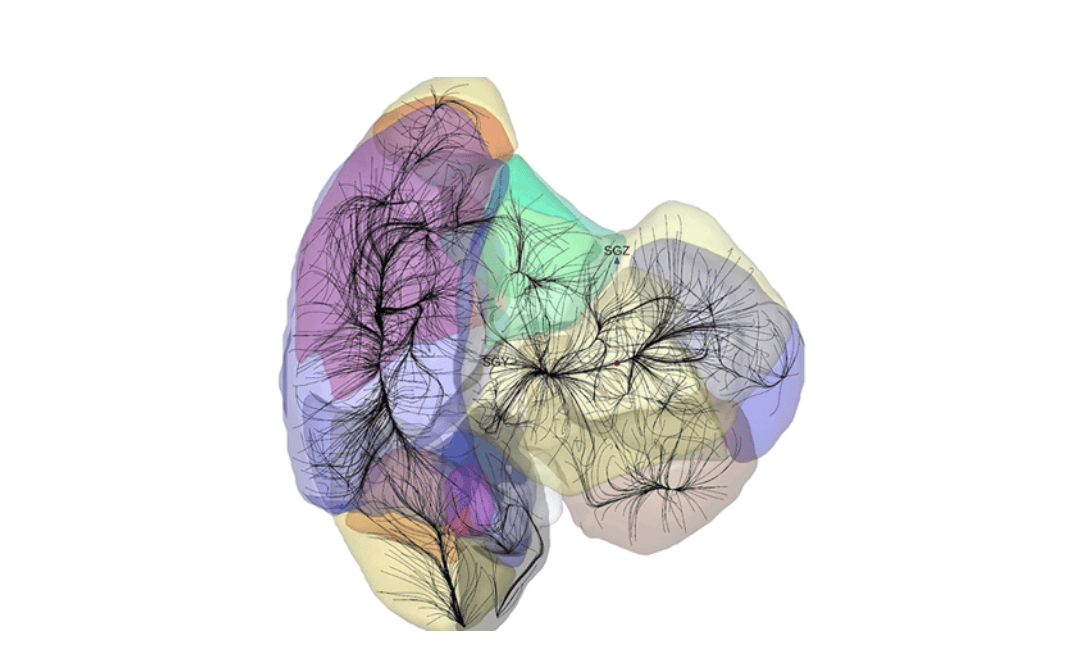
By mapping which direction galaxies are drifting, the team identified enormous regions where everything flows toward a shared gravitational centre. These regions are the basins of attraction.
The striking result is that our own basin appears far larger than expected. Rather than being anchored by the local Laniakea Supercluster, our galaxy may be caught in the pull of the distant Shapley Concentration.
The team estimates roughly a sixty percent probability that the Milky Way belongs to this much larger Shapley-centred basin — a structure about ten times the volume of Laniakea.
“Our universe is like a giant web, with galaxies lying along filaments and clustering at nodes where gravitational forces pull them together,” Tully said when the paper appeared. “Just as water flows within watersheds, galaxies flow within cosmic basins of attraction.”
Our Cosmic Address
To grasp the scale of this discovery, it helps to zoom outward step by step. Each level of structure dwarfs the last.
Earth orbits the Sun. The Sun is one of hundreds of billions of stars in the Milky Way galaxy, itself a spiral roughly 100,000 light-years across.
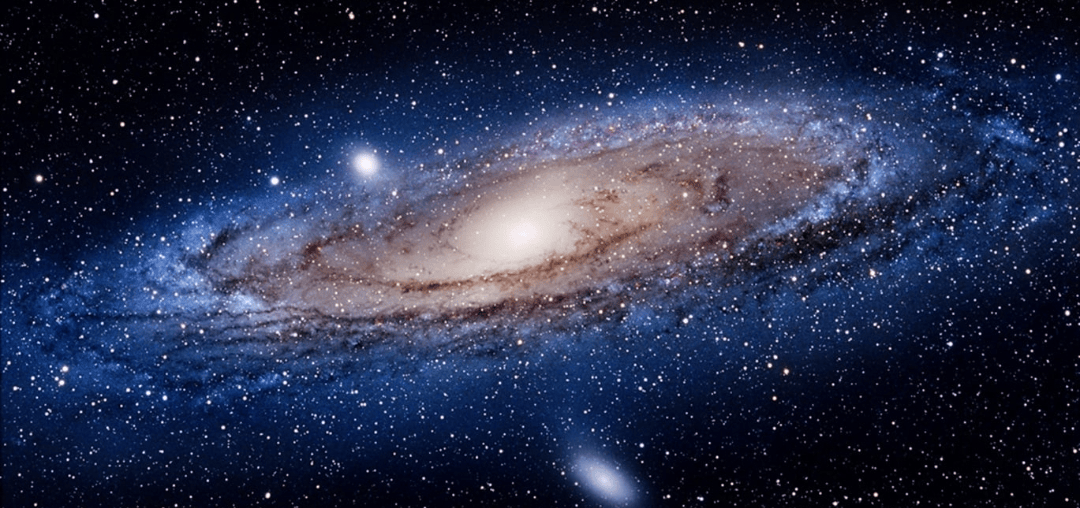
The Milky Way belongs to the Local Group, a small cluster of galaxies bound by gravity, dominated by ourselves and the Andromeda galaxy.
The Local Group sits within the larger Virgo Supercluster, which in turn was found to be a lobe of the far greater Laniakea Supercluster.
Now the new work adds another level above them all — a basin of attraction that may contain Laniakea itself as merely one of its parts.
What Is a Basin of Attraction?
The term is borrowed from the mathematics of flowing systems. Imagine rain falling across a landscape: every drop eventually drains toward one river valley, defined by the surrounding hills.
A cosmic basin of attraction works the same way, but with gravity instead of gravity-fed rivers. Galaxies within a basin all drift toward a common gravitational low point.
These flows are gentle but relentless. On top of the overall expansion of the universe, galaxies carry small extra motions — called peculiar velocities — steered by the gravity of nearby mass.
Reading those peculiar velocities is how astronomers map otherwise invisible structure. The direction a galaxy leans reveals where the mass — including dark matter — is concentrated.
A basin’s edges are the cosmic “watersheds” where flows split, some draining one way and some another. Defining those boundaries is how the team measured the true size of our home structure.
It is a subtle shift in thinking. A structure is defined not by a visible wall of galaxies, but by the invisible territory over which a single centre of gravity holds sway.
The Great Attractor and the Shapley Concentration
For decades, astronomers have known that the Local Group of galaxies is racing through space. The clearest measure comes from the cosmic microwave background, the afterglow of the Big Bang, which looks slightly warmer in the direction we are heading. In 1993 the COBE satellite turned that tilt into a speed: 627 kilometres per second, give or take 22. Much of that motion points toward a region where no obvious concentration of galaxies could be seen.
They named this pull the Great Attractor — a gravitational anomaly whose full nature was hidden partly behind the dust of our own Milky Way, in the so-called Zone of Avoidance.
The new work suggests the Great Attractor is not the final destination. It appears to be a way station on a larger flow toward the Shapley Concentration, far beyond it.
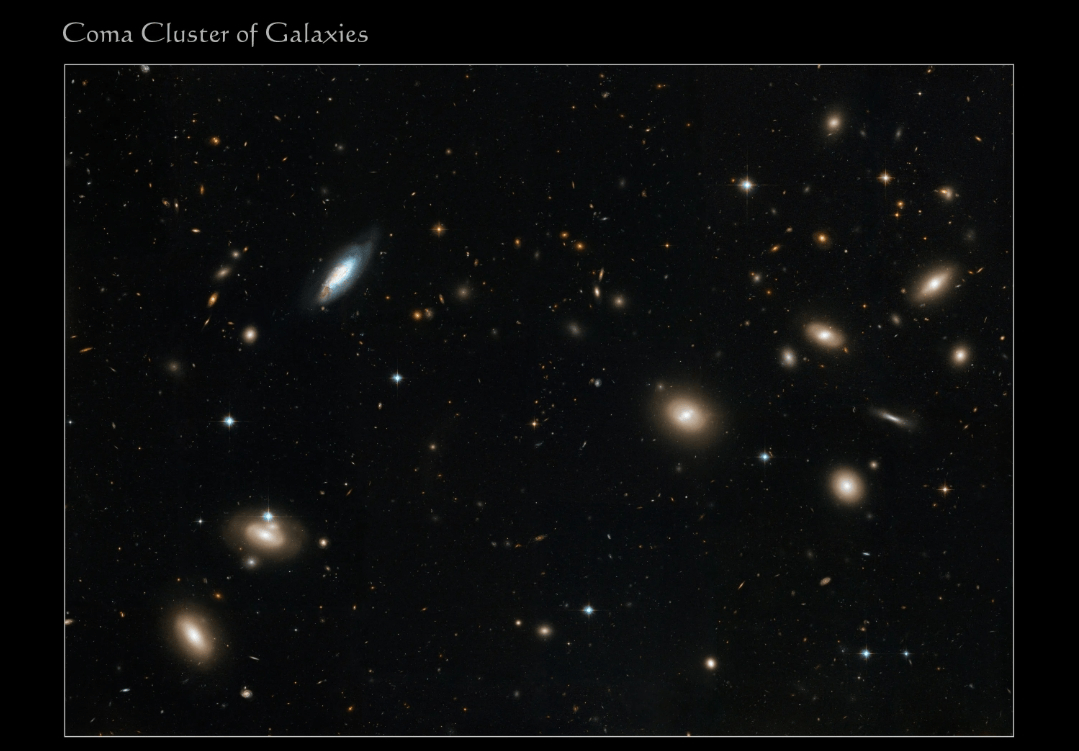
The Shapley Concentration is the largest known collection of galaxies in the nearby universe — a titanic overdensity of clusters lying several hundred million light-years away.
If our galaxy is truly falling toward Shapley, then the Great Attractor and Laniakea are merely features within a far grander basin — one we are only now beginning to trace.
Pull is only half the story. In 2017 the same Cosmicflows team reported a “Dipole Repeller”, a huge, nearly empty region on the opposite side of the sky. Empty space pushes as effectively as dense space pulls, because the matter around a void is drawn away from it. Their map showed the local flow dominated by just two features: the pull of the Shapley Concentration and the push of this void.
That finding is a useful warning about reading cosmic maps. Voids give off no light, so for decades they were simply missing from the picture, and astronomers credited all of our motion to the masses they could see.
The Zone of Avoidance
Part of why these structures took so long to map is an obstacle in our own backyard. The dense band of the Milky Way blocks our view of whatever lies directly behind it.
Astronomers call this obscured strip the Zone of Avoidance. Dust and stars along the plane of our galaxy hide about a quarter of the galaxies that optical telescopes would otherwise see.
The Great Attractor happens to lie partly within this zone, which is why its true nature stayed mysterious for so long after its pull was first detected.
Radio and infrared observations, which pierce dust more easily, have gradually filled in the gaps — and mapping galaxy flows offers another way to sense mass we cannot directly see.
Are We Not in Laniakea After All?
In 2014, the same broad research group defined the Laniakea Supercluster — a structure some 500 million light-years across, containing about 100,000 galaxies, including ours.
Laniakea, a Hawaiian word meaning “immense heaven,” was itself a landmark. It redrew our cosmic address by defining the supercluster as the basin our galaxy flows within.
The new findings suggest that boundary may have been drawn too small. With more galaxy data, the flows appear to extend well beyond Laniakea’s original edge.
This does not erase Laniakea. It suggests Laniakea may be a sub-region of something bigger, in the same way a valley is part of a wider river system.
The honest position is one of uncertainty. The probability is around sixty percent that we belong to the larger Shapley basin — strong, but not yet a settled fact.
How Astronomers Mapped It
The map comes from a project called Cosmicflows, which has spent well over a decade compiling precise distances for tens of thousands of galaxies. Its fourth catalogue uses eight different methods. Most distances come from the link between how fast a galaxy spins and how bright it truly is, with supernovae, pulsating stars and the brightest red giant stars anchoring the scale.
Measuring a galaxy’s distance independently of its redshift is difficult, but it is the key step. Comparing the two reveals the peculiar velocity — the part of the motion driven by gravity rather than cosmic expansion.
From tens of thousands of these velocity vectors, the team reconstructed the underlying gravitational landscape — the hidden hills and valleys of mass shaping the flows.
Because most of that mass is dark matter, this method effectively maps the invisible. The visible galaxies are just tracers, floating along currents set by unseen gravity.
Every individual distance carries an error, and the errors grow with distance. So rather than drawing one map, the team produced a whole family of maps, each consistent with the measurements and their uncertainties, and asked how often our galaxy ended up draining toward each possible centre. That spread is where the 60 per cent comes from. In about six of every ten of those maps we drain toward Shapley; in the rest we do not.
This is also why the boundary of a basin can move when the data improve. Laniakea’s edge was drawn in 2014 from Cosmicflows-2, which held distances and motions for a little over 8,000 galaxies, about a seventh of today’s catalogue. With seven times as many galaxies and better distances, especially far away, the watershed lines shifted.
The same principle underlies other ways of weighing the dark universe, such as the light-bending technique described in our article on gravitational lensing.
A Century of Mapping the Universe
The story of this discovery is really the story of a century-long effort to chart the universe’s large-scale structure.
In the 1920s, Edwin Hubble showed that galaxies exist far beyond the Milky Way and that they are rushing apart, revealing an expanding cosmos.
By the late twentieth century, redshift surveys had exposed the cosmic web — the filaments and voids that give the universe its foamy, structured appearance.
The leap in recent years has been measuring not just where galaxies are, but how they move. Velocity maps turn a static picture into a dynamic one.
The Basin of Attraction is the fruit of that shift — the moment cartography of the cosmos became a study of cosmic currents, not just cosmic coastlines.
The Cosmic Web
Zoom out far enough and the universe is not a random scatter of galaxies. It is a vast network astronomers call the cosmic web.
Galaxies gather along immense filaments of matter, like beads on threads. Where filaments cross, they build dense superclusters. Between them lie enormous, near-empty voids.
Basins of attraction are the large-scale flow patterns woven through this web. They describe not just where matter is, but where it is going.
Understanding the web this way — as a system in motion — is what allowed the team to define a basin’s true boundaries rather than just its brightest clusters.
The new results suggest the web is even more interconnected than thought, with galaxies coordinated across distances that strain our sense of what counts as a single structure.
How Big Is “Big”?
Numbers on this scale lose meaning quickly, so a comparison helps. Laniakea is about 160 megaparsecs, or some 520 million light-years, across. Light leaving one side of it today would take around half a billion years to reach the other. Half a billion years ago, the first animals with backbones were only just appearing in Earth’s seas.
A structure with ten times Laniakea’s volume is a little more than twice as wide, about 1.1 billion light-years. Light would need over a billion years to cross it, roughly twice as long as animals have existed on Earth.
Yet even this is small against the whole observable universe, which spans some 93 billion light-years. A basin of attraction is vast, but it is still a local feature.
That perspective is humbling and clarifying at once. What we call our cosmic neighbourhood is, on the largest scales, barely a single grain in an unimaginable expanse.
Other Giant Structures in the Universe
The Basin of Attraction joins a growing catalogue of enormous structures that push the limits of what cosmology expects.
In 2005 a map from the Sloan Digital Sky Survey revealed the Sloan Great Wall, a band of galaxies 1.37 billion light-years long. More recently, Alexia Lopez and colleagues used the faint absorption that distant gas leaves in the light of quasars to report a Giant Arc about a gigaparsec, or 3.3 billion light-years, long in 2022, and a Big Ring roughly 1.3 billion light-years across in 2024. Both lie so far away that their light set out about seven billion years ago.
In 2025 Hans Böhringer and colleagues, mapping X-ray-bright galaxy clusters, reported a superstructure they named Quipu after the knotted cords of the Inca. It stretches more than 400 megaparsecs, about 1.3 billion light-years, and holds roughly 200 million billion times the mass of the Sun. They described it as the largest cosmic structure discovered to date, a claim that depends on how a structure’s edges are drawn.
Some of these claimed structures remain debated, precisely because they test the assumption that the universe smooths out on large scales. Distinguishing real structure from chance alignment is subtle work. The Quipu team made a telling point of its own: superstructures with similar properties also turn up in computer simulations of the standard cosmological model. Big, on its own, does not mean impossible.
What sets the Basin of Attraction apart is that it is defined by motion, not just position. It is a structure we detect by how it moves matter, which makes it especially compelling evidence.
The Role of Dark Matter
Dark matter makes up about twenty-seven percent of the universe and provides most of the gravity holding large structures together.
The basins of attraction are, in effect, dark matter’s fingerprints. The galaxies we see are lit signposts, but the invisible mass is what actually sculpts the flows.
Mapping these enormous basins therefore tests our models of how dark matter is distributed on the very largest scales — and whether it clumps as expected. The substance itself is explored in our article on dark matter, the invisible universe.
There is a deeper implication too. If the basins are larger than models predict, it may mean dark matter is more strongly clustered on huge scales than the standard picture allows — a subtle but important clue.
The Role of Dark Energy
If dark matter pulls structures together, dark energy pushes the universe apart, driving its accelerating expansion.
The two are locked in a cosmic tug-of-war. Gravity builds basins and superclusters; dark energy stretches the space between them ever faster.
Over cosmic time, dark energy is winning. Eventually it may pull these great basins apart faster than gravity can assemble them, isolating each structure in the dark.
Mapping today’s flows captures a snapshot of that struggle — a balance point in a contest that will ultimately shape the universe’s fate. The repulsive side is explored in our article on dark energy, the invisible force.
This gives the discovery a poignant edge. The grand basin we are only now mapping is, in the deep future, destined to be pulled beyond reach as space expands.
In a sense, we are charting our cosmic neighbourhood at the very moment cosmic history allows it — before dark energy carries its distant reaches over the horizon forever.
Does This Challenge Cosmology?
A cornerstone of modern cosmology is the assumption that, on large enough scales, the universe looks the same everywhere. This is called the cosmological principle.
Standard models predict that above a certain “homogeneity scale,” the universe looks smooth on average. In 2012 the WiggleZ survey of over 200,000 galaxies measured where that happens: in spheres more than about 100 megaparsecs in radius, roughly 680 million light-years across, the galaxy counts become uniform, in excellent agreement with the standard model.
That does not forbid individual structures larger than the homogeneity scale. The Sloan Great Wall is twice as long. Homogeneity is a statement about averages, and the standard model expects a few giant features to appear by chance. The real question is how often structures as large as a 1.1-billion-light-year basin should arise, and whether we see more of them than chance allows. That calculation has not yet settled the matter.
This does not overturn the Big Bang or the broad framework of cosmology. But it joins a growing list of large-scale puzzles hinting that our picture is incomplete.
Those puzzles include the disagreement over the universe’s expansion rate, explored in our article on the Hubble tension.
What Comes Next
Confirming the basin’s full extent will require far more galaxy data, and a new generation of instruments is arriving to provide it.
The Vera C. Rubin Observatory in Chile began its ten-year Legacy Survey of Space and Time on 30 June 2026. Photographing the entire southern sky every few nights, it will find vast numbers of exploding stars whose distances can be measured precisely, adding velocity tracers far beyond today’s catalogues.
The European Euclid space telescope is charting the distribution of galaxies and dark matter across billions of years of cosmic history. Its first large data release is due in two stages: images and catalogues covering about 1,900 square degrees in November 2026, and the full analysis products in mid-2027.
The Square Kilometre Array, a giant radio observatory under construction, will detect hydrogen in distant galaxies, extending velocity maps deeper into space than ever before.
Together, these surveys should settle whether our galaxy truly belongs to the Shapley basin — and reveal how many other giant basins thread the nearby universe.
A Discovery Built on Uncertainty
One of the most honest aspects of this research is how openly it states its own limits. The team does not claim certainty — it reports a probability.
That roughly sixty percent figure is itself a scientific statement. It says the evidence favours the larger basin, while acknowledging that current data cannot yet prove it.
This is how frontier cosmology works. Conclusions are drawn from incomplete maps, then refined as better data arrives, with the uncertainty stated plainly rather than hidden.
Far from weakening the result, that candour is its strength. It tells us exactly what to test next, and how confident we are allowed to be today.
Why This Discovery Matters
Every so often, astronomy redraws the map of where we live. The Basin of Attraction is one of those moments.
It suggests our cosmic address is larger and stranger than we knew — that the Milky Way may be part of a flow spanning more than a billion light-years.
It also demonstrates a powerful method: reading the faint drift of galaxies to weigh mass we cannot see, and to expose structure larger than any single telescope could image.
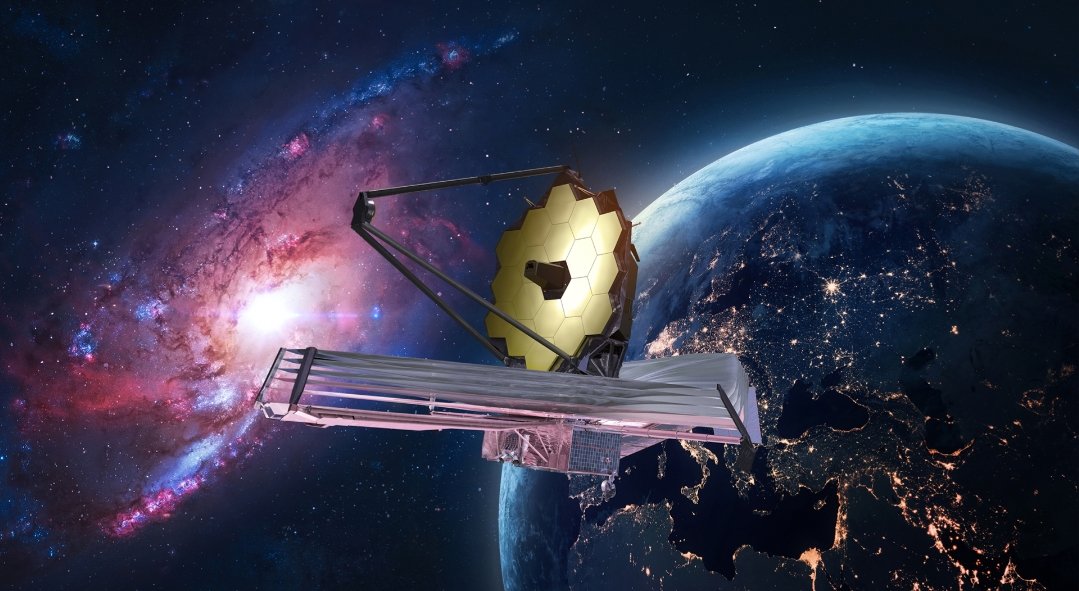
The deep-sky instruments driving this work are the same ones reshaping astronomy across the board, as covered in our article on the James Webb Space Telescope.
Most of all, it is a reminder of scale. We are passengers on a small planet, in a modest galaxy, drifting on a current so vast we have only just begun to chart its shores.
Each time we think we have measured our place in the cosmos, the map turns out to be a detail of something larger. The Basin of Attraction is the latest such humbling — and almost certainly not the last.
For now, the takeaway is simple to state and hard to fully absorb. The Milky Way is drifting, along with thousands of galaxies, toward a gravitational heart we are still working to locate.
Understanding that motion is how we learn the true architecture of the universe — and, in doing so, exactly where in it we belong.
Frequently Asked Questions
What is the Basin of Attraction?
A Basin of Attraction is a vast region of space where the collective gravity of matter causes galaxies to flow toward a common centre, much like rainfall draining into a single valley. Astronomers using the motions of over 56,000 galaxies found that our galaxy may sit in a basin about ten times larger than the Laniakea Supercluster, likely centred on the distant Shapley Concentration.
How large is it compared to Laniakea?
The newly identified basin is estimated to be roughly ten times the volume of the Laniakea Supercluster, which makes it a little more than twice as wide, about 1.1 billion light-years. Laniakea, defined in 2014, spans about 520 million light-years and contains around 100,000 galaxies.
Does this discovery contradict the Big Bang?
No. It refines our understanding of how large-scale structure forms but does not challenge the overall framework of Big Bang cosmology. The universe is expected to look smooth only on average, above a few hundred million light-years, and occasional larger structures are expected by chance. Whether this basin, and other giant structures, are more common than the standard model allows is still being tested.
Are we still part of the Laniakea Supercluster?
Possibly not, in the way we thought. The new analysis gives around a sixty percent probability that the Milky Way actually belongs to the larger Shapley basin rather than Laniakea. Laniakea would then be a sub-region of a much bigger structure. More data is needed to confirm this.
What caused this structure to form?
It is the result of gravity acting over billions of years on immense concentrations of dark matter and ordinary matter. Slightly denser regions in the early universe pulled in surrounding material, growing into the superclusters and vast flows we map today. Dark matter provides most of the gravitational pull involved.
How do astronomers map invisible structures like this?
They measure the peculiar velocities of galaxies — the small motions caused by gravity on top of the universe’s overall expansion. By comparing each galaxy’s independently measured distance with its redshift, researchers reconstruct the hidden landscape of mass, most of which is invisible dark matter, and trace the flows it drives.
Is this the largest structure in the universe?
No single record holder is agreed. The Giant Arc, reported in 2022 at about 3.3 billion light-years long, and the Big Ring, about 1.3 billion light-years across, are larger but far more distant and still debated. In the nearby universe, the Quipu superstructure reported in 2025 stretches about 1.3 billion light-years. A basin of attraction is different: it is defined by where matter flows, not by a visible concentration of galaxies.
What is the Dipole Repeller?
It is a vast, nearly empty region of space identified in 2017 by the Cosmicflows team. Because the matter around a void is pulled away from it, a void effectively pushes. The team found that the motion of our Local Group is dominated by two features: the pull of the Shapley Concentration and the push of this repeller.
Why is the result given as a probability?
Because every galaxy distance carries an error, many different maps of the flows fit the data equally well. The team generated a large family of such maps and checked where our galaxy drains in each. In about 60 per cent it drains toward the Shapley Concentration. Better distances, especially for faraway galaxies, should push that number toward a firm yes or no.
How fast is the Milky Way moving?
Measured against the cosmic microwave background, our Local Group of galaxies moves at about 630 kilometres per second. The COBE satellite measured 627 km/s in 1993, and a 2017 analysis gave 631 km/s. That motion comes from the combined pull and push of all the matter and voids around us.
Further Reading
Sources
- Valade, A., Libeskind, N. I., Pomarède, D., Tully, R. B., et al. (2024). “Identification of basins of attraction in the local Universe.” Nature Astronomy (DOI: 10.1038/s41550-024-02370-0).
- Tully, R. B., Courtois, H., Hoffman, Y. & Pomarède, D. (2014). “The Laniakea supercluster of galaxies.” Nature, 513, 71 (DOI: 10.1038/nature13674).
- University of Hawaiʻi at Mānoa — Institute for Astronomy news releases.
- University of Hawaiʻi News (27 September 2024). “Cosmic Neighborhood May Be 10x Larger.” hawaii.edu.
- Tully, R. B., et al. (2013). “Cosmicflows-2: The Data.” The Astronomical Journal, 146, 86 (DOI: 10.1088/0004-6256/146/4/86).
- Tully, R. B., et al. (2023). “Cosmicflows-4.” The Astrophysical Journal, 944, 94 (DOI: 10.3847/1538-4357/ac94d8).
- Kogut, A., et al. (1993). “Dipole Anisotropy in the COBE Differential Microwave Radiometers First-Year Sky Maps.” The Astrophysical Journal, 419, 1 (DOI: 10.1086/173453).
- Hoffman, Y., Pomarède, D., Tully, R. B. & Courtois, H. M. (2017). “The Dipole Repeller.” Nature Astronomy, 1, 0036 (DOI: 10.1038/s41550-016-0036).
- Kraan-Korteweg, R. C. & Lahav, O. (2000). “The Universe Behind the Milky Way.” Astronomy and Astrophysics Review, 10, 211 (DOI: 10.1007/s001590000011).
- Gott, J. R., et al. (2005). “A Map of the Universe.” The Astrophysical Journal, 624, 463 (DOI: 10.1086/428890).
- Lopez, A. M., Clowes, R. G. & Williger, G. M. (2022). “A Giant Arc on the Sky.” Monthly Notices of the Royal Astronomical Society, 516, 1557 (DOI: 10.1093/mnras/stac2204).
- Lopez, A. M., Clowes, R. G. & Williger, G. M. (2024). “A Big Ring on the Sky.” Journal of Cosmology and Astroparticle Physics, 2024(07), 055 (DOI: 10.1088/1475-7516/2024/07/055).
- Böhringer, H., et al. (2025). “Unveiling the Largest Structures in the Nearby Universe: Discovery of the Quipu Superstructure.” Astronomy & Astrophysics, 695, A59 (DOI: 10.1051/0004-6361/202453582).
- Scrimgeour, M. I., et al. (2012). “The WiggleZ Dark Energy Survey: The Transition to Large-Scale Cosmic Homogeneity.” Monthly Notices of the Royal Astronomical Society, 425, 116 (DOI: 10.1111/j.1365-2966.2012.21402.x).
- NSF–DOE Vera C. Rubin Observatory (30 June 2026). “Action! Rubin Observatory Begins Capturing the Greatest Cosmic Movie Ever Made.” rubinobservatory.org.
- European Space Agency. “Euclid DR1 Timeline.” cosmos.esa.int.
Baryon. (2025, February 18). Astronomers Discover New Cosmic Structure, Challenging Our Understanding of the Universe. Web News For Us. https://webnewsforus.com/astronomers-discover-new-cosmic-structure/
Baryon. “Astronomers Discover New Cosmic Structure, Challenging Our Understanding of the Universe.” Web News For Us, 18 February 2025, https://webnewsforus.com/astronomers-discover-new-cosmic-structure/. Accessed 8 October 2026.