Query the NASA Exoplanet Archive for planets discovered by the James Webb Space Telescope and the answer is three.
That is not a failure. It is a widespread misunderstanding of what the telescope is for. Webb was never built to find planets — that work is done by survey instruments like TESS, which stare at wide fields looking for the faint dimming of a transit. Webb is built to take a planet somebody else found and read its atmosphere.
The distinction matters because it explains why Webb changed astronomy without changing the discovery statistics. The catalogue of confirmed planets grew by 367 in 2022, then by 323, 260 and 246, and by early October 2026 it had added 285 more for the year, taking the total to 6,375. What changed is not how many worlds we know of. It is how much we know about them.
In November 2025, NASA announced that Webb had found five complex organic molecules, among them ethanol, acetaldehyde and acetic acid, frozen in ice around a young star called ST6 in the Large Magellanic Cloud, a small galaxy next door to our own. It was the first conclusive detection of acetic acid ice anywhere, and the first secure detection of several of the others outside the Milky Way.
Three months later a second team reported something stranger. Looking into the dust-choked core of a galaxy called IRAS 07251-0248, it found benzene, methane, acetylene and a highly reactive molecule called the methyl radical, all as gas, in quantities far higher than models predicted. The methyl radical had never been seen beyond our own galaxy.
None of these molecules is a sign of life. They are early steps on the chemical road that, on Earth, eventually led to it. Finding them in other galaxies does not prove life exists there, but it does show that the raw ingredients are made far more widely across the universe than anyone could previously demonstrate.
It was one discovery among dozens the James Webb Space Telescope has produced since becoming fully operational in mid-2022. Each has been significant. Several have been genuinely surprising. A few have forced astronomers to revise models considered settled for decades.
This is what Webb has found, why it matters, and what it means for our understanding of the universe — and our place in it.
What Is the James Webb Space Telescope?

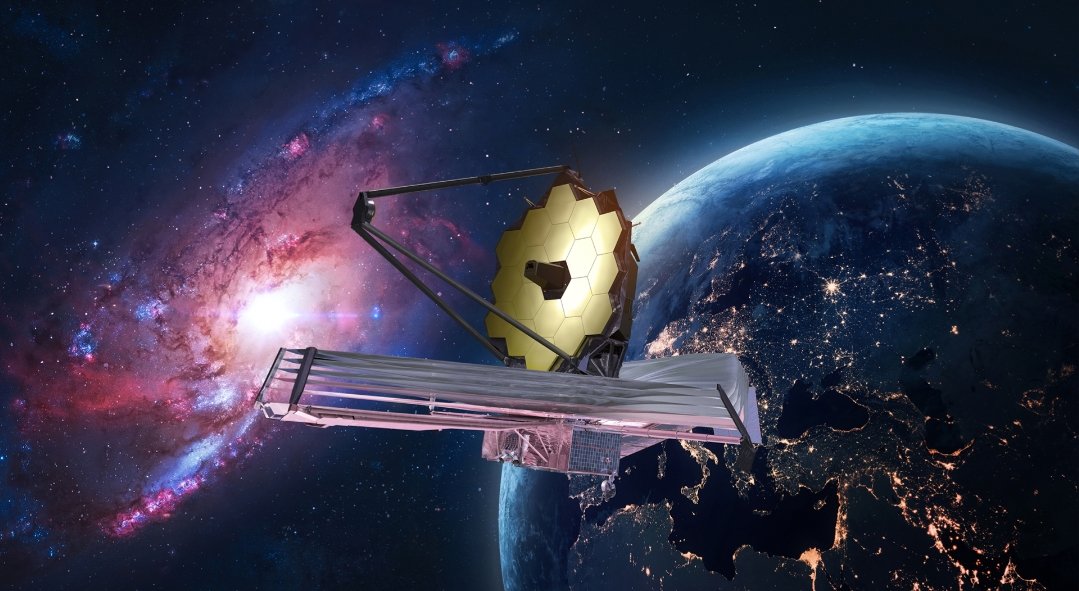
The James Webb Space Telescope is the largest and most powerful space telescope ever launched. Built through a partnership between NASA, the European Space Agency, and the Canadian Space Agency, it launched on Christmas Day 2021 and became scientifically operational in July 2022.
Its primary mirror spans 6.5 metres — more than two and a half times the diameter of Hubble’s — and is made of eighteen gold-coated beryllium hexagons that unfolded in space. It observes chiefly in infrared light, letting it see through clouds of dust that block visible light and detect the faint, red-shifted glow of objects whose light has travelled for more than thirteen billion years.
The telescope sits at the second Lagrange point, roughly 1.5 million kilometres from Earth, where the gravity of the Earth and Sun combine to hold it in a stable position. A five-layer sunshield the size of a tennis court keeps its instruments in permanent, frigid shadow.
It took around twenty-five years and some ten billion dollars to build. Its deployment was one of the most nerve-wracking sequences in the history of spaceflight, with 344 single-point failures that all had to work perfectly, unfixable by any human hand. Every one of them did. In more than four years of science operations, the James Webb Space Telescope has not disappointed.
A Telescope 25 Years in the Making
The James Webb Space Telescope almost never flew. Conceived in the 1990s as a successor to Hubble, it grew steadily more ambitious — and more expensive. Budgets ballooned, deadlines slipped year after year, and at one point the project came close to cancellation by the United States Congress.
It survived because the science was judged too important to lose. Engineers spent decades solving problems no one had faced before: a mirror that had to fold to fit inside a rocket and unfold perfectly in space, a sunshield thinner than a human hair spread across the area of a tennis court, and instruments that had to function at temperatures near absolute zero.
When the telescope finally launched on Christmas morning in 2021, an entire generation of astronomers held its breath through the weeks of deployment. Nothing jammed. Nothing tore. The gamble of twenty-five years and ten billion dollars paid off in the first images — and has been paying off ever since.
How Webb Sees What Hubble Cannot
The power of the James Webb Space Telescope comes from the combination of three things: a giant mirror, infrared vision, and its cold, distant vantage point.
Infrared is the key. As the universe expands, light from the most distant objects is stretched to longer, redder wavelengths — so the earliest galaxies are visible only in the infrared. Dust that hides newborn stars from ordinary telescopes is also transparent to it. Webb was purpose-built to read exactly this light, which is why it can look further back in time than any instrument before it.
To detect such faint heat, the telescope itself must be colder than the signals it hunts. That is what the sunshield and the L2 orbit provide — a stable, deep-frozen darkness that Hubble, in low Earth orbit, could never achieve.
The Instruments Behind the Discoveries
Behind every Webb headline sit four scientific instruments, each tuned to a different job. The near-infrared camera captures the crisp images that reach the public. A near-infrared spectrograph can observe many objects at once, splitting their light to read what they are made of.
The mid-infrared instrument, cooled to within a few degrees of absolute zero, reaches the longer wavelengths where cold dust and the faintest early galaxies glow. A fourth unit handles fine guidance and specialised imaging, keeping the whole telescope locked with extraordinary precision on targets billions of light-years away.
The quiet hero of the James Webb Space Telescope is spectroscopy. By spreading incoming light into a spectrum, Webb reads the chemical fingerprints written into it — each molecule absorbing light at particular wavelengths. This is how it identifies organic compounds in distant galaxies, measures the gases in an exoplanet’s atmosphere, and confirms the distances of the earliest galaxies.
The spectacular images earn the attention, but it is the spectra that carry the science. When astronomers say Webb has “found” a molecule light-years away, what they mean is that it has caught that molecule’s fingerprint in a beam of ancient light — and read it correctly.
What Webb Is Actually For
A persistent misreading of this telescope is that it exists to find things. The catalogue says otherwise, and understanding why clarifies most of what follows.
Of the 6,375 confirmed exoplanets in the NASA archive, just three are credited to Webb as the discovering facility. The overwhelming majority were found by transit surveys — Kepler, and now TESS — which monitor hundreds of thousands of stars and flag the tiny periodic dimming that betrays a planet crossing in front of one. That is a wide-field statistical exercise, and Webb is the opposite kind of instrument: a narrow, extraordinarily sensitive eye pointed at one target at a time.
All three of Webb’s own planets were found by direct imaging, the hardest method of all: picking out a planet’s faint glow right beside its star. The most remarkable, TWA 7 b, was reported in Nature in June 2025. It orbits a star only about 6 million years old, some 111 light-years away, at roughly 52 times the Earth–Sun distance, and its estimated mass is about 0.3 times Jupiter’s, close to Saturn’s. Before Webb, imaging instruments could typically pick out only planets of two Jupiter masses or more. Its gravity neatly explains the rings and gaps in the dusty disc around its star, long suspected to be the work of an unseen planet.
What Webb does with those targets is transmission spectroscopy. As a planet passes in front of its star, a sliver of starlight filters through its atmosphere on the way to us. Molecules in that atmosphere absorb specific infrared wavelengths, leaving gaps in the spectrum — a chemical fingerprint. Reading it requires enormous infrared sensitivity and exceptional thermal stability, which is why the telescope sits 1.5 million kilometres from Earth behind a sunshield, with its instruments held near absolute zero.
The same distinction applies to Webb’s early-universe work. It did not discover that distant galaxies exist. It measured galaxies already known to be there and found several to be more massive and more mature than models of early cosmic time predicted — a result that matters precisely because it is a measurement of known objects rather than a new sighting.
The wider discovery statistics are worth noting too, because they cut against a common assumption. Confirmed exoplanet counts rose by 367 in 2022, 323 in 2023, 260 in 2024 and 246 in 2025, far below the Kepler-era peak of 2016, when 1,504 were added in a single year. The pace picked up again in 2026, with 285 in the first nine months, but the exoplanet revolution has moved from a counting phase into a characterisation phase — and Webb is the instrument that phase was waiting for.
Galaxies That Defy Our Models of the Early Universe
Among Webb’s most consequential findings is how different the early universe looks from what cosmological models predicted.
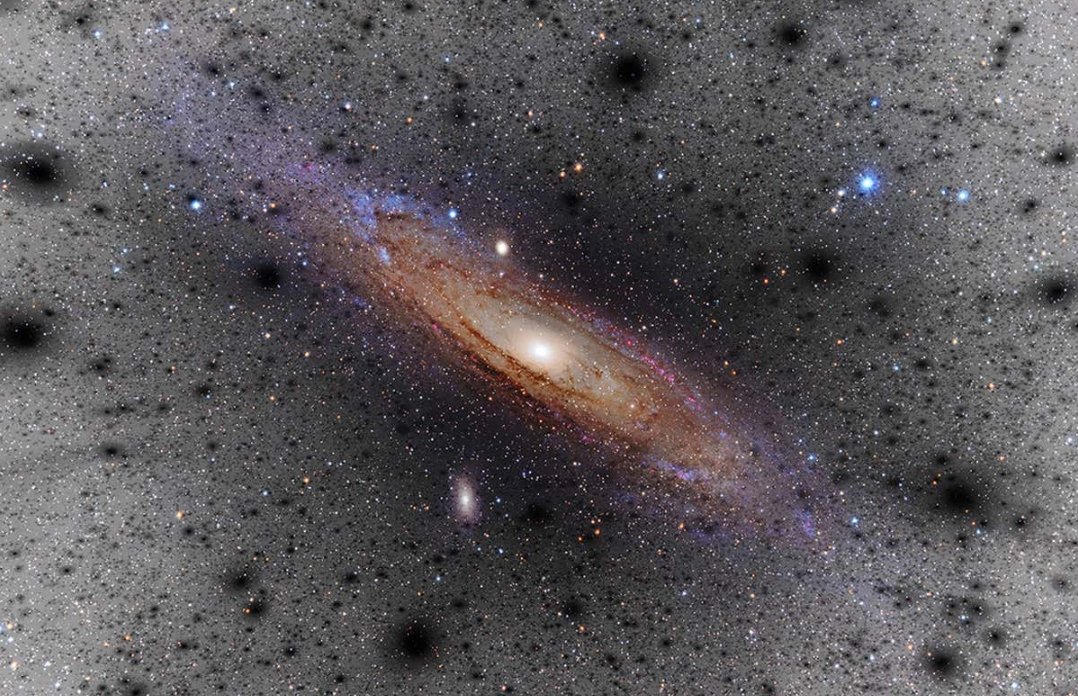
Standard cosmology held that the first galaxies were small, dim, and irregular, slowly assembling into today’s grand structures over billions of years. Webb found something else. Within the first billion years after the Big Bang, it has identified galaxies that are unexpectedly large, unexpectedly bright, and in some cases already showing the organised disc structure that was supposed to take far longer to form.
It has confirmed some of the most distant galaxies ever seen — objects observed as they were less than three hundred million years after the Big Bang, deep in the era astronomers call cosmic dawn. The current record holder, a galaxy called MoM-z14, was confirmed in a paper published in January 2026; we see it as it was about 280 million years after the Big Bang. Its discoverers estimate that bright galaxies at that epoch are more than 100 times as common as pre-Webb models predicted. Webb has also revealed disc structures in galaxies billions of years earlier than models allowed, pushing back the timeline for how quickly orderly galaxies can form.
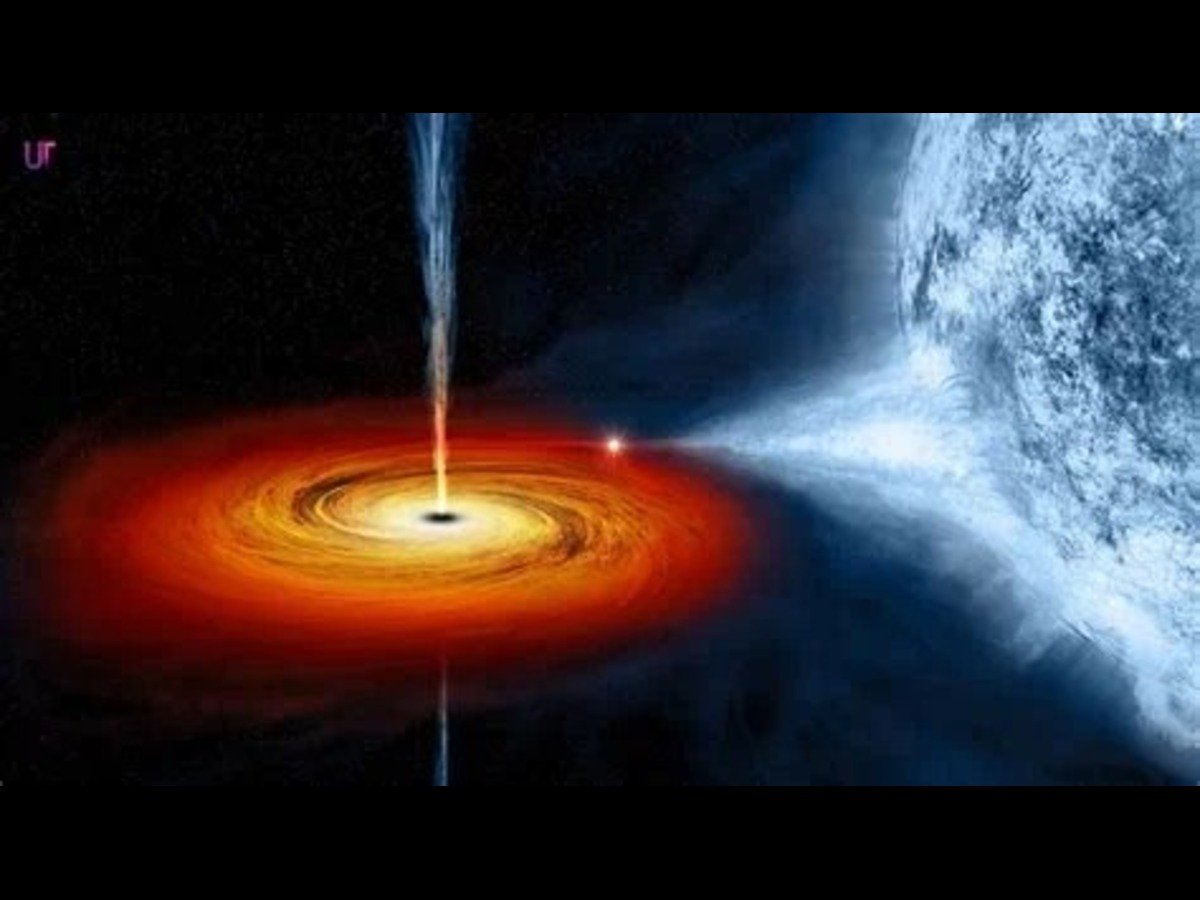
Then there are the “little red dots” — extremely compact, intensely luminous objects in the early universe whose brightness no current model fully explains. Some may be early, rapidly feeding black holes; others may be dense star-forming regions. The honest answer, as of 2026, is that astronomers are still working out what they are.
One of the clearest cases is a little red dot nicknamed the Cliff, described in Astronomy & Astrophysics in 2025. Its light could not be produced by a population of old stars, however the models were adjusted. The team argued it is better explained as a “black hole star”: a powerful source, perhaps a rapidly feeding black hole, wrapped in a dense cocoon of gas. That is a leading hypothesis, not yet a consensus.
What is clear is that the early universe was more active, more structured, and more complex than expected. Webb is not merely confirming theories — it is generating questions that will drive astronomy for a generation.
The Deepest Images Ever Taken
The first full-colour image released from the James Webb Space Telescope, in July 2022, set the tone for everything that followed. Known as the first deep field, it showed thousands of galaxies crowded into a patch of sky no larger than a grain of sand held at arm’s length.
That image also used a natural trick of physics. A massive galaxy cluster in the foreground bent and magnified the light of far more distant galaxies behind it, acting as a cosmic lens — letting Webb reach objects even its enormous mirror could not otherwise resolve.
Since then, Webb has confirmed some of the most distant galaxies ever recorded, seen as they were less than three hundred million years after the Big Bang. Each such record is not a trophy but a data point: direct evidence of how quickly the first structures assembled out of the darkness.
Webb has also revisited familiar landmarks. Its infrared portrait of the Pillars of Creation, the towering columns of gas in the Eagle Nebula, revealed newborn stars hidden from every previous instrument — the same object Hubble made famous, seen with entirely new eyes. These deep images are, in effect, a survey of cosmic history laid out in a single frame.
The Building Blocks of Life Beyond the Milky Way
The two detections of organic molecules beyond the Milky Way are easily confused, and the difference between them is the science.
The first, published in The Astrophysical Journal Letters in October 2025, looked at ST6, a newborn star in the Large Magellanic Cloud, about 160,000 light-years away. That galaxy has only a third to a half of the heavy elements found in the Sun, much like galaxies in the earlier universe. Webb’s mid-infrared spectrograph found five complex organic molecules locked in the icy coatings of dust grains around the star, along with water, carbon dioxide and ammonia ice. The differences from similar stars in our own galaxy suggest that chemistry runs differently where heavy elements are scarce.
The second, published in Nature Astronomy in February 2026, looked into the buried nucleus of IRAS 07251-0248, a nearby galaxy so thick with dust that visible light cannot escape it. Here the benzene, methane and methyl radical are gas, not ice, and they are flowing outward at about 160 kilometres a second. The authors concluded that the most plausible source is the grinding down of carbon-rich dust grains and larger aromatic molecules, probably by cosmic rays, a continuous supply of carbon feeding the chemistry.
These are not signs of life but chemical precursors — the raw materials from which more complex chemistry can grow. Their presence in other galaxies suggests the conditions for such chemistry are not unique to the Milky Way, but a reproducible feature of galaxies wherever the right conditions arise.
This shifts the astrobiological question. It is no longer whether the early chemistry of life exists elsewhere in principle — the evidence increasingly says it does, widely. The question is whether that chemistry has ever organised itself into something alive.
New Discoveries Closer to Home
Webb’s reach extends to our own solar system, where it has delivered results impossible with earlier instruments.
In August 2025, a team led by the Southwest Research Institute announced that Webb had found a previously unknown moon of Uranus — the 29th in the system. Designated S/2025 U1, it is estimated to be only about 10 kilometres across and orbits about 56,000 kilometres from the planet’s centre, between the small moons Ophelia and Bianca. It showed up in a series of long exposures taken on 2 February 2025. Voyager 2 flew past Uranus in 1986 without seeing it.
On 19 January 2025, researchers watched Uranus continuously for 15 hours, nearly a full rotation of the planet. Their results, published in Geophysical Research Letters in February 2026, mapped its charged upper atmosphere, the ionosphere, up to 5,000 kilometres above the clouds for the first time. Temperatures peak between 3,000 and 4,000 kilometres up, while charged particles are densest nearer 1,000. The average, about 426 kelvin (roughly 150 C), confirms that Uranus’s upper atmosphere has kept cooling since the early 1990s, and a darker band between two auroral zones traces the planet’s strangely tilted, off-centre magnetic field.
Webb has also imaged Saturn’s rings in infrared, tracked Jupiter’s storms, and probed comets and asteroids. When the interstellar comet 3I/ATLAS — only the third interstellar object ever found — passed through the solar system in 2025, Webb turned toward it to read the chemistry of another star system entirely. Its gas turned out to be dominated by carbon dioxide, with about 7.6 molecules of it for every molecule of water, one of the highest ratios ever measured in a comet. That may mean its ices were exposed to more radiation than our own comets’, or that it formed close to the carbon dioxide frost line in the disc around its parent star.
Reading the Atmospheres of Other Worlds

A central goal of the James Webb Space Telescope is to characterise the atmospheres of exoplanets — worlds orbiting other stars — precisely enough to look for the chemical signatures of biology. Four years in, the results are informative, if not the confirmation of life some hoped for.
In 2025, Webb studied TRAPPIST-1d, one of seven rocky planets around a nearby red dwarf, several sitting in the zone where liquid water could exist. The finding was clarifying but sobering. Across two transits its spectrum was flat, with no sign of methane, water or carbon dioxide, which ruled out atmospheres like Earth’s, Venus’s, Titan’s or early Mars’s with more than 95 per cent confidence. If TRAPPIST-1d has any air, it is extremely thin or hidden beneath high haze. That does not settle the question for its cooler neighbours e, f and g, but it lowers the odds that this particular world hosts life as we know it.
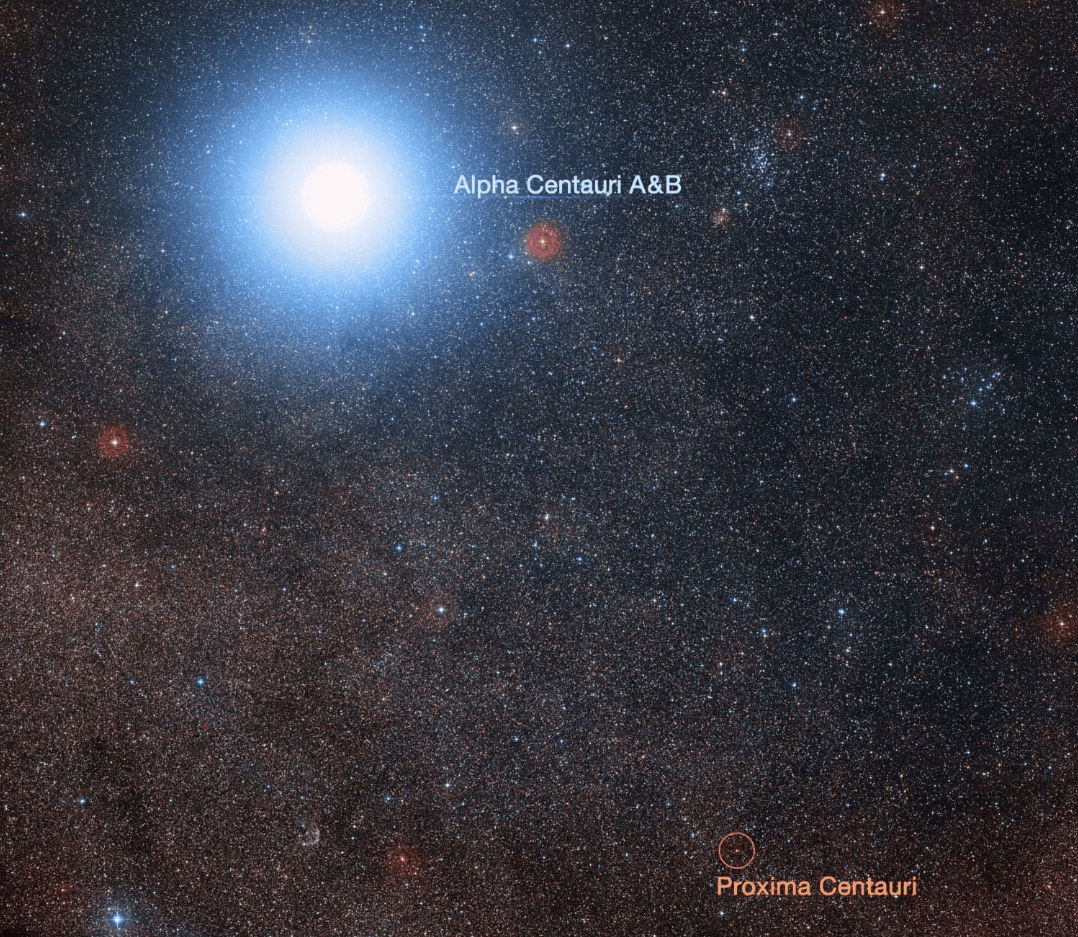
More broadly, Webb is building a growing catalogue of atmospheric compositions across many kinds of planets. Claims of possible biosignatures have come and gone, and the field has learned caution — a single molecule is rarely proof of anything. Over time, though, that database will reveal which kinds of stars and planets tend to have atmospheres worth a closer look. The nearest star systems are first in line.
The clearest lesson came from K2-18 b, a planet more than twice Earth’s size about 124 light-years away. In April 2025 a Cambridge-led team reported evidence, at three-sigma significance, for dimethyl sulfide or dimethyl disulfide, gases that on Earth come mainly from marine life. Within five weeks an independent team had re-analysed every Webb spectrum of the planet together and found insufficient evidence for either: simpler molecules such as ethane fitted the data equally well, and about 25 more transits would be needed even to test the claim properly. Their analysis appeared in Astronomy & Astrophysics in August 2025. The episode did not show that K2-18 b is lifeless. It showed how easily a hint can outrun its data.
Watching Stars and Planets Form in Real Time
Webb’s infrared eyes see straight into the dense clouds where stars are born — clouds completely opaque to visible light — producing images of star formation at a detail never before available.
It has studied protostars still embedded in collapsing gas, and imaged the flat, rotating protoplanetary discs around young stars in enough detail to study their chemistry and spot where planets may already be forming.
Among its most striking results are its portraits of nebulae — the glowing clouds left when stars die. In 2025, Webb revealed new structure in the core of the Butterfly Nebula: jets and a complex dusty torus around the dying star that had never been seen. Such images are not only beautiful; they document the final stages of stellar evolution and the material returned to the galaxy to seed the next generation of stars.
Why the James Webb Space Telescope Matters
The James Webb Space Telescope represents something larger than any single discovery: it has permanently expanded the range of questions astronomy can ask and answer.
Before Webb, the formation of the first stars and galaxies was largely theoretical — models built on inference. Webb is delivering direct observations of those first epochs, and they are forcing revisions that will sharpen our understanding of how the universe evolved from a smooth, hot plasma into the structured cosmos we live in.
It has also shown that the chemistry associated with life is not rare or special to our neighbourhood. It turns up in the icy dust around newborn stars and in the harsh cores of other galaxies alike. That does not confirm life elsewhere, but it removes one argument for why life should be unique to Earth.
Thanks to a near-perfect launch that saved fuel, the telescope carries enough propellant for more than twenty years of science, potentially into the 2040s, far beyond its design requirement of at least five years with a goal of ten. The data it gathers will be studied for decades after it falls silent. In that sense, the most important contributions of the James Webb Space Telescope may not yet have been made.
The Limits, and What Comes Next
For all its power, the James Webb Space Telescope is not a life-detector, and its results demand caution. Announcements of possible biosignatures in exoplanet atmospheres have repeatedly proven contentious, with independent teams re-analysing the same data and reaching more modest conclusions. A single suggestive molecule is not evidence of life, and Webb’s greatest service may be teaching the field patience.
The early-galaxy surprises have been widely misreported as having “broken” the Big Bang. They have not. The overall framework — an expanding universe emerging from a hot, dense beginning — remains intact. What Webb is challenging is the finer detail of how fast galaxies grew and how early structure appeared, which is precisely the kind of refinement good instruments are meant to force.
Demand for observing time is intense. For the telescope’s fifth year of observations, which began in July 2026, astronomers submitted 2,855 valid proposals, and the general observing requests alone asked for about 12 times more time than was available. Only 254 were selected, prepared by 2,333 investigators from 37 countries. That scarcity is itself a measure of how much the telescope has changed the field.
What comes next is a shift from single spectacular finds to patient, systematic surveys — mapping cosmic dawn galaxy by galaxy, building a statistical library of exoplanet atmospheres, and working alongside ground-based giants and future missions. The James Webb Space Telescope has opened a window; the long work of understanding what lies beyond it is only beginning.
What Scientists Say
The unexpectedly massive early galaxies remain a live debate. Several cosmologists note that while the findings do not overturn the Big Bang, they hint that the physics of the early universe — especially how dark matter clumped to seed galaxies — may be more complex than current models capture.
Frequently Asked Questions
How is the James Webb Space Telescope different from Hubble?
Webb’s mirror is 6.5 metres versus Hubble’s 2.4, and it observes mainly in infrared rather than visible light. That lets it see through dust, detect far more distant objects, and study the very early universe with far greater clarity. Webb also sits 1.5 million kilometres from Earth, while Hubble orbits close to it.
Has the James Webb Space Telescope found signs of life?
No confirmed signs of life have been detected. Webb has found organic molecules — chemical building blocks — in other galaxies and in star-forming regions, and has studied exoplanet atmospheres, some of which are not Earth-like. A widely reported 2025 hint of a possible biosignature gas on K2-18 b did not survive independent re-analysis. The search for biosignatures is ongoing and is one of its central long-term goals.
Why do Webb’s early-galaxy discoveries challenge existing models?
Models predicted that galaxies in the first billion years should be small, dim, and irregular. Webb has found ones that are larger, brighter, and more organised than expected. That suggests galaxy formation was more efficient than thought, or that early-universe physics is more complex, or that the models need revision. Astronomers are actively investigating.
How long will the James Webb Space Telescope operate?
It was designed for a mission of at least five years, with a goal of ten. Because its launch was so precise, it used less fuel than planned, and NASA now estimates it has enough propellant for more than twenty years of science — potentially into the 2040s — though hardware ageing could still limit it, and the pace of discovery may slow as the easiest questions are answered.
Where can I see James Webb Space Telescope images?
All Webb images are public through NASA at science.nasa.gov and the ESA Webb portal at esawebb.org. The Space Telescope Science Institute also maintains a full public archive of Webb observations at webbtelescope.org.
Why is the James Webb Space Telescope so far from Earth?
Webb observes faint infrared heat, so it must stay extremely cold and shielded from the Sun, Earth, and Moon at once. The second Lagrange point, 1.5 million kilometres away, lets a single sunshield block all three, keeping the instruments in permanent deep-frozen shadow. The trade-off is that, unlike Hubble, it cannot be visited or repaired by astronauts.
Further Reading
Sources
- NASA Science — Webb Latest News
- ESA Webb — Press Releases 2025
- ScienceDaily — Organic molecules in an ultra-luminous infrared galaxy (Feb 2026)
- ScienceDaily — Magnetic forces warping Uranus (Feb 2026)
- NASA Exoplanet Archive — confirmed planets by discovery facility and year (queried 22 August 2026)
- Curtis-Lake et al. — Spectroscopic Confirmation of Four Metal-Poor Galaxies at z = 10.3–13.2, Nature Astronomy 7, 622 (2023)
- Sewiło et al. — First Detection of Large Solid-state Complex Organic Molecules in the Large Magellanic Cloud, The Astrophysical Journal Letters 992, L30 (2025)
- García-Bernete et al. — Abundant hydrocarbons in a buried galactic nucleus, Nature Astronomy 10, 420 (2026)
- Lagrange et al. — Evidence for a sub-Jovian planet in the young TWA 7 disk, Nature 642, 905 (2025)
- Naidu et al. — A Cosmic Miracle: a remarkably luminous galaxy at z = 14.44 confirmed with JWST, The Open Journal of Astrophysics 9 (2026)
- de Graaff et al. — Absorption in dense gas drives the extreme Balmer break of a Little Red Dot at z = 3.5, Astronomy & Astrophysics 701, A168 (2025)
- Tiranti et al. — JWST discovers the vertical structure of Uranus’ ionosphere, Geophysical Research Letters 53, e2025GL119304 (2026)
- Cordiner et al. — JWST detection of a carbon-dioxide-dominated gas coma surrounding interstellar object 3I/ATLAS, The Astrophysical Journal Letters 991, L43 (2025)
- Piaulet-Ghorayeb et al. — Strict limits on potential secondary atmospheres on the temperate rocky exo-Earth TRAPPIST-1 d, The Astrophysical Journal 989 (2025)
- Madhusudhan et al. — New constraints on DMS and DMDS in the atmosphere of K2-18 b from JWST MIRI, The Astrophysical Journal Letters 983, L40 (2025)
- Luque et al. — Insufficient evidence for DMS and DMDS in the atmosphere of K2-18 b, Astronomy & Astrophysics 700, A284 (2025)
- NASA — New moon discovered orbiting Uranus using NASA’s Webb telescope (19 August 2025)
- STScI — JWST Cycle 5 proposal selection (2026)
Baryon. (2026, March 27). The James Webb Space Telescope: How Its Latest Discoveries Are Reshaping Our Understanding of the Universe. Web News For Us. https://webnewsforus.com/the-james-webb-space-telescope-universe/
Baryon. “The James Webb Space Telescope: How Its Latest Discoveries Are Reshaping Our Understanding of the Universe.” Web News For Us, 27 March 2026, https://webnewsforus.com/the-james-webb-space-telescope-universe/. Accessed 17 October 2026.