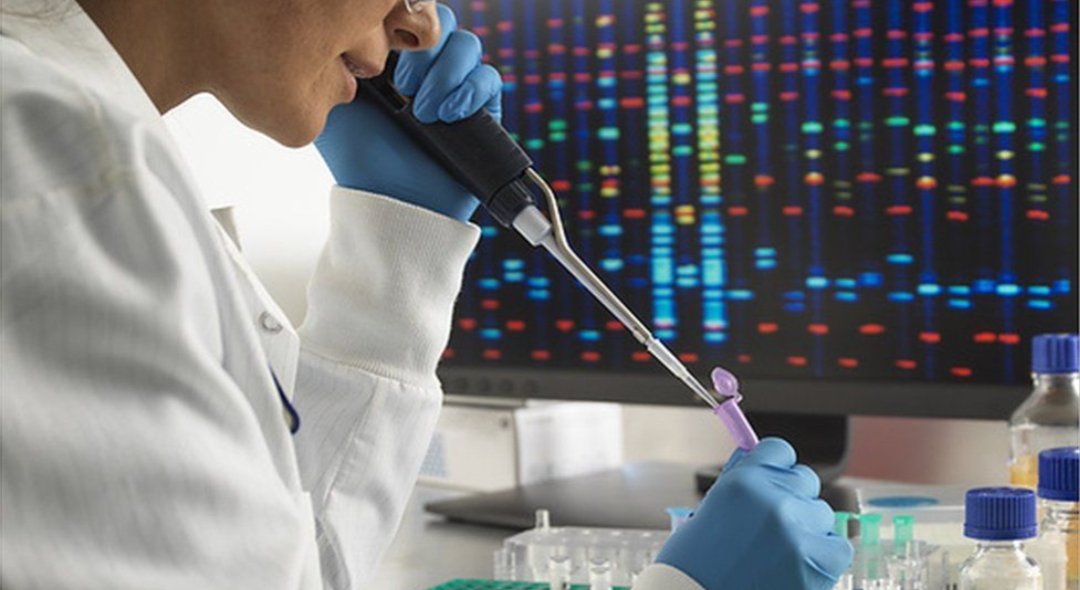
In 2024, a baby named KJ Muldoon was born with a rare and life-threatening genetic disorder called CPS1 deficiency, which stops the body clearing ammonia properly and is estimated to kill about half of affected infants early in life. What happened next was a genuine first.
KJ became the first person known to receive a gene-editing therapy designed for his own mutation: a base editor, carried into his liver cells by lipid nanoparticles, built to correct a disease-causing error in his CPS1 gene. He received two infusions, at about seven and eight months of age. In the seven weeks after the first, according to his doctors’ report in the New England Journal of Medicine, he tolerated more dietary protein and needed only half his starting dose of ammonia-clearing medicine, with no serious adverse events. The authors are careful to add that longer follow-up is needed. Regulators have since moved too: in February 2026 the US Food and Drug Administration published draft guidance for exactly this kind of individualised therapy.
Start with the tool described almost everywhere as the most precise yet built, and the successor to CRISPR: prime editing. We searched the public trial registry to see how much of it has reached people. On 29 September 2026, ClinicalTrials.gov held two registered studies using the phrase “prime editing”. Two. Against 149 for CRISPR and 32 for base editing. Four weeks earlier the same searches had returned two, 148 and 31; in that time, prime editing did not move.
Neither of the two has completed. Both are combined Phase 1/2 studies run by one company, Prime Medicine: one in chronic granulomatous disease, an inherited immune disorder, planned for 12 participants and now enrolling by invitation; the other in Wilson disease, a disorder of copper handling in the liver, planned for 42 and listed as recruiting from September 2026. The entire human prime-editing programme is 54 planned participants across two early trials.
That gap between how a technique is written about and how much of it exists in people is the honest frame for everything below. The tools described here are real, and KJ’s treatment shows what one of them can already do. Most of them have barely been tried.
How Gene Editing Works: The Toolkit
Gene editing is not a single technology but a growing family of tools, each more precise than the last. The best known is CRISPR-Cas9, which uses a guide RNA to locate a target sequence in the three-billion-letter DNA and a Cas9 protein to cut both strands, letting the cell’s repair machinery disable or replace a gene.
Newer tools refine that basic idea. Base editing chemically converts one DNA letter to another without cutting the double helix. Prime editing rewrites short stretches of code, letter by letter, like a find-and-replace function. Epigenetic editing changes which genes are switched on or off without touching the sequence at all. The trend across all of them is the same: away from blunt cutting and toward ever finer, safer control. Much of the 2026 frontier is about turning these matured tools on real diseases.
The Therapies Already Approved
It is easy to treat gene editing as a promise about the future, but a growing shelf of genetic medicines is already approved and in use. Luxturna, approved in the United States in 2017 for an inherited form of blindness, delivers a working gene directly into the cells of the retina. Two years later, Zolgensma became a landmark treatment for spinal muscular atrophy, a devastating disease of infancy — and one of the most expensive drugs ever sold.
Gene therapies for haemophilia followed, replacing the faulty clotting-factor genes that once condemned patients to lifelong infusions. Then, at the end of 2023, came the watershed: Casgevy, the first medicine based on CRISPR itself, was approved for sickle cell disease, first in the United Kingdom in November and then in the United States in December, where a conventional gene therapy for the same condition was approved the same day. Each of these treats a different disease by a different mechanism, but together they establish the essential point — genetic medicine is no longer experimental. It is licensed, regulated, and reaching patients, and the 2026 advances build directly on that foundation.
Reaching patients is a matter of degree. Vertex, which sells Casgevy, reported 76.4 million dollars of Casgevy revenue in the second quarter of 2026, up 151 per cent on a year earlier. On 1 July 2026 the FDA extended the therapy from patients aged 12 and over to children as young as two, a change Vertex estimates makes about 5,500 more people eligible. Revenue is not a patient count, and the company’s quarterly filing does not give one.
Personalised CRISPR: Medicine Made for You Alone
Until recently, CRISPR-based therapies worked like a single key cut to fit a common lock. They were engineered to correct a specific, well-known mutation shared by thousands of patients — such as the mutations behind sickle cell disease or beta-thalassaemia, both of which gained approval for a CRISPR treatment in the United Kingdom in November 2023 (in the United States, sickle cell followed in December 2023 and beta-thalassaemia in January 2024).
KJ Muldoon’s case changed the equation: his treatment was designed, manufactured and given within months. The challenge now is cost and scale. A therapy built for a single child is a medical miracle; a therapy that can be built for any child is a healthcare revolution, and the distance between the two is measured in manufacturing, regulation and money.
A Regulatory Pathway for Medicines Made for One
A therapy made for one child raises an obvious regulatory problem. Approval normally rests on trials that compare treated patients with untreated ones, and there is no such comparison when a disease-causing mutation belongs to a single family. In November 2025 two senior FDA officials, Vinay Prasad and Martin Makary, set out a proposed answer in the New England Journal of Medicine, which they called a plausible mechanism pathway.
On 23 February 2026 the agency published it as draft guidance, titled Considerations for the Use of the Plausible Mechanism Framework to Develop Individualized Therapies That Target Specific Genetic Conditions with Known Biological Cause. It is written for severe, well-characterised conditions linked to a specific gene, and it names genome editing and RNA-based treatments such as antisense oligonucleotides. The central idea is that when the biology is well understood and a randomised trial is impossible because there are too few patients, a developer can lean on a strongly supported mechanism of action, so that a platform proven against one mutation need not start from scratch against the next.
Two cautions belong beside that. The guidance still asks for results robust enough to exclude chance, showing improvement in clinical outcomes, disease course or biomarkers; it lowers a barrier rather than removing the need for evidence. And a draft guidance is not a rule: it approves nothing by itself.
Prime Editing: The Most Precise Rewrite Tool Yet

Standard CRISPR cuts both strands of the double helix and relies on the cell’s own repair, which can introduce unintended changes. Prime editing, developed by David Liu’s laboratory at the Broad Institute of MIT and Harvard, works more like a word processor’s find-and-replace, substituting a corrected sequence without breaking both strands.
The first human evidence came from outside the body. Prime Medicine’s PM359 corrects the most common mutation behind chronic granulomatous disease, a two-letter deletion in the NCF1 gene that leaves white blood cells unable to kill certain bacteria and fungi. The correction is made in a patient’s own blood stem cells, which are then returned by transplant. According to the company’s annual report, filed in March 2026, both patients reported so far showed rapid restoration of the missing enzyme activity to levels above established therapeutic thresholds, their blood counts recovered within two to three weeks, and no serious adverse events attributable to prime editing were reported. In June 2026 the FDA granted the programme a Regenerative Medicine Advanced Therapy designation, and the company plans to apply for approval in the first half of 2027.
That is two patients, described in a company filing rather than a peer-reviewed paper. It shows that prime editing can work in human cells; it cannot yet show how well or how safely. The test inside the body has barely begun. In June 2026 regulators in New Zealand cleared PM577a, a prime editor for Wilson disease delivered to the liver by lipid nanoparticle, the first clinical authorisation for any of the company’s in-body prime-editing therapies, and the FDA followed in July. A third programme, for alpha-1 antitrypsin deficiency, was due to go to regulators in the third quarter of 2026, after an arbitration panel ruled in July that developing it did not breach Prime Medicine’s agreement with the base-editing company Beam Therapeutics.
Cystic fibrosis is not yet a clinical target for prime editing. Prime Medicine’s own annual report describes its cystic fibrosis work, supported by the Cystic Fibrosis Foundation, as early-stage discovery, and no prime-editing study in cystic fibrosis appears in the trial registry.
AI Is Now Reading the Genetic Code of Alzheimer’s
One striking development of early 2026 came not from an editing tool but from artificial intelligence. In February 2026 a study in Alzheimer’s & Dementia described SIGNET, which combined single-nucleus RNA sequencing of brain tissue with the genotypes of 272 people from two long-running American ageing studies to infer which genes drive which, producing cause-and-effect regulatory maps for six major brain cell types.
Those links are statistical inferences, not experiments, and need confirming before anyone can call them mechanisms. Nor is this gene editing; it is a way of choosing targets.
This kind of AI-assisted genetic cartography is now being applied across many diseases. It is the same convergence explored in our piece on DeepMind’s AlphaGenome and the reading of the genome’s dark matter.
Gene Resurrection: Bringing Lost DNA Back to Life
MIT Technology Review named gene resurrection among its breakthrough biotechnologies of 2026: reading DNA from long-dead species to understand, and sometimes recreate, functions lost to time.
The most dramatic example came from Colossal Biosciences, which announced on 7 April 2025 the birth of three animals it called dire wolves, made, by its own account, with 20 edits at 14 genetic sites in the grey wolf genome. Eleven days later the International Union for Conservation of Nature’s Canid Specialist Group noted that the two species differ by thousands of genes and concluded: “The three animals produced by Colossal are not dire wolves.” The technical feat, writing ancient differences into living cells, is not in dispute.
Gene resurrection also has a quieter medical side. Humans and other apes lack a working uricase, the enzyme most mammals use to break down uric acid, which is one reason uric acid can build up and crystallise in the joints as gout. In July 2025 researchers at Georgia State University reported in Scientific Reports that they had used CRISPR to insert a reconstructed ancestral uricase into human liver cells grown in the laboratory. The cells made the enzyme, their internal uric acid fell, and they no longer increased fat production when fed fructose. It was done in cultured cells; a gout therapy is a possible application, not a result.
A Genetic Approach to Type 1 Diabetes
Type 1 diabetes is a condition in which the immune system destroys the pancreas’s insulin-producing cells. People with it depend on insulin, by injection or pump, for the rest of their lives.
In August 2025 a team in Uppsala, Sweden, working with Sana Biotechnology, reported in the New England Journal of Medicine that it had transplanted gene-edited donor islet cells into the forearm muscle of a man with long-standing type 1 diabetes, without immunosuppressive drugs. The cells were edited with a CRISPR enzyme, Cas12b, and a viral vector so the immune system would not reject them. Twelve weeks later there was no immune response against them, and C-peptide, a by-product of insulin production, showed stable insulin release that tracked blood glucose. None of four adverse events was serious or related to the cells.
In July 2026 the group reported that the cells were still surviving and producing insulin at 14 months. It is one man, and freedom from insulin injections is a separate claim the study does not make. Sana plans to test a stem-cell-derived version, SC451, designed to be manufactured at scale, in a trial it says could begin as early as 2026.
A different route avoids editing: Vertex’s zimislecel, stem-cell-derived islet cells given with standard immunosuppression, is in a combined Phase 1/2/3 trial. The size of the prize is set by the 8.4 million people estimated to have been living with type 1 diabetes in 2021, projected to reach 13.5 to 17.4 million by 2040.
From Rare Diseases to Common Ones
So far, gene editing has proved itself mostly against rare, single-gene disorders — conditions caused by one clear error in one known gene, which make ideal first targets. The far larger prize is the common diseases that shape most human lives: heart disease, diabetes, dementia, and the like.
The clearest step in that direction is cholesterol. In May 2026 the New England Journal of Medicine published results for VERVE-102, a base editor designed to switch off the PCSK9 gene in the liver for good, given once to 35 adults with inherited high cholesterol or premature coronary artery disease. At the highest dose PCSK9 fell by 88 per cent on average and LDL cholesterol by 62 per cent, and the reductions appeared durable in the 15 followed for a year. There were no dose-limiting toxic effects; one participant developed aspiration pneumonitis.
VERVE-102 exists because its predecessor stumbled: in April 2024 Verve paused its VERVE-101 trial after a patient developed a grade 3 liver-enzyme rise and a serious drop in platelets, which the company attributed to the lipid nanoparticle. Verve is now owned by Eli Lilly.
A second approach targets a different gene. CRISPR Therapeutics’ CTX310 disables ANGPTL3, whose natural loss-of-function variants are linked to lower cholesterol and cardiovascular risk. In a Phase 1 trial of 15 people published in November 2025, the two highest doses cut ANGPTL3 by about 73 and 80 per cent. One participant died suddenly 179 days after the lowest dose, which on average did not lower ANGPTL3; a single event can neither establish nor rule out a link.
The complication is that most common diseases are not caused by a single gene but by hundreds acting together with environment and lifestyle. Editing one gene rarely fixes them outright. The realistic near-term goal is not to edit away complex disease entirely, but to dial down specific, high-impact genetic risk factors — a more modest ambition than science fiction imagines, and a far more achievable one.
The First Phase 3 Verdict, and a Death
The strongest evidence of the year came from a randomised trial. Intellia Therapeutics’ lonvo-z uses CRISPR-Cas9, delivered by lipid nanoparticle, to disable the KLKB1 gene in the liver of people with hereditary angioedema, which causes recurrent, sometimes life-threatening swelling. In the Phase 3 HAELO trial, published in the New England Journal of Medicine in June 2026, 80 patients were randomised to one infusion or placebo. From week 5 to week 28 attacks fell by 87 per cent (0.26 a month against 2.10), and 62 per cent of treated patients had none, against 11 per cent on placebo, with no serious adverse events in the treated group. By the company’s account these were the first in-body editing candidates to reach Phase 3; Intellia began applying for US approval in April 2026.
The sister therapy shows the other side of the ledger. On 29 October 2025 the FDA placed both Phase 3 trials of nex-z, an in-body CRISPR therapy for transthyretin amyloidosis, on clinical hold after a patient developed grade 4 liver-enzyme elevations and raised bilirubin. The patient died on 5 November 2025. The trial investigator attributed the death to septic shock from a perforated duodenal ulcer, in a clinical course that also included acute liver injury and its treatment with steroids, and an autopsy supported those diagnoses. The FDA lifted the holds in January and March 2026. In August the company reported that, across more than 600 patient samples, the highest liver-enzyme rises occurred in people carrying one particular HLA immune-system gene variant.
It would be wrong to read that death as proof the therapy killed the patient, and equally wrong to read the lifted holds as an all-clear. What the episode shows is that the liver, the organ these therapies reach most easily, is also where their risks concentrate, and that some of those risks may depend on a patient’s immune genetics.
Base editing has reached a larger in-body test too. Beam Therapeutics’ BEAM-302 is designed to correct the single-letter mutation behind the severe form of alpha-1 antitrypsin deficiency, which damages the lungs and liver. By 10 February 2026, 29 patients had been treated; at the 60 mg dose, 94 per cent of circulating AAT protein was the corrected form. Single doses caused no serious adverse events, but one patient given two doses had grade 4 liver-enzyme elevations without symptoms. A pivotal group of about 50 began dosing in July 2026. These figures come from the company’s filings.
Delivery: The Central Challenge
The hardest problem is often not the edit but the delivery. The leading vehicles are viral vectors, limited in cargo and able to provoke immunity, and lipid nanoparticles, which are especially good at reaching the liver.
The 2026 record makes the point concrete. KJ Muldoon’s therapy, lonvo-z, nex-z, VERVE-102, CTX310, BEAM-302 and the Wilson disease prime editor all travel by lipid nanoparticle to the same organ, the liver. Beyond it, progress is earlier. Beam says it is optimising nanoparticles aimed at blood stem cells, part of an effort to treat sickle cell disease without the chemotherapy conditioning that ex-vivo treatments such as Casgevy require; in its own ex-vivo sickle cell trial, one patient died of respiratory failure four months after treatment, which the investigator judged likely related to that conditioning and unrelated to the edited cells. The only registered study using the phrase “epigenetic editing” is a first-in-human trial of EPI-321 in facioscapulohumeral muscular dystrophy, a muscle disease.
What Scientists Say
The scientists’ own papers are more cautious than the coverage. KJ’s doctors wrote that longer follow-up is warranted; HAELO’s median follow-up was seven and a half months; the diabetes result is one patient; and prime editing’s clinical record is a company filing covering two.
The Ethical Questions That Cannot Be Ignored
The power to edit the human genome raises questions science alone cannot answer. The treatments described above all involve somatic editing — changes made to the cells of a living individual, which are not passed on to future generations. This is broadly accepted in the scientific and regulatory community.
Germline editing, altering embryos in ways inherited by all future descendants, remains deeply controversial, especially since 2018, when the Chinese scientist He Jiankui edited human embryos without adequate consent or safety review, resulting in the birth of gene-edited babies. A 2020 survey of 106 countries in The CRISPR Journal found that 75 prohibit using edited embryos to start a pregnancy, five of them with exceptions, and that none explicitly permits it. In May 2025 three of the field’s main professional bodies, the American Society of Gene & Cell Therapy, the International Society for Cell & Gene Therapy and the Alliance for Regenerative Medicine, called for an international moratorium on heritable human genome editing lasting at least ten years.
The pressure does not come only from editing. MIT Technology Review‘s breakthrough biotechnologies for 2026 included embryo scoring, the genetic screening of IVF embryos for traits. It selects among embryos rather than editing them, but it raises many of the same questions about who decides what counts as a better child.
As the tools grow more powerful, the questions grow more urgent: who decides which traits count as a disease worth curing, and who gets treatments that cost millions? They run alongside the science explored in our articles on designer babies and the genetics of cancer.
Conclusion
Gene editing in 2026 is a story of tools that work, being applied to real patients: a baby in Philadelphia given a therapy designed for him alone, a single CRISPR infusion that prevented most attacks of an inherited disease in a placebo-controlled trial, prime editing entering human trials, and lost genes pulled back from deep time.
The genome is no longer a fixed text we can only read. It is a document we are learning to edit, with growing precision and growing responsibility. What we write in it — and who we write it for — will shape the future of human health for generations to come.
Frequently Asked Questions
What was the KJ Muldoon case?
KJ Muldoon was born in 2024 with severe CPS1 deficiency, a metabolic disorder that stops the body clearing ammonia properly and is estimated to kill about half of affected infants early in life. He became the first person known to receive a base-editing therapy designed for his individual mutation, developed within months and given as two infusions at about seven and eight months of age. The early results, published in May 2025, were encouraging, and the team that treated him wrote that longer follow-up is warranted.
Is gene editing the same as germline editing?
No. Nearly all current gene-editing therapies are somatic: they alter the cells of a living patient and are not inherited. Germline editing changes embryos, eggs, or sperm, so the changes pass to all future generations. A 2020 survey of 106 countries found that 75 prohibit heritable genome editing and none explicitly permits it, and in 2025, seven years after the He Jiankui case, three leading professional bodies called for a moratorium of at least ten years.
What is the biggest obstacle to gene-editing therapies?
Three obstacles dominate: delivery, safety and cost. Getting editing tools into the right cells in a living body remains difficult beyond the liver and blood. In-body editing has produced both a successful Phase 3 trial and, in a separate programme, a severe liver reaction that led the FDA to halt two trials for months, in a patient who later died. And current therapies can cost millions of dollars per patient. The scientific frontier has largely shifted from whether editing works to how to deliver it safely, affordably, and equitably at scale.
Has gene editing inside the body passed a Phase 3 trial?
Yes, as of June 2026. In the HAELO trial of lonvo-z for hereditary angioedema, published in the New England Journal of Medicine, one infusion of CRISPR-Cas9 editing reduced attacks by 87 per cent compared with placebo from week 5 to week 28, with no serious adverse events in the treated group. The developer, Intellia Therapeutics, has begun applying for US approval.
Sources
- MIT Technology Review — Technologies Shaping Biotech in 2026
- Nature Medicine — Gene editing enables islet transplantation without immunosuppression (2025)
- National Institutes of Health — What Is Genome Editing?
- Anzalone et al. — Search-and-Replace Genome Editing Without Double-Strand Breaks or Donor DNA, Nature 576, 149 (2019)
- Frangoul et al. — CRISPR-Cas9 Gene Editing for Sickle Cell Disease and β-Thalassemia, New England Journal of Medicine 384, 252 (2021)
- Personalized, In Vivo Gene Editing for a Newborn — Nature Medicine (2025)
- Musunuru, K. et al. (15 May 2025) — Patient-Specific In Vivo Gene Editing to Treat a Rare Genetic Disease. New England Journal of Medicine 392(22):2235-2243.
- Prasad, V. & Makary, M.A. (12 November 2025) — FDA’s New Plausible Mechanism Pathway. New England Journal of Medicine 393(23):2365-2367.
- US Food and Drug Administration (23 February 2026) — draft guidance on the Plausible Mechanism Framework for individualised therapies.
- Cohn, D.M. et al. (13 June 2026) — Lonvoguran Ziclumeran: In Vivo CRISPR Gene Editing in Hereditary Angioedema. New England Journal of Medicine.
- Intellia Therapeutics — Form 10-Q for the quarter ended 30 June 2026.
- Vafai, S.B. et al. (25 May 2026) — In Vivo Base Editing of PCSK9 with VERVE-102 for Hypercholesterolemia. New England Journal of Medicine 395(7):648-659.
- Verve Therapeutics — Form 10-Q for the quarter ended 31 March 2024 (VERVE-101 enrolment pause).
- Laffin, L.J. et al. (8 November 2025) — Phase 1 Trial of CRISPR-Cas9 Gene Editing Targeting ANGPTL3. New England Journal of Medicine 393(21):2119-2130.
- Beam Therapeutics — Form 10-Q for the quarter ended 30 June 2026.
- Prime Medicine — Form 10-K for 2025 (filed 3 March 2026).
- Prime Medicine — Form 10-Q for the quarter ended 30 June 2026.
- Carlsson, P.-O. et al. (4 August 2025) — Survival of Transplanted Allogeneic Beta Cells with No Immunosuppression. New England Journal of Medicine 393(9):887-894.
- Carlsson, P.-O. et al. (10 July 2026) — Long-Term Survival of Hypoimmune Allogeneic Islets without Immunosuppression (letter). New England Journal of Medicine 395(8):825-827.
- Sana Biotechnology — Form 10-Q for the quarter ended 30 June 2026.
- Vertex Pharmaceuticals — Form 10-Q for the quarter ended 30 June 2026.
- Gregory, G.A. et al. (2022) — Global incidence, prevalence, and mortality of type 1 diabetes in 2021 with projection to 2040. Lancet Diabetes & Endocrinology 10(10):741-760.
- Liu, D. et al. (12 February 2026) — From correlation to causation: cell-type-specific gene regulatory networks in Alzheimer’s disease (SIGNET). Alzheimer’s & Dementia 22(2).
- de Lima Balico, L. & Gaucher, E.A. (18 July 2025) — Genomic insertion of ancestral uricase into human liver cells to determine metabolic consequences of pseudogenization. Scientific Reports 15:26093.
- IUCN SSC Canid Specialist Group (18 April 2025) — Conservation perspectives on gene editing in wild canids.
- Baylis, F. et al. (2020) — Human Germ Line and Heritable Genome Editing: The Global Policy Landscape. The CRISPR Journal 3(5):365-377.
- ASGCT, ISCT & ARM (21 May 2025) — International Call for a 10-Year Moratorium on Heritable Human Genome Editing.
- ClinicalTrials.gov — registry searches for CRISPR, base editing, prime editing and epigenetic editing, re-run 29 September 2026.
Baryon. (2026, September 27). Gene Editing in 2026: Scientific Advances, Risks, and Future of Human Medicine. Web News For Us. https://webnewsforus.com/gene-editing-in-2026-human-medicine/
Baryon. “Gene Editing in 2026: Scientific Advances, Risks, and Future of Human Medicine.” Web News For Us, 27 September 2026, https://webnewsforus.com/gene-editing-in-2026-human-medicine/. Accessed 11 October 2026.


4 Responses