Mitochondrial donation has produced more newspaper front pages than patients. The United Kingdom legalised it in 2015, the phrase “three-parent baby” entered the language, and the technique has been debated in parliaments across the world ever since.
A search of ClinicalTrials.gov for mitochondrial donation returns 14 registered studies. Read them and only one is about the technique this article describes: Newcastle’s study of the children it has produced. Fourteen hits, one real study — against 2,931 for CAR-T therapy and 771 for mRNA vaccines. This is one of the smallest clinical programmes in modern genetic medicine, and one of the loudest.
The gap between attention and evidence is not a criticism of the science, which is careful and genuinely remarkable. It is the essential context for reading anything about it. What follows is what the technique does, what the first cohort of children actually showed, and what remains unresolved.
Your mother gave you something your father could not. Not a trait, not a temperament — a second genome.
Thirty-seven genes, riding inside the mitochondria that power every cell you own, passed down an unbroken maternal line stretching back through your grandmother, her mother, and every woman before them.
For almost everyone, this quiet inheritance never announces itself. The mitochondria work. The cells make energy. Life proceeds.
For roughly one adult in 5,000, that tiny genome carries a disease-causing fault, and in many of them it announces itself catastrophically. The fault starves the body’s hungriest organs — brain, heart, muscle, liver — of the energy they need to survive. There is no cure. There has never been a cure.
Until recently there was not even a way to stop a mother passing the fault to her children. She could only hope. In July 2025 that changed, and it changed with evidence rather than promise.
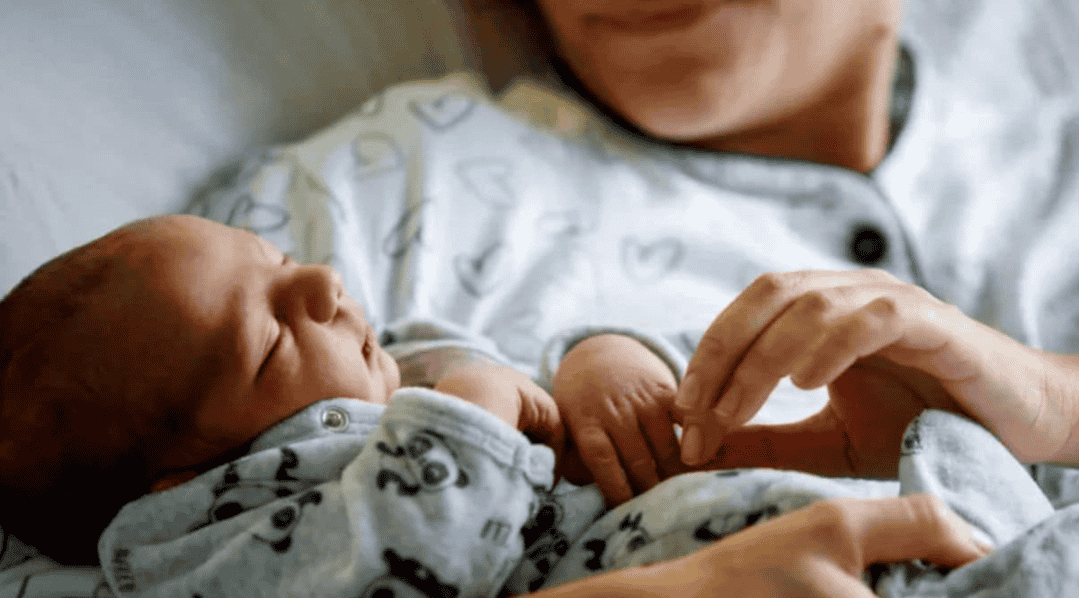
Writing in the New England Journal of Medicine, the Newcastle team behind mitochondrial donation treatment reported eight babies born healthy, with the faulty mitochondrial DNA that had haunted their mothers’ families either undetectable or well below the level that causes disease. This is the story of how that became possible — and what it still cannot do.
Two Genomes in Every Cell
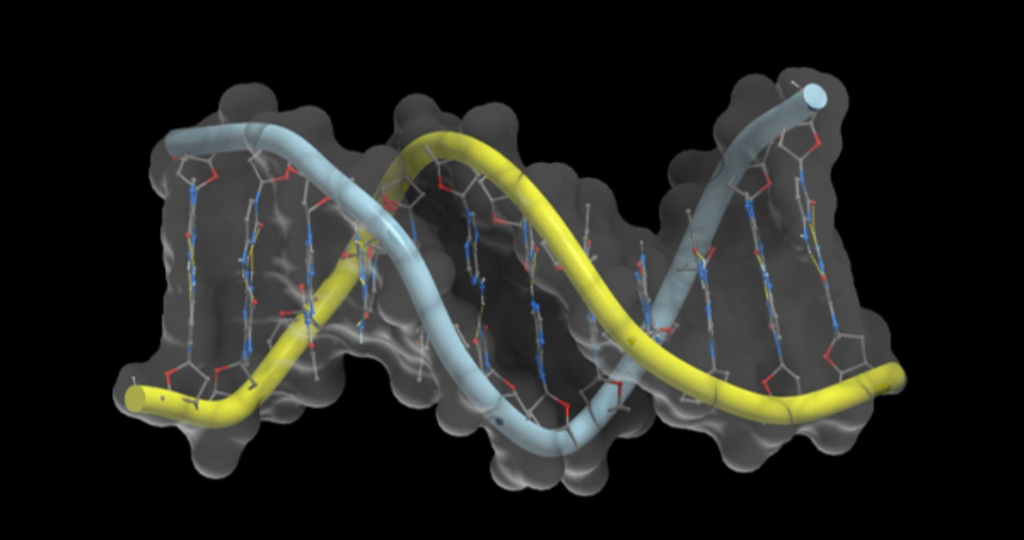
Almost everything people mean by “your genes” lives in the nucleus. That is the roughly 20,000-gene nuclear genome described in our complete guide to DNA, inherited half from each parent and shuffled anew in every generation.
Mitochondria carry a second, far smaller genome of their own: a circular loop of about 16,500 base pairs holding 37 genes. It is a relic of an ancient bargain, when free-living bacteria were absorbed into a larger cell and never left.
Over billions of years most of those bacterial genes migrated into the nucleus. Thirty-seven stayed behind, and they remain indispensable, because they encode core parts of the machinery that turns food and oxygen into usable energy.
The mitochondrion’s job is to produce ATP — adenosine triphosphate — the molecule cells spend to do anything at all. Every heartbeat and every thought draws on it. A cell whose mitochondria fail cannot maintain itself.
This is why mitochondrial disease strikes the brain, heart and skeletal muscle hardest. Those tissues have the highest energy demands, so they are the first to notice when supply falters.
Why Only Mothers Pass It On
Sperm carry mitochondria, but they are destroyed shortly after fertilisation. A child’s mitochondria therefore come from the egg alone, which makes mitochondrial DNA the one part of the genome that travels a purely maternal route.
The consequence is unforgiving. A mother carrying a mitochondrial mutation passes it to every one of her children. Her daughters pass it to theirs. No natural mechanism clears the fault from a maternal lineage once it takes hold.
There is a further complication called heteroplasmy. Cells usually hold a mixture of healthy and mutant mitochondrial DNA, and the ratio can shift between tissues and between generations.
This is not the tidy Mendelian inheritance most people learned at school. It is closer to the layered, conditional inheritance explored in our article on epigenetics and gene expression — heredity with a dimmer switch rather than an on-off toggle.
The Mitochondrial Bottleneck
Heteroplasmy behaves unpredictably because of a phenomenon called the mitochondrial bottleneck. A cell holds thousands of copies of mitochondrial DNA, yet only a small sample of them passes into each developing egg.
Because that sample is small and effectively random, the proportion of mutant copies can swing sharply from one egg to the next. A mother with a modest mutant load may produce eggs ranging from nearly clean to heavily affected.
This explains the cruelty families describe: two children of the same mother, one healthy and one gravely ill. It also explains why counting mutant copies in a single embryo cannot reliably predict a child’s fate.
Preimplantation genetic testing tries to work around the bottleneck by choosing embryos with the lowest mutant loads. It helps many families. For high or unstable mutation levels, it cannot promise a healthy child.
Mitochondrial donation takes a different route. Rather than gambling on which embryo drew the best hand, it replaces the faulty mitochondria with a donor’s healthy set and removes the gamble entirely.
What Mitochondrial Donation Actually Does
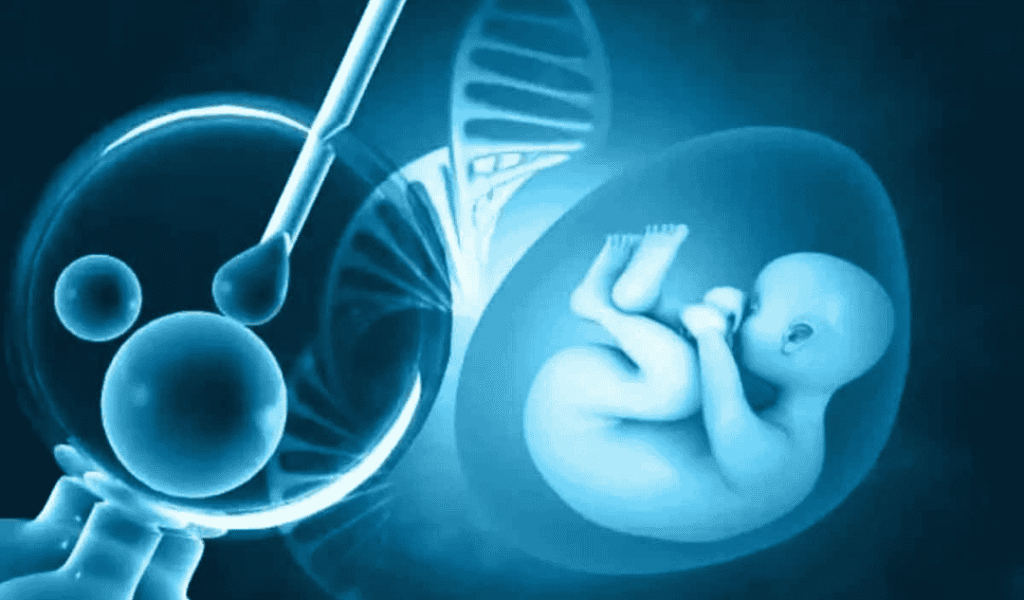
Mitochondrial donation treatment builds an embryo carrying nuclear DNA from both parents alongside mitochondrial DNA from a healthy female donor. The child inherits every one of the roughly 20,000 nuclear genes from their mother and father.
The donor contributes only the 37 mitochondrial genes, every one of them devoted to energy production. None bears on appearance, temperament or intelligence, which is why clinicians describe the donation as swapping a faulty battery rather than rewriting a person.
Two techniques exist. In maternal spindle transfer, the spindle of chromosomes is lifted from the mother’s egg and placed into a donor egg whose own nucleus has been removed. That reconstructed egg is then fertilised.
In pronuclear transfer, the mother’s egg and the donor egg are both fertilised first. The nuclear material is then moved from the affected embryo into the donor embryo, whose own nuclear material has been discarded.
Pronuclear transfer creates and then dismantles an embryo, which raises ethical questions maternal spindle transfer avoids. Even so, pronuclear transfer is the method Newcastle uses and the one behind every British birth so far, and the UK regulator’s position is that the two techniques work equally well. Australia’s programme is developing spindle transfer instead.
Who the Donor Is
The mitochondrial donor is a separate woman who provides healthy eggs. She is screened much as an egg donor would be, with particular attention paid to the health of her own mitochondrial DNA.
Her role is deliberately narrow. She passes on nothing that shapes the child’s face, character or talents — only a working set of the energy machinery that every cell requires to function.
This is why regulators and clinicians resist the phrase “three-parent baby”. It is vivid, but it overstates the donor’s part and unsettles families who fear their child will somehow belong to someone else.
British law nonetheless treats the contribution seriously. The donor stays anonymous and has no legal rights or responsibilities towards the child, because her mitochondria make up less than 1 per cent of the child’s genetic material. From the age of 16, though, a child can ask for non-identifying information about her: the screening tests she had, her personal and family medical history, a personal description if she gave one, and anything else she chose to share.
The Diseases It Prevents
How common are these diseases? A 2015 study of adults in north-east England found that at least one in 5,000 carries a disease-causing mutation in mitochondrial DNA. Counting the forms caused by nuclear genes as well, mitochondrial disease affects about one adult in 4,300, which makes it among the commonest inherited neurological disorders. The burden falls unevenly: some mutations sit in every cell and devastate; others are milder, or confined to a fraction of tissues.
Leigh syndrome causes progressive neurological collapse that usually begins in infancy and proves fatal within a few years. MELAS syndrome brings muscle weakness, brain dysfunction, lactic acidosis and stroke-like episodes.
Pearson syndrome disrupts the bone marrow and pancreas. Across the whole group, treatment can ease symptoms, but nothing reverses the underlying failure of energy production.
The 32 women approved for the treatment in Newcastle carried ten different faulty variants between them. They include ones that cause fatal disease of the heart muscle in infancy and Leber hereditary optic neuropathy, which brings sudden, permanent loss of sight in young adults. Some had already lost a child.
Onset varies as widely as severity. Some mutations declare themselves at birth. Others stay silent until childhood or adult life, when a threshold of failing mitochondria is finally crossed.
Mitochondrial decline is also a thread running through ordinary ageing, a theme we examine in our work on the real science of reverse ageing and on telomeres as biological clocks.
The Long Road to the Clinic
The 2025 births were the product of two decades of patient laboratory work, carried out largely in Newcastle and Oregon. The technique did not arrive whole; it was assembled piece by piece.
In 2010 Craven and colleagues showed that pronuclear transfer could be performed in abnormally fertilised human embryos while holding carried-over mitochondria to a minimum. It was the first sign the approach might work in human material.
Three years later Tachibana and colleagues reported maternal spindle transfer in human eggs, generating embryonic stem cells that carried the donor’s mitochondria. The second technique had been demonstrated.
By 2016 the Newcastle group, led by Hyslop, had refined pronuclear transfer specifically for clinical use, showing that carefully timed transfers held residual mutant mitochondria to very low levels. That work underpinned the UK’s decision to license the treatment.
Only after this chain of peer-reviewed studies did regulators let the technique move from the bench to real families. For a genuinely novel intervention, the caution was the point.
The First Babies and the 2025 Evidence
For years the clinical case rested on scattered individual births. The first widely reported baby arrived in 2016, after a team led by John Zhang of a New York fertility clinic used maternal spindle transfer in Mexico to help a mother avoid passing on Leigh syndrome, described the following year by Zhang and colleagues.
That case proved the principle but sat outside any formal regulatory system. The decisive evidence had to come from somewhere the technique was licensed and monitored.
It came from Newcastle. In July 2025, in two papers in the New England Journal of Medicine, the team reported its results. Twenty-two women had undergone pronuclear transfer; eight became pregnant, and there had been eight births, four girls and four boys including a pair of identical twins, with one more pregnancy under way. Another 18 babies had been born to women in the same programme who could use embryo testing alone.
In five of the eight babies the mother’s faulty mitochondrial DNA could not be detected in blood at birth. In the other three it was present at 5, 12 and 16 per cent, below the level thought to cause disease, and in the child at 5 per cent it had fallen to undetectable by 18 months. All eight were healthy at birth. Since then one child developed raised blood fats and an irregular heartbeat, both of which responded to treatment, and another had a form of infant epilepsy that went away on its own. At the time of the report all eight were developing normally.
A companion paper described the NHS-supported care pathway that assessed each family and offered the treatment only where genuinely warranted. Every one of the 32 applications Newcastle had sent to the regulator for individual families had been approved.
What changed in 2025 was not the science but the weight of evidence. For the first time the field could point to a monitored cohort inside a regulated system, reported in full to the medical community.
The Reversal Problem
One concern has shadowed the technique from the beginning: mitochondrial carryover. However carefully the nuclear material is moved, a few of the mother’s mitochondria travel across with it.
Usually the residue is vanishingly small. But laboratory work showed that carried-over mutant mitochondria can sometimes multiply faster than the donor’s and gradually reassert themselves, a phenomenon known as reversal or reversion.
Kang and colleagues documented this behaviour in 2016 in human cells derived from treated eggs, and later studies confirmed reversion could occur in particular genetic backgrounds. It is one reason clinics now match donor and patient mitochondrial types where they can.
The clearest warning so far came from outside Britain, and from a child rather than a dish. In a pilot study at a clinic in Athens, working with a Barcelona company, maternal spindle transfer was used not for mitochondrial disease but for couples with repeated IVF failure, and produced six children from 28 treatment cycles. In five, the mitochondria came almost entirely from the donor. In the sixth, whose embryo had carried just 0.8 per cent of the mother’s mitochondrial DNA, the mother’s share had risen to between 30 and 60 per cent by birth. That mother had no mitochondrial disease, so the child was not harmed. Had her mitochondria carried a dangerous mutation, the same reversal could have mattered a great deal.
How Success Is Actually Measured
Success in this field is not declared by the absence of symptoms at birth. It is measured in percentages of mutant mitochondrial DNA, sampled from the child’s blood and other accessible tissues.
Mitochondrial diseases generally obey a threshold effect. A cell tolerates a surprising quantity of faulty mitochondria before anything goes wrong, and only when the mutant fraction climbs past a critical level does energy production collapse.
That threshold varies by mutation and by tissue, which is why clinicians speak of levels too low to cause disease rather than of a clean cure. The aim is to push the mutant load far beneath the line where symptoms begin.
In the Newcastle cohort the carried-over mutant DNA was either undetectable or sat well below that threshold. This is a genuine clinical result, and it is also a measurement taken at one moment in a life.
The researchers flagged the two higher readings themselves. They wrote that it will be important to understand why the 12 and 16 per cent levels were higher than in the other cases, and that blood and urine, the tissues easy to sample, may not represent the whole body.
Because a mutant fraction can drift upward over years, the same measurement must be repeated as these children grow. A low reading in infancy is evidence, not a guarantee, and the researchers involved are careful to say so.
How Small This Programme Actually Is
Mitochondrial donation occupies an unusual position: enormous public profile, minimal clinical footprint. Both halves of that are worth quantifying, because most coverage conveys only the first.
Searching the public trial registry on 7 October 2026 returns 14 registered studies mentioning mitochondrial donation. Set that beside neighbouring areas of genetic medicine: 2,931 studies involving CAR-T therapy, 771 involving mRNA vaccines, 217 involving antisense oligonucleotides, 208 involving siRNA. The disparity is roughly two hundredfold.
Even fourteen flatters the field. Read the entries one by one and only one studies mitochondrial donation as a treatment: Newcastle’s observational study, open since November 2017, which follows the children’s development to 18 months. Most of the rest are organ-transplant and perfusion studies that match on words such as “donation” and “mitochondrial”. The real clinical programme is a single registered study at a single centre.
Some of that is simply the size of the patient population. Severe inherited mitochondrial disease is rare, and the subset of families for whom donation is the appropriate answer — rather than egg donation, adoption, or conventional testing — is smaller still. A technique for a rare condition will always generate fewer trials than one aimed at cancer.
But part of it is regulatory. Very few jurisdictions permit the procedure at all, and in some, including the United States, restrictions have effectively prevented clinical use. A technique that is illegal in most of the world cannot accumulate trials, which means the evidence base grows slowly regardless of how well it works — and the reversal problem described above is precisely the kind of question that needs many children followed for many years to answer.
This produces a genuine bind rather than a scandal. The families involved face a devastating, untreatable inherited disease, and waiting for a large evidence base is not a neutral act for them. Against that, the children born from this procedure carry a germline modification that will pass to their own daughters, and the follow-up needed to be confident about that spans generations rather than years.
The honest framing is that mitochondrial donation is a carefully regulated, closely monitored intervention performed on a very small number of families, whose long-term outcomes are still being established. That is a considerably less dramatic sentence than “three-parent babies”, and a considerably more accurate one.
The Ethical Debate
Mitochondrial donation has drawn hard ethical scrutiny since it was first proposed, and clinical use has not settled the argument. The central objection concerns the germline.
Unlike therapies that alter DNA in one patient’s tissues, this changes genetic material passed to every future generation descended from the child. A treated girl will hand the donor mitochondria to her own children.
That is a permanent change to a human lineage, made on behalf of people not yet born who cannot consent. Critics argue that crossing the line of heritable modification, however narrow, sets a precedent that grows harder to hold.
Supporters answer that this is not the nuclear editing that fuels the fears examined in our article on designer babies and genetic optimisation. The mitochondrial genome is tiny, its role confined to energy, and the intervention removes suffering rather than adding advantage.
The distinction has shaped the law. Where the technique is licensed, it is restricted strictly to preventing serious mitochondrial disease, deliberately walled off from any use aimed at selecting other characteristics.
That wall matters, because the tools next door are advancing quickly. Readers can trace where nuclear editing actually stands in our guides to CRISPR gene editing and to gene editing in human medicine.
The Global Regulatory Landscape
The United Kingdom remains the only country with a full clinical framework for mitochondrial donation. The Human Fertilisation and Embryology Authority reviews and approves every case individually before treatment proceeds.
Australia legislated in 2022, through a law known as Maeve’s Law, to permit a phased programme. Its mitoHOPE programme at Monash University has received the country’s first mitochondrial donation licence, for research rather than treatment, and in 2026 began practising maternal spindle transfer in the laboratory. It expects its clinical trial to begin in late 2027. Several other nations are weighing similar steps.
The United States sits in a stricter position. Research is permitted, but a rider attached to federal funding law blocks clinical use, leaving American families without a legal domestic route.
That patchwork creates a real hazard: reproductive tourism. Families may travel to jurisdictions where the technique is available or loosely governed, beyond the reach of robust safety monitoring.
Advocates argue that clear, science-based regulation protects patients better than prohibition, which tends to push practice across borders rather than end it.
What It Cannot Do
It is easy to overstate the reach of this technique. Mitochondrial donation prevents disease caused by mutations in mitochondrial DNA — those 37 genes, and nothing else.
Many mitochondrial diseases are caused instead by faults in nuclear genes that govern how mitochondria are built and maintained. Nuclear DNA is not replaced in the procedure, so donation cannot prevent that substantial subset.
Nor is it a proven fertility treatment or an anti-ageing therapy, whatever looser claims suggest. Spindle transfer has been tried for unexplained infertility in the Greek pilot, but its own authors wrote that claims about its effectiveness for that purpose would be premature. It is a targeted intervention for a narrow, well-defined class of inherited disease.
Access and What Comes Next
Even where it is legal, mitochondrial donation is not routine. In the UK it runs through a single specialist centre, and every case must clear individual regulatory review before treatment begins.
That deliberate bottleneck protects patients while limiting reach. Only families with a confirmed, serious risk of transmitting mitochondrial DNA disease qualify, and assessment is thorough and slow.
Demand is modest in absolute terms, small enough to manage carefully and large enough to matter enormously to those affected. The next phase is patience: tracking the 2025 cohort and the children who follow.
Researchers want years of follow-up, watching for late signs of reversal and confirming that development stays on course. Only sustained monitoring can turn early reassurance into settled confidence.
What has already changed is harder to reverse. For the first time, a woman who carries a devastating mitochondrial mutation can be told that a healthy, genetically related child is possible, and be pointed to published evidence rather than hope.
That is a narrow victory, bounded by a threshold measurement and a follow-up schedule. It is also, for the families it reaches, the end of an inheritance that no previous generation could refuse.
Frequently Asked Questions
Further Reading on Web News For Us
Sources
Primary peer-reviewed research:
- Craven, L., Tuppen, H.A., Greggains, G.D., et al. (2010). Pronuclear transfer in human embryos to prevent transmission of mitochondrial DNA disease. Nature, 465, 82–85. doi.org/10.1038/nature08958
- Tachibana, M., Amato, P., Sparman, M., et al. (2013). Towards germline gene therapy of inherited mitochondrial diseases. Nature, 493, 627–631. doi.org/10.1038/nature11647
- Hyslop, L.A., Blakeley, P., Craven, L., et al. (2016). Towards clinical application of pronuclear transfer to prevent mitochondrial DNA disease. Nature, 534, 383–386. doi.org/10.1038/nature18303
- Kang, E., Wu, J., Gutierrez, N.M., et al. (2016). Mitochondrial replacement in human oocytes carrying pathogenic mitochondrial DNA mutations. Nature, 540, 270–275. doi.org/10.1038/nature20592
- Zhang, J., Liu, H., Luo, S., et al. (2017). Live birth derived from oocyte spindle transfer to prevent mitochondrial disease. Reproductive BioMedicine Online, 34(4), 361–368. doi.org/10.1016/j.rbmo.2017.01.013
- Hyslop, L.A., et al. (2025). Mitochondrial donation and preimplantation genetic testing for mtDNA disease. New England Journal of Medicine, 393, 438–449. doi.org/10.1056/NEJMoa2415539
- McFarland, R., et al. (2025). Mitochondrial donation in a reproductive care pathway for mtDNA disease. New England Journal of Medicine, 393, 461–468. doi.org/10.1056/NEJMoa2503658
- Gorman, G.S., et al. (2015). Prevalence of nuclear and mitochondrial DNA mutations related to adult mitochondrial disease. Annals of Neurology, 77, 753–759. doi.org/10.1002/ana.24362
- Costa-Borges, N., et al. (2023). First pilot study of maternal spindle transfer for the treatment of repeated in vitro fertilization failures in couples with idiopathic infertility. Fertility and Sterility, 119, 964–973. doi.org/10.1016/j.fertnstert.2023.02.008
Institutional sources:
- Human Fertilisation and Embryology Authority. Mitochondrial donation treatment. hfea.gov.uk
- ClinicalTrials.gov — registered mitochondrial donation studies (queried 7 October 2026)
- ClinicalTrials.gov. NCT04113447 — Mitochondrial Donation: An 18 Month Outcome Study (Newcastle upon Tyne Hospitals NHS Foundation Trust). clinicaltrials.gov/study/NCT04113447
- Monash University mitoHOPE Program. June 2026 update. monash.edu/medicine/mitohope
Baryon. (2025, November 27). Mitochondrial Donation: The Science Behind Three-Person Babies and the End of Inherited Disease. Web News For Us. https://webnewsforus.com/mitochondrial-donation-babies-three-person-dna/
Baryon. “Mitochondrial Donation: The Science Behind Three-Person Babies and the End of Inherited Disease.” Web News For Us, 27 November 2025, https://webnewsforus.com/mitochondrial-donation-babies-three-person-dna/. Accessed 11 October 2026.