In September 2015, a 44-year-old biotech CEO flew to Colombia and let doctors inject her with two experimental gene therapies that had never been tested in a human being.
She did this to herself. On purpose. Without FDA approval, because the FDA would never have approved it.
Her name was Elizabeth Parrish. Six months later, blood tests appeared to show that her telomeres, the protective caps on the ends of her chromosomes, had lengthened by the equivalent of 20 years. She called herself patient zero in the fight against aging itself.
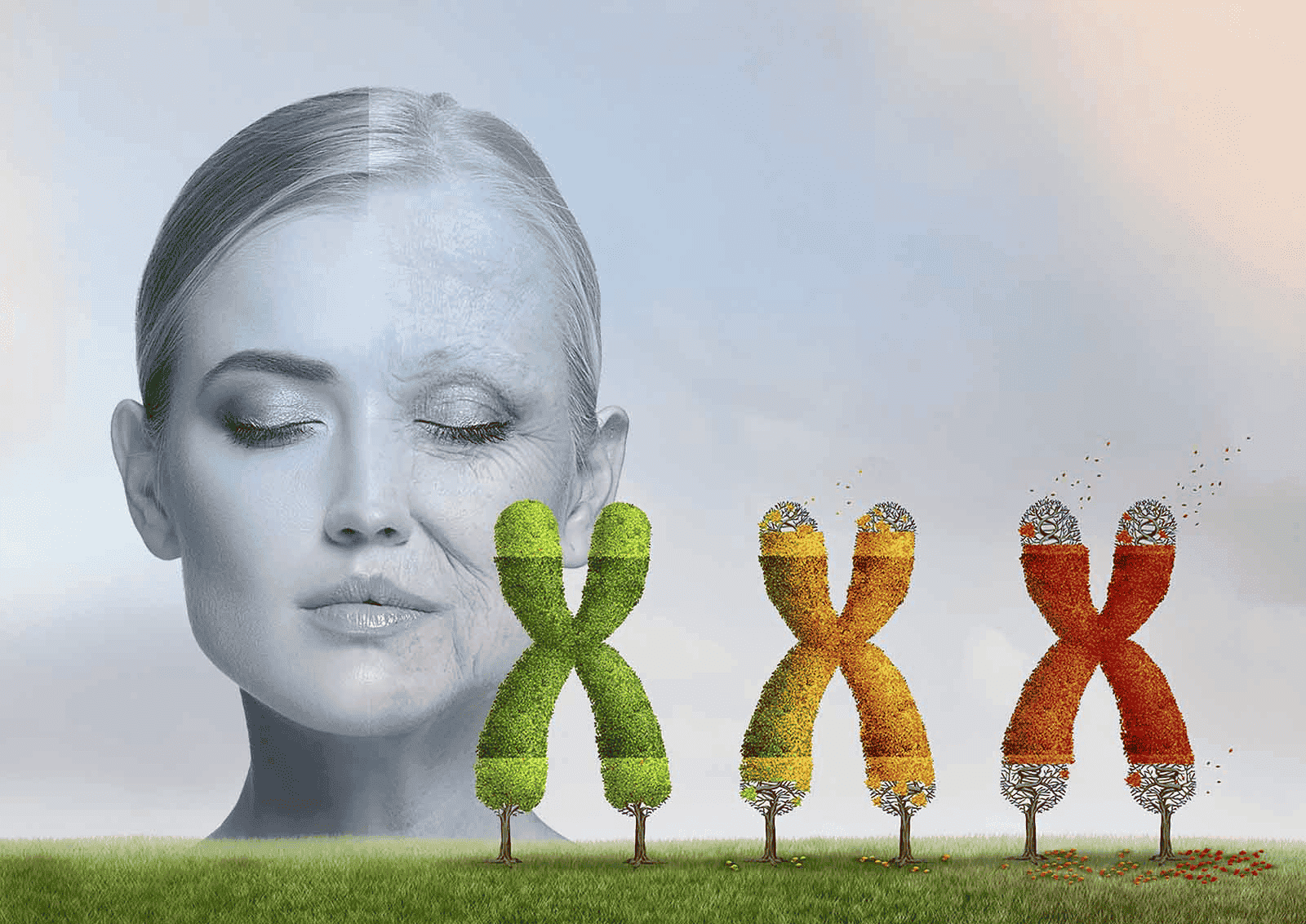
Reverse aging is the idea that the biological processes responsible for getting older are not fixed and irreversible, but can, at least partially, be slowed, stopped, or run backward. It is no longer a fringe idea confined to longevity podcasts. It is now a serious, well-funded, and increasingly well-evidenced area of biomedical research, pursued by Harvard professors, FDA-cleared clinical trials, and billion-dollar laboratories.
This article covers where that research actually stands. The real studies. The real institutions. The real controversy. And the story of the woman who decided not to wait for any of it.
Within the field, partial cellular reprogramming is described as the most credible route to reversing ageing, so we checked how much of it has reached people. Searched on 2 October 2026, the public trial registry held exactly one such trial: a safety study of Life Biosciences’ ER-100, planned for 18 people with eye disease. Nine studies use the phrase “cellular reprogramming”, but none is a rejuvenation trial; most use reprogrammed cells to study disease in a dish.
Set that against the surrounding noise. The same registry holds 1,394 studies mentioning longevity and 31 mentioning senolytics. The most-discussed idea in the field has the smallest clinical footprint in it.
That is not evidence the biology is wrong. It is the distance between a mechanism that works in mice and a treatment that has been tried in people, measured in registrations rather than adjectives.
Who Is Elizabeth Parrish, and What Did She Actually Do?
Elizabeth Parrish founded a small biotech company called BioViva, based on Bainbridge Island near Seattle. The company’s stated mission was to treat aging itself as a disease, rather than as the unavoidable backdrop to disease.
In September 2015, Parrish received two of her own company’s experimental therapies. The first was a myostatin inhibitor, intended to protect against age-related muscle loss. The second was a telomerase gene therapy, intended to lengthen telomeres and counteract the cellular aging associated with their shortening.
The procedure was done outside the United States to avoid the regulatory process that would otherwise have been required. Much of the biotech community criticised it sharply, arguing that self-experimentation outside any trial was reckless and scientifically meaningless however it turned out.
Six months later, BioViva reported that blood samples taken by an independent testing laboratory showed Parrish’s telomeres had lengthened from 6.71 kilobases to 7.33 kilobases. According to the company, this implied her white blood cells had become biologically younger by roughly 20 years.
The results were never published in a peer-reviewed journal. They came from one person, with no control group, no blinding and no replication, and critics pointed out that one telomere measurement before and after a treatment proves very little.
Whether or not the biology held up, Parrish had shown that someone would bet her own body on the idea that ageing could be reversed. She did not deliver a cure. She did force a speculative idea into public conversation, and kept it there for a decade.
Bryan Johnson: A Decade Later, a Different Kind of Self-Experiment
Parrish was not the last person to turn her own body into a research project. The tech entrepreneur Bryan Johnson took a far more systematic, far more expensive version of the idea and turned it into a media phenomenon.
Johnson, who sold his payments company Braintree to eBay for 800 million dollars in 2013, launched Project Blueprint in 2021: a continuously adjusted stack of diet, exercise, sleep, supplements and medical monitoring.
He publishes his blood panels and protocols openly and reports epigenetic-clock results, including DunedinPACE, that put his biological age below his calendar age. That openness has made him both the most transparent and the most scrutinised figure in the field.
The scrutiny has been warranted in places. Johnson took rapamycin for almost five years and stopped on 28 September 2024, citing recurring skin infections, raised glucose and lipids and a faster resting heart rate. In 2023 he received monthly infusions of young plasma, one donation coming from his teenage son, and then stopped them, saying no benefits had been detected.
Parrish and Johnson represent two very different bets on the same idea: a single irreversible act in 2015, and an open-ended experiment revised in public for years. Neither has produced peer-reviewed proof that their personal results generalise to anyone else. Both have pulled enormous public attention toward a field that once lived mostly in academic journals.
What Does “Reversing Aging” Actually Mean?
Your chronological age is simply how many years you have been alive. Nobody is claiming to reverse that. What researchers are targeting is biological age: a measure of how old your cells, tissues, and organs actually appear at the molecular level, based on markers like DNA methylation patterns, telomere length, and the accumulation of senescent cells.
Two people can share the same chronological age and have meaningfully different biological ages. This is precisely the territory explored in our coverage of centenarian genetics, where some individuals appear to age far more slowly than the calendar would suggest.
The tools used to measure biological age, most notably the Horvath epigenetic clock, are what make reverse aging research testable at all. Without a way to measure biological age independently of birth certificates, claims of “reversal” would be unfalsifiable. With it, researchers can show, in controlled studies, that a given intervention measurably moves the needle backward.
The Twelve Hallmarks of Aging: The Map Behind Every Method

In 2013 the Spanish biochemist Carlos López-Otín, with Maria Blasco, Linda Partridge, Manuel Serrano and Guido Kroemer, published a paper in Cell proposing nine hallmarks of ageing: common cellular and molecular processes that drive ageing across essentially all studied organisms. In 2023 the same five expanded the list to twelve, in a Cell paper titled “Hallmarks of aging: An expanding universe.”
The twelve hallmarks include genomic instability, telomere attrition, epigenetic alterations, loss of proteostasis, disabled macroautophagy, deregulated nutrient sensing, mitochondrial dysfunction, cellular senescence, stem cell exhaustion, altered intercellular communication, chronic inflammation, and dysbiosis, an imbalance in the body’s microbial communities.
The framework gives researchers a shared language for comparing very different interventions. Partial reprogramming mainly targets epigenetic alterations; hyperbaric oxygen and senolytics target telomere attrition and cellular senescence; fasting targets nutrient sensing and autophagy; plasma dilution targets intercellular communication and inflammation.
The 2023 update stresses that no hallmark acts alone. They reinforce one another, which is why researchers increasingly favour combinations over any single intervention.
Partial Cellular Reprogramming: The Most Credible Frontier
If there is one approach that the scientific establishment takes most seriously, it is partial cellular reprogramming, built on a Nobel Prize-winning discovery from 2006.
That year, Shinya Yamanaka showed that introducing four specific proteins into an adult cell could reset it all the way back to an embryonic, pluripotent state. These four proteins, OCT4, SOX2, KLF4, and c-MYC, are collectively known as the Yamanaka factors, or OSKM.
Full reprogramming erases a cell’s identity entirely. A skin cell stops being a skin cell. This is useful for stem cell research, but useless and dangerous for treating a living, aging body, since fully reprogrammed cells can form tumours.
The breakthrough came when researchers, including David Sinclair’s laboratory at Harvard, discovered that briefly and partially activating just three of the four factors, leaving out the more tumour-associated c-MYC, could restore youthful function to old cells without erasing what kind of cell they were.
In a landmark 2020 study that made the cover of Nature, Sinclair’s team used this three-factor approach, OSK, to restore vision in mice with damaged optic nerves, reversing a form of vision loss that mimics glaucoma. The cells became biologically younger by epigenetic measures, without losing their identity as retinal neurons.
In 2024 a team at the company Rejuvenate Bio, including the first author of the 2020 study, delivered OSK by gene therapy to naturally aged male mice at 124 weeks old, a very advanced age for a mouse. Their median remaining lifespan rose by 109 per cent, roughly doubling the time they had left, and their frailty scores improved.
This is where the story moves from mice to people. In January 2026 the FDA cleared Life Biosciences, which Sinclair co-founded, to begin the first human trial of partial epigenetic reprogramming, in patients with glaucoma or a rare condition called NAION that damages the optic nerve. The first participant was dosed in June 2026.
“Until recently, the best we could do was slow aging. New discoveries suggest we can now reverse it.”
— David A. Sinclair, Professor of Genetics, Harvard Medical School. Harvard / Aging press release, 12 July 2023.
The trial is explicitly focused on safety first. Restoring lost vision would be a secondary, hoped-for outcome. This is also an extremely well-funded race. Altos Labs, Retro Biosciences, and NewLimit, backed respectively by investment from Yuri Milner, Sam Altman, and Brian Armstrong, are all competing to bring some version of partial reprogramming into the clinic.
The Newest Breakthrough: Rewinding Aging With a Single Gene Switch
The most striking development since this field’s early milestones arrived in January 2026, and it points to a strategy even simpler than reprogramming.
A team at the University of California, San Francisco, with Changhui Deng, Saul Villeda and Hao Li as senior authors, reported in PNAS on 9 January 2026 a search for single transcription factors, master-switch proteins that control many other genes, able to nudge old cells back toward a younger pattern of activity.
Using a large genetic screen in aged human fibroblasts, they found that boosting EZH2 or E2F3, or lowering STAT3 or ZFX, made old cells multiply more and behave more youthfully, with less senescence, without losing their identity.
In living animals, raising EZH2 in the livers of aged mice reversed ageing-associated gene activity, reduced fat build-up and scarring, and improved glucose tolerance.
If a single transcription factor can reverse several ageing changes at once, the road to a therapy may be shorter than multi-gene reprogramming suggests. It remains animal-stage work.
Hyperbaric Oxygen Therapy: Lengthening Telomeres With Pressurised Air
Researchers in Israel found something unexpected while studying a far simpler intervention: pressurised oxygen.
Hyperbaric oxygen therapy, or HBOT, involves breathing concentrated oxygen inside a pressurised chamber. It has been used for decades to treat decompression sickness and hard-to-heal wounds. What researchers at Tel Aviv University and Shamir Medical Center wanted to know was whether it could do anything for aging itself.
In a 2020 clinical trial led by Professor Shai Efrati, 35 healthy adults aged 64 and older underwent 60 hyperbaric sessions over 90 days, with no other lifestyle, diet, or medication changes. Blood was drawn before, during, and after the protocol.

The results, published in the peer-reviewed journal Aging, showed telomere lengthening of more than 20 percent, reaching up to 38 percent in some immune cells studied. The same protocol reduced the proportion of senescent cells, the worn-out, zombie-like cells discussed in our coverage of telomeres and cellular aging, by up to 37 percent.
“Today telomere shortening is considered the ‘Holy Grail’ of the biology of aging.”
— Professor Shai Efrati, Tel Aviv University and Shamir Medical Center. Tel Aviv University / Sagol Center press release, 18 November 2020.
Fasting and Caloric Restriction: The Oldest Known Longevity Lever
Of every intervention discussed here, caloric restriction has the longest and most consistent evidence behind it, stretching back nearly a century of animal research.
The modern human-relevant version of this idea is largely the work of Valter Longo, director of the Longevity Institute at the University of Southern California. Longo studied under calorie-restriction pioneer Roy Walford at UCLA before developing what he calls the fasting-mimicking diet, or FMD.
The FMD is a five-day, low-calorie, low-protein, plant-based eating pattern designed to trick the body into a fasting state without requiring true water-only fasting. According to Longo, this triggers cellular cleanup processes, particularly autophagy, in which cells break down and recycle damaged internal components.
In a 2024 secondary analysis of a randomised trial, published in Nature Communications, three FMD cycles were associated with a 2.5-year fall in median biological age, independent of weight loss. Longo and a co-author hold equity in L-Nutra, which supplied the diet; the paper states they did not take part in collecting or analysing the data.
The mechanism runs through nutrient-sensing pathways that recur throughout this article. When calories are scarce, the energy sensor AMPK switches on and the growth pathway mTOR, the target of rapamycin, winds down, flipping cells from building into maintenance and the recycling of worn-out components, a process called autophagy. Sirtuins, proteins that need the coenzyme NAD+, also become more active. Metformin and rapamycin are called caloric-restriction mimetics because they engage the same machinery with a pill.
A 2026 University of Sydney trial in 104 adults aged 65 to 75, published in Aging Cell, found that some diets lowered a blood-marker estimate of biological age within four weeks, though the authors cautioned that this may reflect short-term responses rather than slower ageing.
Young Blood, Diluted Blood, and an Accidental Discovery
The idea that young blood might rejuvenate old bodies has a strange and important history, one that mostly disproved itself on the way to a more useful discovery.
In 2005 a Stanford team including Irina and Michael Conboy surgically joined the circulatory systems of an old mouse and a young mouse, a technique called parabiosis. Muscle and liver cells in the old mouse showed genuine signs of rejuvenation.
This launched a wave of excitement, and a wave of companies, around the idea that specific youthful proteins in young blood were the active ingredient. Some companies began offering young plasma infusions directly to paying customers.
Then the Conboy lab ran a more careful follow-up. When they exchanged blood between young and old mice without physically joining the animals, the young mice got measurably worse, while young blood did little for the old ones.
This led to a different hypothesis entirely: that aging is driven less by a deficiency of youthful factors, and more by an accumulation of harmful ones. To test it, the Conboys simply diluted old plasma, replacing part of it with plain saline and albumin, a basic blood protein, without adding any young blood at all.
A single dilution improved muscle repair, reduced fat and scarring in the liver and increased the birth of new neurons in old mice, results published in the journal Aging in 2020. Dilution alone, with no young blood at all, met or exceeded the effects of the original parabiosis experiments.
By 2022 the approach had reached people through therapeutic plasma exchange, a long-established procedure for autoimmune conditions: a Berkeley study in GeroScience reported that repeated sessions shifted a panel of ten protein biomarkers toward a younger profile. In 2025 a randomised, placebo-controlled trial of 42 adults over 50 at the Buck Institute, published in Aging Cell, found that plasma exchange improved 15 epigenetic clocks compared with placebo, most strongly when combined with immunoglobulin; two adverse events led participants to stop. Both studies include authors from Global Apheresis, a plasma-exchange company.
Repurposed Drugs: Metformin, Rapamycin, and Telomerase Activators
Some of the most discussed reverse aging candidates were not designed for aging at all. They were designed for diabetes and organ transplants, and researchers noticed their side effects looked suspiciously like slower aging.
Metformin has been prescribed for type 2 diabetes since the 1950s. A 2014 observational study reported that diabetic patients on metformin outlived matched people without diabetes, which helped inspire the TAME trial (Targeting Aging with Metformin), designed to test whether metformin delays multiple age-related diseases in older adults without diabetes. A 2022 study of Danish national registers found no such survival advantage.
Rapamycin, originally developed as an immunosuppressant for organ transplant patients, works through a related pathway, inhibiting mTOR. In a landmark 2009 study it extended mouse lifespan by 9 per cent in males and 14 per cent in females even when started late in life, at 600 days old, one of the most consistently reproduced findings in ageing biology.
A newer pharmacological direction targets telomerase directly. In 2024, a team led by Ronald DePinho at the MD Anderson Cancer Center screened 653,000 compounds and identified one, dubbed a TERT-activating compound or TAC, that boosted the telomere-extending enzyme telomerase throughout the body, including the brain, and reversed numerous signs of aging in mice. It remains a preclinical, animal-stage finding.
The honest caveat matters as much as the promise. As of 2026, no completed human trial has proven that any of these drugs extends healthy lifespan in people without an underlying condition. The case for diabetics and organ transplant patients is much stronger than the case for preventive use in otherwise healthy adults.
Why the FDA Does Not Recognise “Aging” as a Disease
The U.S. Food and Drug Administration does not currently recognise aging itself as a disease or condition that a drug can be approved to treat. This is precisely why the TAME trial measures metformin’s effect on delaying multiple specific diseases of aging, rather than aging as a single outcome, and why Life Biosciences’ partial reprogramming trial is officially framed around treating glaucoma and NAION, not reversing aging broadly.
Researchers and advocacy organisations, including the American Federation for Aging Research, have spent years lobbying regulators to accept a delay in the onset of multiple age-related diseases as a legitimate trial endpoint, because no existing pathway lets a company seek approval for an anti-aging drug as such.
Until that changes, the clinical proof of any reverse-ageing method will keep arriving sideways, through named diseases, rather than head-on.
Epigenetic Clocks: How a “Younger” Result Is Measured
The original epigenetic clock, developed by biostatistician Steve Horvath in 2013, estimates biological age by examining DNA methylation patterns at several hundred specific sites across the genome. Methylation, a chemical tag attached to DNA that influences gene activity, changes predictably enough with age that Horvath’s clock can estimate a person’s age from a tissue sample to within a few years.
Later clocks refined the idea. GrimAge, from Horvath’s own team, was trained to predict mortality risk. PhenoAge incorporates blood biomarkers. DunedinPACE, used by Bryan Johnson and built from New Zealand’s long-running Dunedin cohort study, measures the pace of aging directly, in biological years accumulated per calendar year.
These tools are genuinely powerful, validated against real health outcomes across large populations. They are not infallible rulers. Different clocks can disagree on the same blood sample, and a clock trained on one population does not always generalise to another. A favourable reading on one clock is informative, but it is not the same as proof that a person’s actual risk of disease or death has dropped by an equivalent margin.
How to Evaluate Reverse Aging Claims You Encounter Online
First, ask whether the claim comes from a single self-reported case or from a controlled trial with a comparison group. Elizabeth Parrish’s telomere result and Bryan Johnson’s biological age scores are both single-subject data points. They are interesting. They are not evidence that the same protocol would work in you.
Second, check whether the researchers or company behind a study have a direct financial stake in its outcome, as with the Tel Aviv HBOT trial and several commercial epigenetic-clock providers. A conflict of interest does not make a result wrong, but it does mean independent replication matters more than usual.
Third, distinguish between animal results and human results. Rapamycin’s lifespan extension in mice is one of the most reproduced findings in aging biology. Whether it extends healthy lifespan in humans without an underlying disease remains, as of 2026, genuinely unproven.
Fourth, remember that celebrated researchers attract serious pushback. David Sinclair’s claims, including those in his bestselling book Lifespan, have been sharply criticised by the biochemist Charles Brenner, among others. Open disagreement is not a reason to dismiss the field; it is a sign that claims are facing scrutiny.
Why “Reversing” Aging Is Different From Slowing It

Slowing aging means reducing the rate at which biological damage accumulates going forward. Reversing aging means actively undoing damage that has already accumulated, moving a measured biomarker backward rather than simply flattening its future trajectory.
Caloric restriction and rapamycin are best understood, on current evidence, as primarily slowing interventions. Partial reprogramming, the transcription-factor approach, HBOT’s telomere effects, and plasma dilution are the candidates with the strongest direct evidence of genuine reversal on specific biomarkers, which is precisely why they generate the most excitement and the most scrutiny at once.
None of this happens in isolation from the underlying genetics. The epigenetic machinery that partial reprogramming targets is the same machinery explored in our article on epigenetics and gene expression. The senescent cells that HBOT and senolytics both target are the same cells discussed in our coverage of telomeres and cellular aging. Reverse aging research is not a separate field from genetics. It is genetics, applied with a specific, audacious goal in mind.
Frequently Asked Questions
Further Reading on Web News For Us
Sources
Primary peer-reviewed research:
- López-Otín, C., Blasco, M. A., Partridge, L., Serrano, M. & Kroemer, G. (2023). Hallmarks of aging: An expanding universe. Cell, 186(2), 243–278. doi.org/10.1016/j.cell.2022.11.001
- Lu, Y. et al. (2020). Reprogramming to recover youthful epigenetic information and restore vision. Nature, 588, 124–129. doi.org/10.1038/s41586-020-2975-4
- Yang, J. H. et al., Sinclair Lab (2023). Chemically induced reprogramming to reverse cellular aging. Aging, 15. PMC10373966
- Sengstack, J. … Deng, C., Villeda, S. A. & Li, H. (2026). Systematic identification of single transcription factor perturbations that drive cellular and tissue rejuvenation. PNAS, 123(2). NIH Research Matters summary
- Hachmo, Y., Hadanny, A., Abu Hamed, R. … Efrati, S. (2020). Hyperbaric oxygen therapy increases telomere length and decreases immunosenescence in isolated blood cells. Aging, 12. doi.org/10.18632/aging.202188
- Brandhorst, S., Levine, M. E. … Longo, V. D. (2024). Fasting-mimicking diet causes hepatic and blood markers changes indicating reduced biological age and disease risk. Nature Communications, 15. doi.org/10.1038/s41467-024-45260-9
- Andrews, C. J. et al. (2026). Short-term dietary intervention alters physiological profiles relevant to ageing. Aging Cell, 25(5). University of Sydney summary
- Mehdipour, M., Skinner, C., Wong, N. … Conboy, I. (2020). Rejuvenation of three germ-layer tissues by exchanging old blood plasma with saline-albumin. Aging, 12. PMC7288913
- Kim, D., Kiprov, D. D. … Conboy, I. (2022). Old plasma dilution reduces human biological age: a clinical study. GeroScience, 44(6), 2701–2720. doi.org/10.1007/s11357-022-00645-w
- Fuentealba, M. et al. (2025). Multi-omics analysis of biological age rejuvenation in response to therapeutic plasma exchange. Aging Cell. doi.org/10.1111/acel.70103
- Castner, S. A. et al. (2023). Longevity factor klotho enhances cognition in aged nonhuman primates. Nature Aging, 3(8), 931–937. doi.org/10.1038/s43587-023-00441-x
- Macip, C. C. … Davidsohn, N. (2024). Gene therapy-mediated partial reprogramming extends lifespan and reverses age-related changes in aged mice. Cellular Reprogramming, 26(1), 24–32. doi.org/10.1089/cell.2023.0072
- Harrison, D. E. et al. (2009). Rapamycin fed late in life extends lifespan in genetically heterogeneous mice. Nature, 460, 392–395. doi.org/10.1038/nature08221
- Keys, M. T. et al. (2022). Reassessing the evidence of a survival advantage in Type 2 diabetes treated with metformin compared with controls without diabetes. International Journal of Epidemiology, 51(6). doi.org/10.1093/ije/dyac200
Institutional and science journalism coverage:
- Nature (April 2026) — This Method to Reverse Cellular Ageing Is About to Be Tested in Humans
- Live Science (2024) — Single Molecule (TAC) Reverses Signs of Aging in Mice (DePinho, MD Anderson)
- American Federation for Aging Research — The TAME Trial: Targeting Aging with Metformin
- American Council on Science and Health (Feb 2025) — Dissecting the Claims of the Blueprint Protocol
- ClinicalTrials.gov — NCT07290244: ER-100 in optic neuropathies (Life Biosciences)
- Life Biosciences (9 June 2026) — First patient dosed in Phase 1 trial of ER-100
- Bryan Johnson — I stopped taking rapamycin (Blueprint)
Baryon. (2024, December 27). Reverse Aging Phenomenon: Decoding Real Science Behind The Hype. Web News For Us. https://webnewsforus.com/reverse-aging-science-explained/
Baryon. “Reverse Aging Phenomenon: Decoding Real Science Behind The Hype.” Web News For Us, 27 December 2024, https://webnewsforus.com/reverse-aging-science-explained/. Accessed 21 October 2026.



2 Responses