In August 2025, a story swept across the internet: a Chinese company had supposedly built a humanoid “pregnancy robot” with an artificial womb, able to carry a baby from conception to birth for around $14,000. It was shared millions of times. It was also false.
The hoax spread because it touched a real anxiety. Birth rates are collapsing across much of the world, infertility is rising, and the idea of growing babies outside the body — known as ectogenesis — sits at the edge of what science might one day achieve.
It is a subject where fact and fiction are unusually tangled. Science fiction has imagined artificial wombs for a century, and every real advance is quickly inflated into something it is not.
Behind the viral fiction lies genuine, carefully regulated research — chiefly aimed not at replacing pregnancy, but at saving the most premature babies.
This article separates the hoax from the science: what artificial wombs actually are, how far the real technology has come, the formidable obstacles that remain, and the ethical questions it raises.
The real technology behind every artificial-womb headline, hoax or otherwise, is the artificial placenta, so that is what we looked for in the public trial registry. As of 1 September 2026 it held zero registered studies using the phrase “artificial placenta”. Re-run on 3 October 2026, it still held none — and none for “artificial womb”, “artificial uterus” or “ectogenesis” either.
That is the number to hold onto while reading anything about ectogenesis. The lamb experiments were real, published and repeated. Nine years after the first biobag, the technique has still not been registered as a human trial anywhere in the registry.
It is not evidence the work has stalled — regulatory approval for a first-in-human study of this kind is a slow, deliberate process, and the research continues in animals. It is evidence of exactly how far from a delivery room the technology remains.
What Are Artificial Wombs?
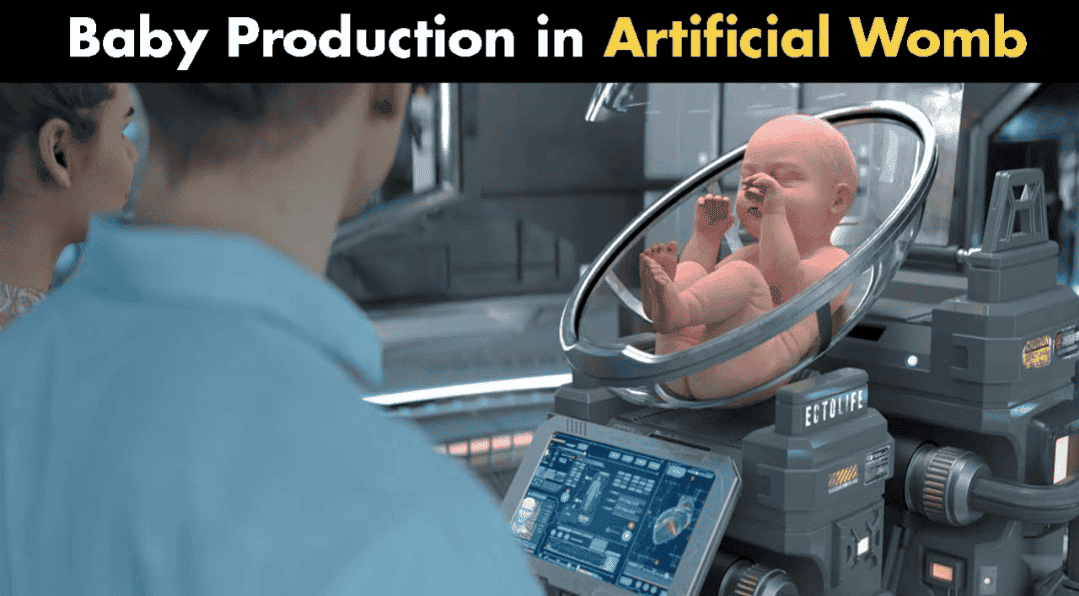
An artificial womb is a device designed to support the growth of a fetus outside a human body. The scientific term for gestation outside the womb is ectogenesis, an idea first popularised in Aldous Huxley’s Brave New World.
It is essential to distinguish two very different concepts, because they are almost always confused in popular coverage.
Partial ectogenesis supports a fetus that has already developed part-way in a natural pregnancy — typically an extremely premature baby of 22 to 28 weeks. This is where real science is making progress.
Full ectogenesis would grow a baby from conception all the way to birth entirely outside the body. This does not exist, has never been achieved even in animals, and remains far beyond current science.
Nearly all confusion — and every dystopian headline — comes from blurring these two. The viral “pregnancy robot” claimed full ectogenesis. Real laboratories are working only on the partial kind.
The distinction is not merely technical. Partial ectogenesis is an extension of neonatal medicine, helping babies who already exist. Full ectogenesis would be something genuinely new — a machine standing in for the entire process of gestation.
The China “Pregnancy Robot”: Anatomy of a Hoax
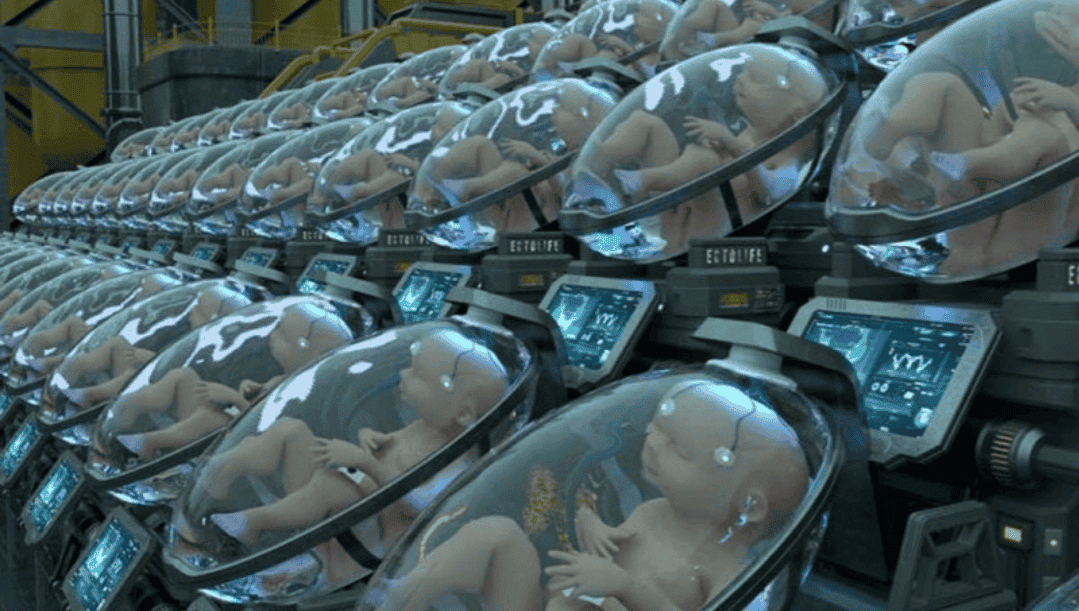
In August 2025, reports claimed that a man named Zhang Qifeng, said to have founded a Guangzhou company called Kaiwa Technology, had built a humanoid robot with an artificial womb able to carry a full pregnancy.
A prototype was promised for 2026 at under 100,000 yuan — roughly $14,000. The story, illustrated with striking images, spread from Chinese social media to major outlets including the New York Post, Newsweek, and the Daily Mail.
Then the fact-checkers arrived. Snopes and Live Science investigated and found the story did not hold up.
Zhang was said to hold a PhD from Nanyang Technological University in Singapore, but the university told Live Science that no one by that name had graduated from it with a PhD. Live Science could find no online evidence that Kaiwa Technology existed at all.
The story had begun with a single Chinese outlet, Kuai Ke Zhi, and was repeated by much larger publications without that basic checking. No prototype, paper or demonstration accompanied any version of it.
The episode is a case study in how misinformation spreads. A neat, dramatic solution to a painful human problem, dressed in convincing imagery, outran verification before the corrections could catch up.
It also shows how AI-generated images have raised the stakes. A decade ago, a fabricated device would have lacked convincing photographs. Today, realistic images can be produced in minutes, giving a false story an air of authenticity.
Why the Hoax Struck a Nerve: China’s Demographic Crisis
The story went viral partly because it spoke to a very real crisis. China’s population is shrinking, and its leaders are searching urgently for ways to reverse the trend.
China’s fertility rate has fallen to around 1.0 births per woman — less than half the 2.1 needed to keep a population stable, and among the lowest in the world.
The numbers keep falling. China’s National Bureau of Statistics reported 7.92 million births in 2025, down from 9.54 million in 2024, and a fourth consecutive year of population decline, to 1.405 billion people.
The legacy of the one-child policy, which ran from 1979 to 2015, created a demographic momentum that is now proving very hard to shift, even after the government reversed course.
Infertility has risen sharply too, from about 12% in 2007 to about 18% by 2020, according to a 2021 Lancet Commission led by the reproductive biologist Qiao Jie. Delayed marriage, economic pressure, and lifestyle factors all contribute.
Commercial surrogacy is illegal in China, closing off one route many couples use elsewhere. In that pressured environment, a technological “fix” for reproduction — however implausible — was always going to capture attention.
The government has rolled out incentives — extended parental leave, housing support and, since 2025, a national childcare subsidy of 3,600 yuan a year for every child under three — with limited success so far. Against that backdrop of official anxiety, a miracle machine was an irresistible story, whatever its truth.
The Real Science: The Biobag and EXTEND
While the pregnancy robot was fiction, artificial-womb research is genuine — and its landmark moment came in 2017.
Researchers at the Children’s Hospital of Philadelphia, led by Alan Flake, kept extremely premature lambs alive for up to four weeks inside a transparent “biobag” filled with a warm, amniotic-like fluid.
The lambs, at a stage equivalent to a 23-week human fetus, continued to grow, develop their lungs, and open their eyes. Nutrients and oxygen were supplied through the umbilical cord, mimicking the placenta.
This work evolved into a system called EXTEND — the Extra-uterine Environment for Newborn Development. Its goal is narrow and specific: to give the most premature human babies a better chance of survival.
The target is a group that medicine still struggles to save. A US study of 10,877 babies born between 22 and 28 weeks of pregnancy, published in JAMA in 2022, found that 10.9% of those born alive at 22 weeks survived to go home, against 94% of those born at 28 weeks. Among babies given full intensive care, survival was 30% at 22 weeks and about 56% at 23.
Survivors often carry a heavy cost. In the same study, 8.4% of children born at 22 to 26 weeks had moderate or severe cerebral palsy by the age of two, and around half had been readmitted to hospital. Those numbers, not science fiction, are the reason artificial-womb research exists.
The researchers have been emphatic that EXTEND is a bridge for babies already born prematurely — not a way to push viability earlier, and certainly not a way to gestate a baby from conception.
Regulators have begun considering first-in-human trials, but none has yet taken place. Every result so far comes from animal studies.
How the Biobag Actually Works
The elegance of the biobag lies in how closely it imitates the womb rather than trying to improve on it. The design is strikingly simple.
The fetus floats in a sealed bag of synthetic amniotic fluid, kept at body temperature and continually refreshed. This mirrors the fluid that cushions and protects a baby in the uterus.
Crucially, the system has no mechanical pump. The fetal heart itself drives blood through an external oxygenator connected to the umbilical cord, avoiding the damage that pumps can inflict on tiny, fragile vessels.
That external oxygenator acts as an artificial placenta, adding oxygen and removing carbon dioxide, while nutrients are supplied through the same umbilical link.
The whole approach is a departure from the conventional incubator, which exposes a premature baby to air and forces immature lungs to breathe. The biobag lets those lungs keep developing in fluid, as nature intended.
In the 2017 lamb studies, this proved decisive. Lungs and brains that would normally be damaged by early exposure to air continued to mature almost as if the animals were still in the uterus.
The paper itself is careful about what it showed. Lambs on the system kept a stable circulation and normal blood oxygen levels, and with proper nutrition they grew normally, their lungs matured, and their brains grew and laid down myelin, the insulating sheath around nerve fibres. It also noted that earlier attempts to extend gestation outside the body had achieved only limited success.
Why Full Ectogenesis Is So Hard
The gap between the biobag and a full artificial womb is not a matter of engineering polish. It involves biological problems we do not yet know how to solve.
Implantation. Early pregnancy depends on an embryo embedding into the uterine wall and building a placenta — a process no artificial system can currently replicate outside the body.
Hormonal signalling. Pregnancy is orchestrated by a shifting, feedback-driven cascade of hormones that coordinate growth, immune tolerance, and the timing of birth. No machine can yet reproduce that dynamic dialogue.
Infection control. The womb is nearly sterile. Once external tubes, ports, and sensors are introduced, every connection becomes a possible entry point for infection — sustained for months.
These are the reasons scientists say full ectogenesis remains far out of reach. The biobag solves the late stage of gestation; the beginning remains a mystery.
There is a useful way to picture the gap. The biobag takes over near the end of a journey that is already most of the way complete. Full ectogenesis would have to start that journey from nothing — a vastly harder task.
Stem-Cell Embryo Models
A separate strand of research studies the very earliest stages of development using stem-cell-based embryo models — structures grown from stem cells that mimic aspects of an early embryo without sperm or egg.
Teams led by researchers such as Magdalena Żernicka-Goetz and Jacob Hanna have created models that reproduce features of early human development, offering a window into a stage that is otherwise almost impossible to study.
These models are powerful tools for understanding miscarriage, birth defects, and the mysteries of implantation. But they are explicitly not intended, or able, to become babies.
They matter to the artificial-womb question because implantation and early development are precisely the stages that full ectogenesis cannot yet reproduce. Understanding them in the lab is a prerequisite for any distant future technology.
International guidelines from the International Society for Stem Cell Research set strict limits on how such models may be used, precisely to keep the science within ethical bounds. This research shares roots with our article on lab-grown neurons and brain organoids.
The Ethical Debate
Even limited to premature care, artificial-womb technology raises profound ethical questions — and full ectogenesis would raise far more.
Supporters argue the technology could save the lives of extremely premature babies, reduce the physical risks of pregnancy, and help people who cannot carry a child, including those with medical conditions or after cancer treatment.
Critics worry that separating gestation from the body could commodify reproduction, devalue the maternal bond, and deepen existing inequalities in who can access such care.
Bioethicists also point to thorny questions of viability. If a fetus can be supported outside the body ever earlier, how might that reshape debates over the legal thresholds of pregnancy?
The question is not abstract. In Britain, the legal limit for most abortions has been 24 weeks since 1990, a figure linked to the point at which a premature baby might survive, so any technology that moved that point earlier would reopen a long-settled argument.
The psychological effects on children born this way are simply unknown. Studies of IVF children are reassuring, but full ectogenesis would be genuinely uncharted territory. Related dilemmas appear in our article on designer babies and the myth of genetic optimisation.
There is also the matter of the maternal experience. Pregnancy involves a profound biological and emotional relationship between parent and child, and it is far from clear what would be gained or lost by removing it.
The Legal and Regulatory Landscape
Artificial-womb technology is emerging faster than the laws meant to govern it, creating a patchwork that varies widely by country.
In the United States, oversight currently focuses on safety through the medical-device approval process, since the only near-term application is neonatal care for premature infants.
In Europe, bioethics committees tend to scrutinise reproductive technologies more strictly, and any move toward external gestation would face intense review.
China, notably, has no specific law addressing artificial wombs, and its ban on commercial surrogacy leaves a robotic surrogate in an unregulated grey area — part of why the hoax resonated there.
Most ethicists agree that clear, internationally coordinated frameworks are needed before the science advances further, to prevent misuse and ensure equitable access.
History suggests that regulation tends to lag behind reproductive technology. IVF, surrogacy, and genetic screening all arrived before the rules that now govern them, often after difficult public debate.
Where Things Stand in 2026
Research has accelerated sharply since the lamb experiment. We counted PubMed records that mention an artificial womb, artificial placenta, artificial uterus or ectogenesis in their title or abstract: 41 between 2008 and 2016, and 250 between 2017 and 2025, with a peak of 45 in 2023. The field has grown about sixfold — and still has no registered human trial.
That 2023 peak coincided with the moment regulators took the question seriously. On 19 and 20 September 2023, the US Food and Drug Administration’s Pediatric Advisory Committee met to discuss how first-in-human studies of artificial-womb devices could be designed safely and ethically, for babies born before 28 weeks — fewer than one in a hundred births.
Several teams are preparing. The Philadelphia group’s EXTEND work has been taken forward by a spin-out company, Vitara Biomedical; a team at the University of Michigan led by the fetal surgeon George Mychaliska is developing what it calls an artificial placenta; and a Dutch start-up, AquaWomb, is building its own design. As of October 2026, none of them has a study listed in the public trial registry.
Similar work is under way in Australia and Japan. In 2019 a team from the University of Western Australia and Tohoku University reported keeping eight lamb fetuses, at a stage roughly equivalent to 24 weeks of human pregnancy, on an artificial placenta for five days; seven of the eight completed the full 120 hours with their key body measurements in the normal range.
The rules are tightening at the other end. In June 2025 the International Society for Stem Cell Research updated its guidelines to say that embryo models grown from stem cells must never be transferred to a uterus, and must not be cultured to the point of potential viability — an explicit ban on attempting full ectogenesis with them.
Global Research and the Realistic Outlook
Serious artificial-womb research is a global effort, though far more modest than headlines suggest. The leading work remains focused on partial ectogenesis for premature infants.
The United States leads with the EXTEND system. Groups in Europe, Japan, and Australia pursue related approaches, alongside advances in bioengineered placentas and real-time fetal monitoring.
Supporters hope that partial ectogenesis for the most premature babies could enter carefully controlled human trials within this decade, potentially improving survival for infants born around 22 to 24 weeks.
Even that narrower goal faces hurdles. Human trials will demand exceptional safety data, careful consent from parents in crisis, and long-term follow-up to confirm that babies supported this way go on to thrive.
Full ectogenesis, by contrast, may take decades if it proves possible at all — and would require breakthroughs in implantation, hormonal control, and infection prevention that no one can yet foresee.
A Long History of Trying
The dream of supporting life outside the womb is far older than the biobag. Its history helps put today’s research in perspective.
In the late nineteenth century, French doctors introduced the “couveuse,” an early infant incubator inspired by devices for hatching eggs. It was so novel that incubators with live babies were once exhibited at public fairs.
Serious attempts at an artificial placenta began decades before the biobag. In 1993 a team at the University of Tokyo reported keeping two premature goat fetuses alive for about three weeks in tanks of artificial amniotic fluid, their umbilical vessels connected to an external oxygenator. The fetuses had to be paralysed with drugs to stop them moving and swallowing, but when they were taken out and put on ventilators, both survived for more than a week.
Over the twentieth century, neonatal intensive care transformed the odds for premature babies. Ventilators, surfactant therapy, and modern incubators pushed the limit of viability steadily earlier, to around 22 to 24 weeks today.
Two advances did much of that work. In 1972 the obstetrician Graham Liggins and the paediatrician Ross Howie showed in a controlled trial in New Zealand that giving steroids to mothers before a premature birth reduced breathing failure in their babies, and around 1990 artificial surfactant, which stops immature lungs from collapsing, came into routine use.
Seen this way, the artificial womb is not a sudden leap but the next step in a long medical effort to help the smallest and most fragile infants survive.
Could Artificial Wombs Reverse Population Decline?
The implicit promise behind the viral hoax was that technology could solve a falling birth rate. It is worth stating plainly why that hope is misplaced.
Even if full ectogenesis were achievable, it would be enormously expensive, ethically fraught, and available to very few. It could never operate at the scale needed to move a national birth rate.
More fundamentally, low fertility is driven by social and economic factors — the cost of housing and childcare, career pressures, and changing choices — not by a shortage of wombs.
A machine cannot address the reasons people are choosing to have fewer children. That is why demographers treat the idea of a technological baby boom with deep scepticism.
Where governments have slowed fertility decline at all, it has been through social policy — affordable childcare, family-friendly workplaces, and secure housing — and even there the effects have been modest. That is where the real debate lies.
Why This Matters
The pregnancy-robot hoax and the real science of ectogenesis together tell an important story about how we understand technology in the 2020s.
The genuine research is quieter and more limited than the myth, but it is also more valuable: it aims to save the lives of babies born too soon, one of the oldest tragedies of medicine.
The hoax, meanwhile, is a warning. As reproductive anxieties grow and AI-generated content becomes ever more convincing, the appetite for dramatic, tidy solutions will keep outrunning the slower truth.
Understanding the real state of artificial wombs — promising for premature care, distant for full gestation, and ethically complex throughout — is the best defence against the next viral fiction. The science deserves to be judged on its facts, not its headlines.
For the families of babies born dangerously early, that real science may one day mean the difference between loss and a healthy child. It is a quieter promise than a pregnancy robot, but a far more meaningful one.
Frequently Asked Questions
Was the China “pregnancy robot” real?
No. The August 2025 claim about a humanoid “pregnancy robot” with an artificial womb was debunked by Snopes and Live Science. Nanyang Technological University said no one by the inventor’s name had graduated from it with a PhD, and Live Science found no evidence that the company existed. No prototype, paper or demonstration ever accompanied the story.
What is the difference between partial and full ectogenesis?
Partial ectogenesis supports a fetus that has already developed part-way in a natural pregnancy — typically an extremely premature baby of 22 to 28 weeks — and is the focus of real research. Full ectogenesis would grow a baby entirely outside the body from conception, which has never been achieved even in animals and remains far beyond current science.
What was the 2017 biobag experiment?
In 2017, researchers at the Children’s Hospital of Philadelphia kept extremely premature lambs — at a stage equivalent to a 23-week human fetus — alive for up to four weeks inside a fluid-filled “biobag.” The lambs continued to grow and develop, with nutrients supplied through the umbilical cord. It is the foundation of the modern EXTEND system for premature infants.
Why is a full artificial womb so difficult to build?
Three biological problems stand in the way: replicating implantation, where an embryo embeds and builds a placenta; reproducing the dynamic, feedback-driven hormonal signalling that governs pregnancy; and preventing infection over many months once external tubes and sensors are introduced. No current system can achieve any of these, which is why experts say full ectogenesis is not close.
Are there human trials of artificial wombs?
Not yet. All results to date come from animal studies, primarily in lambs, and a registry search on 3 October 2026 found no registered human trial. The FDA’s Pediatric Advisory Committee discussed how first-in-human studies could be run in September 2023, and several teams are preparing, but any such trials would focus solely on supporting babies already born prematurely, not on gestation from conception.
Why did the hoax spread so quickly in China?
China faces a severe demographic crisis, with a fertility rate near 1.0 births per woman, 7.92 million births in 2025, rising infertility, and a ban on commercial surrogacy. In that pressured context, a technological “fix” for reproduction was compelling. Combined with dramatic imagery and rapid social-media amplification, the story spread widely before fact-checks could catch up.
How is the biobag different from an incubator?
An incubator keeps a premature baby warm while it breathes air, often with the help of a ventilator. The biobag keeps the fetus in warm fluid instead, with oxygen supplied through the umbilical cord by an external oxygenator driven by the fetus’s own heart, so the lungs can keep developing in fluid as they would in the womb.
Could artificial wombs replace pregnancy?
Not with any technology that exists or is close. Current research starts with a fetus that has already spent five or six months in a womb, and nobody can yet reproduce implantation, the hormonal control of pregnancy, or months of infection-free support. Even the teams closest to human trials describe their devices as treatments for extreme prematurity, not substitutes for pregnancy.
Why do artificial wombs focus on 22 to 24 weeks?
Because that is where today’s intensive care struggles most. In a large US study published in 2022, only about 30% of babies born at 22 weeks and given full intensive care survived to go home, and many survivors had lasting complications. Letting the lungs and brain keep developing in fluid, rather than air, is the idea artificial wombs are built to test.
Is it legal to grow a human embryo outside the body?
Only for a very short time, and only for research. In the UK, for example, the law forbids keeping a human embryo in the laboratory beyond 14 days. Since June 2025, international stem-cell guidelines have also banned culturing embryo models grown from stem cells to the point where they could become viable. No country permits gestation from conception outside the body.
Further Reading
Sources
- Partridge, E. A., Flake, A. W., et al. (2017). “An extra-uterine system to physiologically support the extreme premature lamb.” Nature Communications, 8, 15112 (DOI: 10.1038/ncomms15112).
- Children’s Hospital of Philadelphia — Artificial Womb / EXTEND research.
- Snopes — “No, China Didn’t Build a ‘Pregnancy Robot'” (fact check, August 2025).
- Live Science — analysis of the pregnancy-robot claim and real artificial-womb science.
- International Society for Stem Cell Research — Guidelines for Stem Cell Research and Clinical Translation.
- World Bank Open Data — fertility rate, total (births per woman), China.
- Bell et al. — Mortality, In-Hospital Morbidity, Care Practices, and 2-Year Outcomes for Extremely Preterm Infants in the US, 2013–2018, JAMA 327, 248–263 (2022).
- Qiao et al. — A Lancet Commission on 70 years of women’s reproductive, maternal, newborn, child, and adolescent health in China, The Lancet 397, 2497–2536 (2021).
- CNN — FDA advisers discuss future of ‘artificial womb’ for human infants (19 September 2023).
- Progress Educational Trust — ISSCR requires expanded oversight of embryo models, bans ectogenesis (June 2025).
- National Bureau of Statistics of China — Statistical Communiqué on the 2025 National Economic and Social Development (28 February 2026).
- Kuwabara group — Development of an artificial placenta: survival of isolated goat fetuses for three weeks with umbilical arteriovenous extracorporeal membrane oxygenation, Artificial Organs 17, 996–1003 (1993).
- Usuda et al. — Successful use of an artificial placenta to support extremely preterm ovine fetuses at the border of viability, American Journal of Obstetrics and Gynecology 221, 69.e1–69.e17 (2019).
- Liggins & Howie — A controlled trial of antepartum glucocorticoid treatment for prevention of the respiratory distress syndrome in premature infants, Pediatrics 50, 515–525 (1972).
- PubMed — records mentioning artificial womb, artificial placenta, artificial uterus or ectogenesis, counted by year (searched 3 October 2026).
Baryon. (2025, September 9). Artificial Wombs: Current Advances, Ethical Challenges and China’s Pregnancy Robot Controversy. Web News For Us. https://webnewsforus.com/artificial-wombs-in-2025-china-pregnancy-robot/
Baryon. “Artificial Wombs: Current Advances, Ethical Challenges and China’s Pregnancy Robot Controversy.” Web News For Us, 9 September 2025, https://webnewsforus.com/artificial-wombs-in-2025-china-pregnancy-robot/. Accessed 10 October 2026.