The human brain contains roughly 86 billion neurons, a figure from a 2009 study that dissolved whole brains and counted their cell nuclei. These cells are so specialised and so varied in shape and wiring that neurological diseases have resisted treatment longer than almost any other category of illness.
Alzheimer’s, Parkinson’s, ALS, and schizophrenia affect hundreds of millions of people, yet remain without cures. The reason is partly that the organ they damage is almost impossible to study directly.
You cannot take a biopsy of a living brain the way you can a liver. You cannot watch neurons die in real time in a patient. Until recently, you could not test a drug on living human brain tissue in a dish.
That has now changed. Scientists can grow functioning human neurons in the laboratory — and in 2025, a landmark study produced over 400 distinct neuron types, the most comprehensive neuronal library ever assembled.
The most discussed object in this field is the brain organoid: a miniature brain in a dish, debated for what it might one day feel. When we searched the public trial registry, ClinicalTrials.gov, on 6 October 2026, eight registered studies mentioned brain organoids. In every one of them the organoids stay in the laboratory. Patient samples go in, usually blood, skin or tumour tissue, organoids are grown in a dish as a model of that patient’s illness, and nothing goes back into a person.
The technology underneath them has gone much further. The same registry holds 224 studies involving induced pluripotent stem cells, of which 51 have completed and 13 were terminated. In March 2026 Japan gave conditional approval to the first medicine made from these cells, a treatment for Parkinson’s disease. The cells have reached patients; the organoids have not left the laboratory.
That split is the honest frame for the ethical debate below. The questions about consciousness in a dish are worth asking early, but they are being asked about something that no registered study has ever placed inside a human being.
What Are Lab-Grown Neurons?
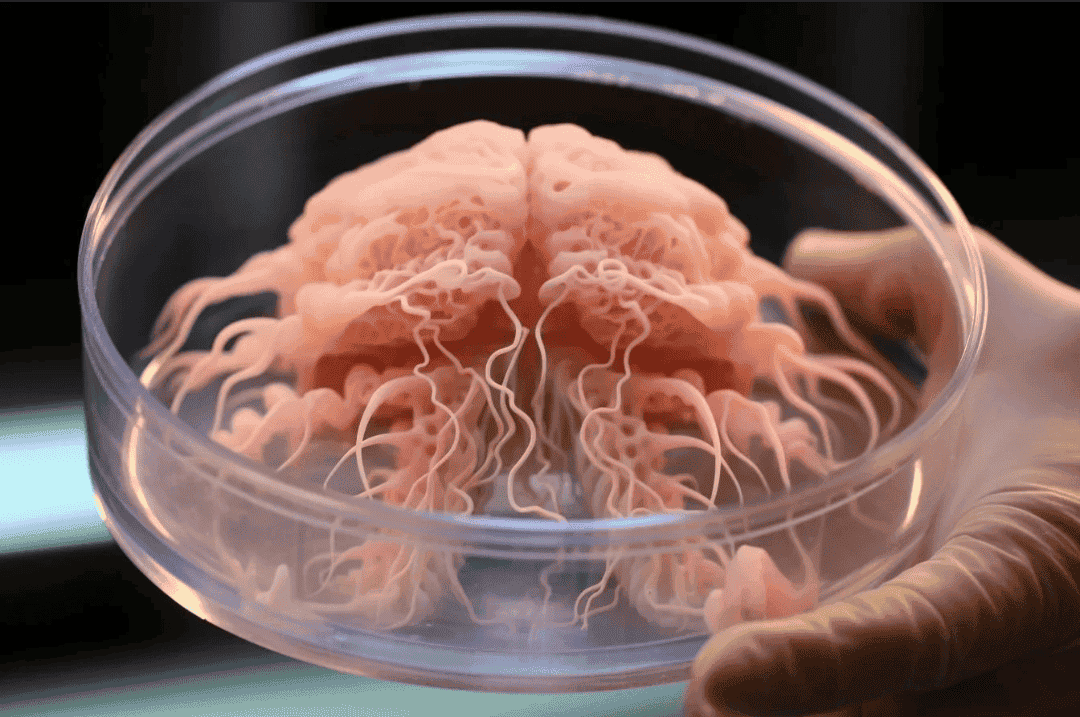
A neuron is a specialised cell that processes and transmits information through electrical and chemical signals. The brain contains hundreds of distinct subtypes, each with its own shape, electrical behaviour, and role.
A dopaminergic neuron in the substantia nigra — the type that degenerates in Parkinson’s disease — looks and behaves nothing like a pyramidal neuron in the cortex or a Purkinje cell in the cerebellum.
Lab-grown neurons are neurons produced from stem cells under laboratory conditions. The key starting material is human induced pluripotent stem cells, or iPSCs.
These are ordinary adult cells — usually from skin or blood — reprogrammed back to an embryonic-like state, capable of becoming almost any cell type in the body.
By exposing iPSCs to specific sequences of chemical signals — mimicking the cues that guide neuron formation in the embryo — scientists can coax them into becoming neurons of chosen types.
The result is a living human neuron, genetically identical to the donor. It fires electrical signals, forms synaptic connections, and responds to drugs as a real neuron would. Crucially, it can be grown from patients with specific diseases.
This means researchers can create neurons carrying the exact genetic profile of an Alzheimer’s patient, a Parkinson’s patient, or someone with a rare inherited condition — and study the disease in the very cell type it attacks.
The iPSC Revolution
The entire field rests on a discovery that stunned biologists. In 2006, the Japanese scientist Shinya Yamanaka showed that mature cells from mice could be reprogrammed back into a stem-cell-like state. A year later his team did the same with human skin cells.
By introducing just four genes, later dubbed the Yamanaka factors, he turned mature cells into induced pluripotent stem cells — capable of becoming any tissue in the body.
The implications were so profound that Yamanaka shared the Nobel Prize in Physiology or Medicine in 2012, only six years after his first paper, an unusually fast recognition. He shared it with the British biologist John Gurdon, whose experiments with frog eggs half a century earlier had first shown that the nucleus of a mature cell still carries every instruction needed to build a whole animal.
Before iPSCs, growing patient-specific human cells meant using embryonic stem cells, which raised serious ethical objections. Yamanaka’s method sidestepped that, using a patient’s own skin or blood.
This is why lab-grown neurons from patients became possible at all. Almost every patient-derived neuron in a modern disease study traces back to that 2006 breakthrough in cellular reprogramming.
How a Neuron Is Grown, Step by Step
Turning a skin cell into a working neuron is a carefully staged process, guided at every step by the signals a developing embryo would naturally provide.
First, a sample of the donor’s skin or blood cells is reprogrammed into iPSCs using the Yamanaka factors, resetting them to a blank, embryonic-like state.
Next, the iPSCs are bathed in precise sequences of signalling molecules. These tell the cells which region of the nervous system to become — forebrain, midbrain, spinal cord, and so on.
Over days and weeks, the cells mature. They sprout the long branching extensions — axons and dendrites — that let neurons connect, and begin firing electrical signals.
Getting the recipe right is the hard part. A slightly different signal at the wrong moment produces the wrong neuron, which is exactly why the ETH Zurich map of 400 recipes is so valuable.
The ETH Zurich Breakthrough: 400 Neuron Types
In July 2025, a team at ETH Zurich led by Barbara Treutlein published a landmark study in the journal Science, the most comprehensive attempt yet to grow the full variety of human neurons in the laboratory.
The researchers combined iPSC reprogramming with carefully controlled exposure to morphogens — proteins that guide cell fate during development — to produce over 400 distinct neuronal subtypes.
They used seven of these signalling molecules at different doses and in different orders, testing 480 combinations in all, and read out what each one produced in about 700,000 individual cells using single-cell sequencing. It was an industrial-scale mapping of how to build a chosen neuron on demand.
Each type was catalogued by its gene expression, electrical properties, and shape, creating a reference map other laboratories can use to grow the exact neurons they need.
The team was frank about the limits. Recent estimates put the number of neuron types in the human brain at several hundred to several thousand, so 400 is a large share but not the whole catalogue. The point, Treutlein said when the paper appeared, is precision: “If we want to develop cell culture models for diseases and disorders such as Alzheimer’s, Parkinson’s and depression, we need to take the specific type of nerve cell involved into consideration.”
The types were identified mainly by their gene activity, matched against neurons from real tissue. Electrical recordings and cell shapes were checked for a subset and fitted their expected identities, but a neuron that looks right on paper still has to prove it behaves right in a disease model.
The practical impact is enormous. Drug developers testing a compound for Parkinson’s once relied on mice with artificially induced disease — models that often fail to predict human outcomes.
Now they can test on human dopaminergic neurons grown from Parkinson’s patients’ own cells. That should make early testing more relevant to people. Animal models are one reason so many drugs that work in mice later fail in human trials.
Regulators have started to move the same way. In April 2025 the US Food and Drug Administration announced a plan to phase out its animal-testing requirement for monoclonal antibodies and other drugs, promoting lab-grown human organoids and organ-on-a-chip systems for safety testing instead.
Brain Organoids: Miniature Brains in a Dish
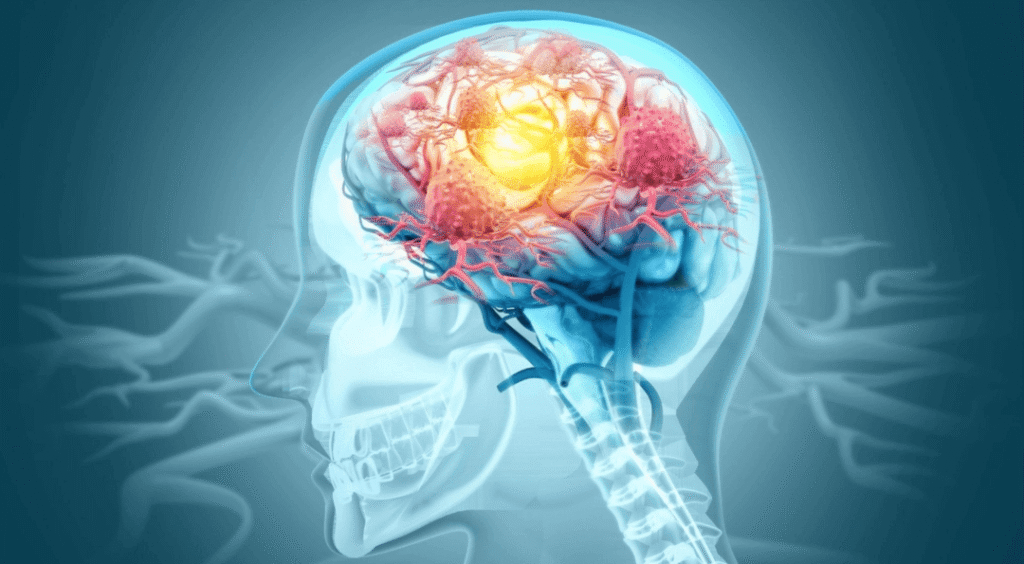
Alongside individual neuron cultures, researchers have developed a related technology: brain organoids — three-dimensional clusters of neurons that self-organise into structures resembling regions of the developing brain.
The technique was pioneered in 2013 by Madeline Lancaster and Jürgen Knoblich, who showed that stem cells could grow into “cerebral organoids” with distinct brain-like regions.
Brain organoids are not brains. They lack blood vessels, immune cells, sensory input, and the full architecture of a real brain. But they are far more than a flat layer of cells.
Organoids develop spontaneous electrical activity. They form layered structures resembling the cortex, and show gene-expression patterns matching specific stages of human brain development.
They have been used to model microcephaly, Zika virus infection, autism spectrum conditions, and early-stage Alzheimer’s — offering insights into developmental origins that animal models could not provide.
Can Neurons in a Dish Learn?
One experiment captured the public imagination more than any other. In 2022, the Australian company Cortical Labs reported a system they called DishBrain.
A flat layer of lab-grown neurons, of human or rodent origin, sat on a grid of electrodes connected to a computer. The electrodes told the cells where a ball was, and their firing moved a paddle. Within about five minutes of play the cultures appeared to improve at a simplified version of the video game Pong, something control cultures without structured feedback did not do.
The neurons were not conscious or intentional. They simply responded adaptively to feedback signals in a way that demonstrated rudimentary learning — adjusting their firing to improve at the task.
The experiment drew enormous attention and helped launch a field some call “organoid intelligence,” which explores whether living neural tissue could perform computation.
The paper’s title said the neurons “exhibit sentience”, and that word drew a sharp response. In 2023 a group of 30 neuroscientists wrote to the same journal arguing that the claims of intelligence and sentience went well beyond what the data showed: improving at a feedback task is a long way from feeling anything. Most researchers now describe what DishBrain showed as adaptive learning in a very simple system.
It also raised profound ethical questions about the moral status of neural cultures — questions that remain actively debated. The parallels with artificial systems are explored in our article on neural networks, from the human brain to AI.
Separately, in 2023 researchers at Johns Hopkins University proposed a formal research roadmap for this area, coining the term “organoid intelligence” to describe the biological computing it might one day enable.
Fighting Parkinson’s and ALS
The diseases lab-grown neurons are best placed to tackle are those where access to the affected cell type has been the main bottleneck in research.
In Parkinson’s disease, the dopaminergic neurons of the substantia nigra progressively degenerate, for reasons still not fully understood.
Neurons grown from patients with familial Parkinson’s are now used to study how specific mutations cause cellular dysfunction, and to screen drugs that might slow the process.
Clinical trials of dopaminergic neuron transplantation, replacing lost neurons with lab-grown equivalents, have now reported their first results, and one product has reached the market in Japan. The details are in the transplantation section below.
In ALS, the motor neurons controlling voluntary movement degenerate. Lab-grown motor neurons from ALS patients have revealed cellular weaknesses invisible in animal models, and in Japan they led to a real trial. Researchers at Keio University screened existing drugs on patients’ motor neurons and picked ropinirole, an old Parkinson’s medicine.
Their small trial, published in 2023, gave it or a placebo to 20 people for 24 weeks. In that blinded phase the main measure of decline was no different between the groups. In a longer open-label extension the ropinirole group lost function more slowly and gained an estimated 27.9 weeks without disease progression, but many participants dropped out, and the authors said a larger trial was needed. It is a fair picture of where the field stands: real leads, modest evidence.
Alzheimer’s and Psychiatric Conditions
In Alzheimer’s disease, the picture is more complex, involving multiple cell types and brain regions. But organoid models have shed new light on the disease’s cellular mechanics.
Beyond neurodegeneration, lab-grown neurons are illuminating psychiatric conditions such as schizophrenia and bipolar disorder — illnesses with strong genetic components but no clear pathology visible under a microscope.
By comparing neurons from patients and healthy controls, researchers are finding subtle differences in synaptic development, firing patterns, and gene expression that may underlie these conditions at the cellular level.
How genes are switched on and off in these cells is itself shaped by the environment, a process explored in our article on epigenetics.
Transplantation: Replacing Lost Neurons
Beyond studying disease, lab-grown neurons hold out a bolder promise: actually replacing the cells a disease has destroyed.
Parkinson’s is the leading test case. Because the disease kills one specific cell type — dopaminergic neurons — replacing them with healthy lab-grown equivalents is a natural strategy.
Two trials reported their first results in the journal Nature in April 2025. At Kyoto University Hospital, seven patients aged 50 to 69 received dopamine-cell precursors made from donated induced pluripotent stem cells. There were no serious adverse events over two years. Of the six patients assessed for benefit, four improved on a standard movement score when off their medication and five when on it, and brain scans showed dopamine production in the treated area up by about 45 per cent.
In the second trial, run in New York and Toronto, 12 patients received a product called bemdaneprocel, made from embryonic stem cells. All took immune-suppressing drugs for a year. No adverse events were linked to the cells, scans showed the grafts survived, and at 18 months the higher-dose group had improved by an average of 23 points on the same movement score. Neither trial had a placebo group, so neither proves the cells work.
Regulators in Japan moved first anyway. On 6 March 2026 Sumitomo Pharma received conditional, time-limited approval for AMCHEPRY (raguneprocel), the Kyoto cells, for Parkinson’s patients whose movement symptoms respond poorly to existing drugs, including levodopa. It is the world’s first approved product made from iPS cells. The company must run a post-marketing study and confirm the benefit within a set period to win full approval.
Bemdaneprocel has moved into a larger test. Its phase 3 trial began in June 2025 and, when we checked the registry on 6 October 2026, was recruiting 102 participants in the United States, Canada and Australia. Unlike the earlier studies, it is randomised and double-blind: one in three participants undergoes a sham operation instead, so it should show whether the benefit is real.
Both the Kyoto cells and bemdaneprocel come from donor cells, which is why patients need immune-suppressing drugs. Using a patient’s own iPSCs avoids that, because cells that are genetically their own are far less likely to be rejected. A US trial by the company Aspen Neuroscience is testing exactly this, making each participant’s graft from their own skin cells.
The Limits of the Technology
Organoids lack a blood supply, so they cannot grow beyond a few millimetres before their cores are starved of oxygen and nutrients. This caps their size and maturity.
They also mature slowly. For years organoids were thought to be stuck at a fetal stage, a problem for studying late-onset diseases like Alzheimer’s. A 2021 study from Stanford and UCLA kept cortical organoids growing for many months and found they reached changes typical of the period just after birth at around 250 to 300 days, on roughly the same timetable as a real brain. They can mature; it simply takes as long as nature does.
And a dish of neurons, however sophisticated, lacks the sensory input, body, and lifetime of experience that shape a real brain. Researchers are working on vascularised organoids and faster maturation to close these gaps.
Some teams are grafting human organoids into animal hosts, which supply blood vessels and let the tissue mature further. In 2022 a Stanford team transplanted human cortical organoids into the brains of newborn rats. The human neurons grew larger and more complex than in a dish, wired into the rats’ sensory circuits, and responded when the animals’ whiskers were touched. Stimulating them with light could even drive the rats’ reward-seeking behaviour.
That made the grafts a sharper research tool. They revealed defects in neurons from people with Timothy syndrome, a rare genetic condition, that cells in a dish had not shown. It also made the ethical questions concrete, because the human cells were influencing an animal’s behaviour.
Personalised Medicine and the Future of Neurology
One of the most transformative long-term applications is personalised medicine — testing treatments on a patient’s own cells before administering them to the patient.
Today, neurological treatment is largely trial and error. A neurologist prescribes a drug, waits to see if it works, adjusts the dose, and tries alternatives if it does not.
For conditions like epilepsy, resistance is common. A Scottish study that followed 1,795 newly diagnosed patients over 30 years found that more than a third never achieved lasting seizure control, despite more than a dozen new drugs arriving over that time. There is still no reliable way to predict who will respond to which drug.
Lab-grown neurons could change this. A blood sample could be reprogrammed into iPSCs, turned into the relevant neuron type, and exposed to a panel of candidate drugs, revealing which works best for that patient before any is prescribed.
The technology to do this exists, but it has not yet been shown to work in clinical practice. The barriers include cost, the months needed to grow mature neurons, and standard methods across laboratories. Above all, nobody has yet shown in a proper trial that a drug’s effect in a dish reliably predicts its effect in the patient the cells came from. That is the test personalised neurology still has to pass.
The Consciousness Question
As organoids grow more sophisticated, an unavoidable question arises: could a cluster of human neurons ever develop something resembling experience?
Most scientists consider the risk extremely low for current organoids. They lack the scale, the sensory connections, and the organised architecture that consciousness appears to require in any living system.
But the honest answer is that we cannot be certain, because we do not yet understand what gives rise to consciousness even in a full human brain.
Without a theory of how subjective experience emerges from matter, we lack a clear test for when — if ever — a neural culture might cross a meaningful line. This deep problem is explored in our article on why science cannot yet explain consciousness.
The Ethical Landscape
Brain organoids and lab-grown neurons raise ethical questions the scientific community is actively working to address. The most pressing concerns the moral status of organoids.
In 2021 the US National Academies of Sciences, Engineering, and Medicine reviewed the question. Their report concluded that, based on everything known about the brain basis of consciousness, there is no reason to believe current organoids are conscious in any meaningful sense. It found existing oversight adequate for now, but said some rules would need revisiting as organoids grow more complex and as more human cells are placed into animals.
Questions of consent and ownership also arise. iPSCs carry the complete genetic information of the donor, so neurons grown from them are, in a meaningful sense, the donor’s cells.
What rights do donors retain over research on those cells? Who owns discoveries made using them? These questions are being addressed through evolving consent frameworks, but they remain live issues. Similar dilemmas run through our article on gene editing in 2026.
Why This Matters
For decades, the brain’s inaccessibility made it the hardest organ to study and its diseases the hardest to treat. Lab-grown neurons remove that barrier for the first time.
The 400-neuron library, the first approved iPS-cell medicine and ever more mature organoids together mark a genuine turning point for one of medicine’s most stubborn frontiers.
The same tools force us to confront profound questions about experience, identity, and the moral status of living tissue we can now build ourselves. The science of the brain is becoming, at last, a science we can hold in our hands.
For the millions living with conditions once deemed untreatable, that shift carries real hope. The path from a dish of neurons to a cure is long, but for the first time, it is a path we can actually see.
Frequently Asked Questions
What are lab-grown neurons made from?
Lab-grown neurons are made from human induced pluripotent stem cells (iPSCs) — adult cells, typically from blood or skin, that have been reprogrammed to an embryonic-like state. By exposing iPSCs to specific developmental signals, scientists direct them to become neurons of specific types. The resulting neurons are genetically identical to the original donor.
What is a brain organoid?
A brain organoid is a three-dimensional cluster of lab-grown neurons that self-organises into a structure resembling a region of the developing human brain. First created in 2013, organoids are not brains — they lack blood vessels, immune cells, and full complexity — but they develop layered structures, spontaneous electrical activity, and realistic gene-expression patterns.
What diseases can lab-grown neurons help treat?
Lab-grown neurons are used to study and develop treatments for Parkinson’s disease, ALS, Alzheimer’s disease, epilepsy, schizophrenia, bipolar disorder and rare inherited neurological conditions. Replacement dopamine cells for Parkinson’s disease received conditional approval in Japan in March 2026, and a phase 3 trial of a similar product is under way in North America and Australia.
What was the ETH Zurich breakthrough?
In July 2025, researchers at ETH Zurich led by Barbara Treutlein published a study in Science describing more than 400 types of human neurons grown from stem cells, after testing 480 combinations of developmental signals in about 700,000 cells. It gives other researchers a reference map for producing the specific neuron types they need for drug testing, disease modelling and transplantation research.
Are brain organoids conscious?
Current scientific consensus holds that existing brain organoids are not conscious. They lack the architectural complexity, sensory connections, and scale of activity associated with consciousness in any living system. However, because we do not yet understand how consciousness arises even in a full brain, the scientific community is actively developing ethical frameworks as the technology advances.
How soon could personalised neurology be available?
The technology to grow neurons from a patient’s own cells and test drugs on them already exists. What is missing is proof, from proper clinical trials, that results in a dish predict how the patient will respond, along with lower costs and standard methods. Until that evidence exists, nobody can honestly put a date on it.
Has any treatment made from iPS cells been approved?
Yes. On 6 March 2026 Japan granted conditional, time-limited approval to AMCHEPRY (raguneprocel), dopamine-cell precursors made from donated iPS cells, for Parkinson’s disease that responds poorly to existing drugs. It is the first approved product of its kind. Full approval depends on a post-marketing study confirming the benefit.
Further Reading
Sources
- Takahashi, K. & Yamanaka, S. (2006). “Induction of Pluripotent Stem Cells from Mouse Embryonic and Adult Fibroblast Cultures by Defined Factors.” Cell, 126, 663 (DOI: 10.1016/j.cell.2006.07.024).
- Lin, H.-C., Janssens, J., et al. (Treutlein Lab, ETH Zurich) (2025). “Human neuron subtype programming via single-cell transcriptome-coupled patterning screens.” Science, 389, eadn6121 (DOI: 10.1126/science.adn6121). Preprint: bioRxiv (DOI: 10.1101/2023.12.12.571318).
- Lancaster, M. A., Knoblich, J. A., et al. (2013). “Cerebral organoids model human brain development and microcephaly.” Nature, 501, 373 (DOI: 10.1038/nature12517).
- Kagan, B. J., et al. (2022). “In vitro neurons learn and exhibit sentience when embodied in a simulated game-world (DishBrain).” Neuron, 110, 3952 (DOI: 10.1016/j.neuron.2022.09.001).
- National Institute of Neurological Disorders and Stroke (NINDS).
- International Society for Stem Cell Research — Guidelines for Stem Cell Research.
- Web News For Us — The Human Microbiome.
- Takahashi, K., et al. (2007). “Induction of Pluripotent Stem Cells from Adult Human Fibroblasts by Defined Factors.” Cell, 131, 861 (DOI: 10.1016/j.cell.2007.11.019).
- Azevedo, F. A. C., et al. (2009). “Equal Numbers of Neuronal and Nonneuronal Cells Make the Human Brain an Isometrically Scaled-Up Primate Brain.” Journal of Comparative Neurology, 513, 532 (DOI: 10.1002/cne.21974).
- Sawamoto, N., et al. (2025). “Phase I/II Trial of iPS-Cell-Derived Dopaminergic Cells for Parkinson’s Disease.” Nature, 641, 971 (DOI: 10.1038/s41586-025-08700-0).
- Tabar, V., et al. (2025). “Phase I Trial of hES Cell-Derived Dopaminergic Neurons for Parkinson’s Disease.” Nature, 641, 978 (DOI: 10.1038/s41586-025-08845-y).
- Sumitomo Pharma and RACTHERA (6 March 2026). “Announcement on the Approval for Manufacturing and Marketing Authorization of the Allogeneic iPS Cell-Derived Dopaminergic Neural Progenitor Cell Product AMCHEPRY in Japan.” Notice via Sumitomo Chemical (PDF).
- ClinicalTrials.gov. “A Study to Investigate the Efficacy and Safety of Bemdaneprocel in Adults Who Have Parkinson’s Disease.” NCT06944522.
- ClinicalTrials.gov. “Phase 1/2a Study of ANPD001 in Parkinson Disease” (autologous iPSC-derived cells). NCT06344026.
- Morimoto, S., et al. (2023). “Phase 1/2a Clinical Trial in ALS with Ropinirole, a Drug Candidate Identified by iPSC Drug Discovery.” Cell Stem Cell, 30, 766 (DOI: 10.1016/j.stem.2023.04.017).
- Balci, F., et al. (2023). “A Response to Claims of Emergent Intelligence and Sentience in a Dish.” Neuron, 111, 604 (DOI: 10.1016/j.neuron.2023.02.009).
- Smirnova, L., et al. (2023). “Organoid Intelligence (OI): The New Frontier in Biocomputing and Intelligence-in-a-Dish.” Frontiers in Science, 1, 1017235 (DOI: 10.3389/fsci.2023.1017235).
- Gordon, A., et al. (2021). “Long-Term Maturation of Human Cortical Organoids Matches Key Early Postnatal Transitions.” Nature Neuroscience, 24, 331 (DOI: 10.1038/s41593-021-00802-y).
- Revah, O., et al. (2022). “Maturation and Circuit Integration of Transplanted Human Cortical Organoids.” Nature, 610, 319 (DOI: 10.1038/s41586-022-05277-w).
- Chen, Z., Brodie, M. J., Liew, D. & Kwan, P. (2018). “Treatment Outcomes in Patients with Newly Diagnosed Epilepsy Treated with Established and New Antiepileptic Drugs: A 30-Year Longitudinal Cohort Study.” JAMA Neurology, 75, 279 (DOI: 10.1001/jamaneurol.2017.3949).
- US Food and Drug Administration (10 April 2025). “FDA Announces Plan to Phase Out Animal Testing Requirement for Monoclonal Antibodies and Other Drugs.” FDA press announcement.
- National Academies of Sciences, Engineering, and Medicine (2021). The Emerging Field of Human Neural Organoids, Transplants, and Chimeras: Science, Ethics, and Governance (DOI: 10.17226/26078).
Baryon. (2025, July 9). Lab-Grown Neurons Reach a Milestone: How They Could Unlock Personalised Neurological Cures. Web News For Us. https://webnewsforus.com/lab-grown-neurons-brain-cells/
Baryon. “Lab-Grown Neurons Reach a Milestone: How They Could Unlock Personalised Neurological Cures.” Web News For Us, 9 July 2025, https://webnewsforus.com/lab-grown-neurons-brain-cells/. Accessed 21 October 2026.


Such developments and research are my favourite topics, thanks for sharing.
Thanks for sharing. I read many of your blog posts, cool, your blog is very good.
Your article helped me a lot,very thoroughly written and presented.