In January 1920, dying at thirty-two, Srinivasa Ramanujan wrote a last letter to G. H. Hardy describing a new kind of function he called mock theta functions. He gave seventeen examples, almost no explanation, and no proof of what they were.
Nobody could say what they actually were for eighty-two years. The answer came in 2002, when Sander Zwegers showed they belong to a wider family now called mock modular forms. Ten years after that, in 2012, physicists working on string theory found that these same objects count the quantum states of a black hole horizon.
A man with no formal mathematical training, writing from a sickbed in Madras, produced the mathematics that would be used ninety-two years later to compute black hole entropy. That is not a legend that grew in the retelling. It is a documented sequence with dates attached, and it is the strongest answer to the question this article keeps returning to: what exactly was Ramanujan doing?
In the last year of his life, dying of an illness no doctor in England or India had been able to name, Srinivasa Ramanujan lay in a rented house in Madras and did the only thing he had ever truly known how to do. He filled sheet after sheet with numbers. The man was failing; the mathematics was not. Some of those final pages would not be understood for another eighty years — and when they finally were, they turned out to describe the physics of black holes.
This is the strange shape of Ramanujan’s story. A clerk with no degree, no teacher, and no money saw further into the structure of numbers than almost anyone before or since — and then died at thirty-two, leaving the world a century of catching up to do. He did not study mathematics so much as inhabit it. To understand how that was possible, you have to go back to a small town in southern India, and a single letter that should never have been believed.
Ramanujan died in 1920, aged thirty-two. More than a century later, his name still titles new mathematics: the arXiv archive held 899 papers with “Ramanujan” in the title on 1 September 2026, and 114 on mock theta functions — the objects from his last letter. Five weeks later, on 6 October 2026, the counts had risen to 917 and 116.
A century after his death, his name titles papers at a rate most living mathematicians never reach. The 114 on mock theta functions are the direct descendants of seventeen examples he wrote down without proof while dying.
That is the measurable version of the claim this article makes. He was not merely brilliant for his time; he left problems that are still generating original mathematics more than a hundred years later.
A Childhood in Kumbakonam: The Making of a Mathematical Mind
Srinivasa Ramanujan Iyengar was born on 22 December 1887 in Erode, a small town in Tamil Nadu, in southern India. His family soon moved to Kumbakonam, where his father worked as a clerk in a cloth merchant’s shop. They were Brahmin and devoutly religious, and Ramanujan would remain so all his life, attributing many of his insights to the goddess Namagiri of Namakkal, whom his family worshipped. He described her appearing to him in dreams, writing equations on his tongue. Whether this was metaphor, vision, or something else, no one can say.
His gifts were obvious before he was a teenager. By eleven he had absorbed the mathematics of the college students who boarded in the family home, exhausting their knowledge and asking them questions they could not answer. At Kumbakonam’s Town High School he found the book that would shape everything: George Carr’s A Synopsis of Elementary Results in Pure and Applied Mathematics, a dense catalogue of thousands of theorems listed without proofs. For most students it was a revision guide. For Ramanujan it was a challenge. He worked through every theorem, reconstructing the proofs himself, then went beyond them — filling the margins with results Carr had never imagined.
That approach — working alone, rebuilding foundations, generating results by intuition — was both the making and the limiting of him. He proved extraordinary things, but often in ways that were invisible even to himself, by pattern-recognition he could not always translate into the formal language the Western tradition demanded.
Years of Struggle: Poverty, Failure, and Notebooks

His gifts did not translate into academic success. He won a scholarship to the Government College in Kumbakonam, which he entered in 1904, but the following year it was not renewed: he was spending all his time on mathematics and neglecting every other subject. He ran away for a while, later tried another college in Madras, failed its examinations, and left without a degree.
For several years he lived in poverty, dependent on the charity of friends and a few occasional patrons. He filled notebooks with results, conjectures, and identities — without income, without recognition, without anyone nearby who could judge what he was producing. On 14 July 1909 he married, in a marriage arranged by his mother, a ten-year-old girl named Janaki, as was the custom of the time.
The notebooks kept filling. Ramachandra Rao, a mathematician and official in Madras, gave him a stipend after hearing him explain work on hypergeometric series that Rao had no framework to evaluate but could plainly see was extraordinary. By 1912 Ramanujan had a clerkship at the Madras Port Trust. He was a competent clerk. The notebooks kept filling.
The Letter That Changed Everything
In January 1913, encouraged by colleagues at the Port Trust, Ramanujan wrote to G.H. Hardy at Trinity College, Cambridge — one of the most eminent mathematicians in Britain. The letter ran to pages of theorems, organised by topic, with no proofs and no account of method. Hardy almost dismissed it; every prominent mathematician received letters from cranks. But something stopped him. He showed it to his colleague J.E. Littlewood, and the two spent the evening working through the results. Some were already known and correctly stated.
Some were new and appeared to be true. Some seemed impossible, yet proved correct on careful analysis. A few were simply wrong — his intuition occasionally outpaced even his own accuracy. The overall impression was overwhelming.
“They must be true,” Hardy said of the formulas, “because if they were not true, no one would have had the imagination to invent them.”
Hardy arranged support at once. The University of Madras granted a scholarship. E.H. Neville, a colleague lecturing in India, worked to overcome Ramanujan’s deep reluctance to cross the sea — a serious obstacle, since orthodox Brahmin tradition forbade it. After prolonged persuasion, and reportedly the intervention of his goddess Namagiri in a dream, he agreed. He sailed from India on 17 March 1914.
Cambridge: The Great Collaboration
Ramanujan reached Trinity College in April 1914, aged 26. England was cold, grey, and alien. A strict vegetarian in a country that barely understood vegetarian food, he cooked for himself, struggled with the climate, and missed India with a homesickness those around him could see but not ease. He was not unhappy — his letters home were warm, sometimes funny — but he was out of his element in every way except the one that mattered most.
The partnership worked because each man held exactly what the other lacked. Hardy brought rigorous command of formal proof, a map of contemporary European mathematics, and the discipline to turn intuition into publishable work. Ramanujan brought an almost supernatural capacity to see patterns and relationships that no amount of training produces. Hardy is said to have rated mathematical talent on a scale of 0 to 100. He reportedly gave himself 25, Littlewood 30, David Hilbert, the towering figure of the previous generation, 80 — and Ramanujan 100.
Between 1914 and 1919 Ramanujan produced a stream of research papers, several of them with Hardy. The most celebrated was their 1918 work on the partition function, which counts the ways a whole number can be written as a sum of positive integers. The number of partitions grows explosively and had no known formula; together they built what is now called the circle method, an ingenious use of complex analysis, to produce an approximation of extraordinary accuracy. The method became one of the central tools of analytic number theory and is still in use today. In 1918, aged thirty, Ramanujan was elected a Fellow of the Royal Society, and soon after a Fellow of Trinity. He had arrived with no degree and left as one of the most distinguished mathematicians alive.
Counting the Ways to Split a Number
Partitions are easy to state and fiendishly hard to count. The number 4 can be written as a sum of positive whole numbers in five ways: 4, 3+1, 2+2, 2+1+1 and 1+1+1+1. By 10 there are 42 ways, by 100 more than 190 million, and by 200 almost four trillion.
That last figure was the test of the 1918 paper. The mathematician Percy MacMahon, famous for his skill at calculation, had worked out by hand that the number 200 can be partitioned in exactly 3,972,999,029,388 ways. The formula Hardy and Ramanujan derived, an infinite series of curious terms, reproduced that number from just a handful of them. Few results in mathematics have announced their own correctness so dramatically.
Ramanujan also noticed patterns nobody else had seen. Looking at tables of partition numbers, he found that the number of partitions of 4, 9, 14, 19 and so on, every fifth number starting at 4, is always divisible by 5. Partitions of 5, 12, 19 and every seventh number after are divisible by 7, and of 6, 17, 28 and every eleventh after are divisible by 11. He proved some of these patterns himself and conjectured more.
Why only 5, 7 and 11 remained a puzzle for decades. In 2000 Ken Ono showed in the Annals of Mathematics that similar divisibility patterns exist for every prime number of 5 or larger, they are simply far harder to see. It was a vast generalisation of something Ramanujan had spotted in a hand-made table.
The Illness That Could Not Be Named
By 1917 Ramanujan was seriously ill. The diagnosis shifted over the years — tuberculosis was the main one, though other conditions were suggested — and the damp English climate did not help. He was admitted to several sanatoriums and lost a great deal of weight. There were periods when those around him feared the worst.
The question was reopened in 1994 by the physician D. A. B. Young, who went back through every surviving description of the symptoms. He concluded in the Royal Society’s history journal that the most likely cause was hepatic amoebiasis, an infection of the liver by a parasite probably picked up in India years earlier. It was treatable even then. Had it been recognised, Ramanujan might well have lived.
He returned to India in 1919 as his health slightly improved. He was thirty-one. Even bedridden and weakening, he kept filling pages with new mathematics — including the results that would later become the lost notebook. He died on 26 April 1920 in Kumbakonam, aged thirty-two, having worked almost until the end.
The Three Notebooks and the Lost One
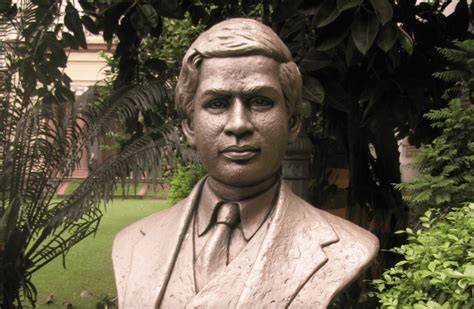
Ramanujan left three notebooks recording roughly 3,900 results, most without proofs. Verifying them occupied mathematicians for decades; Bruce Berndt of the University of Illinois spent more than twenty years working through them, publishing his findings in five volumes. Most results proved correct, and the act of proving them generated entirely new mathematics.
The most dramatic story belongs to the fourth — the lost notebook. When Ramanujan returned to India in 1919 he carried a manuscript of about 138 pages from his final months: work on mock theta functions, q-series, and more. After his death it passed through several hands, became tangled with the papers of the mathematician G.N. Watson, and was nearly incinerated after Watson died in 1965 before surviving by chance and reaching the Wren Library at Trinity. There it sat, unsorted, until the spring of 1976, when the American mathematician George Andrews — who had written his doctorate on mock theta functions, precisely this subject — examined the Watson papers and recognised at once what he was holding.
The discovery was later described as the mathematical equivalent of finding Beethoven’s tenth symphony. The notebook held over 600 formulas, none published, and many among the most profound things he ever wrote — produced in his last year, while dying.
What Ramanujan Actually Discovered
He worked across several areas of mathematics. A brief tour gives a sense of what the achievement actually was — and how long the rest of the world took to catch up.
| Discovery | What it was | Fully understood |
|---|---|---|
| Partition congruences | Hidden divisibility patterns in how numbers can be split into sums | Deepest proof around 2000 |
| Highly composite numbers | Numbers with more divisors than any smaller number | Founded a field in 1915 |
| Infinite series for π | Formulas adding roughly eight correct decimals per term | Proved rigorously by 1987 |
| Mock theta functions | Objects that almost, but not quite, share the symmetry of theta functions | Explained in 2002 |
The mock theta functions were perhaps his deepest work, described in his last letter to Hardy. What they actually were went unexplained until 2002, when Sander Zwegers proved they were the holomorphic parts of objects called harmonic weak Maass forms. That breakthrough revealed connections to modular forms now found in the entropy of black holes and in string theory. Ramanujan had reached these objects by intuition eighty years before the framework to understand them existed.
The Formulas for π That Are Still Being Used
In 1914 Ramanujan published seventeen infinite series for 1/π. The most famous adds roughly eight correct decimal places with every term, a speed no earlier method came close to. They were not rigorously proved until the 1980s, and in 1988 the brothers David and Gregory Chudnovsky built a still faster formula on the same principles.
That descendant now sets world records. Every record computation of π since 2009 has used the Chudnovsky formula, which adds about fourteen digits per term. The current Guinness World Record, set by StorageReview and Micron Technology on 18 November 2025, reaches 314 trillion digits, computed in 110 days. Every serious modern record follows the path Ramanujan opened.
Physicists have found a further connection. In December 2025 Faizan Bhat and Aninda Sinha of the Indian Institute of Science showed in Physical Review Letters that Ramanujan’s series arise naturally in a class of physical theories called logarithmic conformal field theories, which describe phenomena such as percolation and the fractional quantum Hall effect. Formulas written down before quantum mechanics existed turned out to encode quantities from modern theoretical physics.
The Source of His Genius: What We Know and Don’t

Hardy wrestled all his life with how Ramanujan did what he did. The standard account of discovery — deep study, formal training, gradual extension of known methods — described him not at all. Cut off from most of the mathematics of his era, he was forced to rediscover and reinvent from first principles. That isolation cost him effort on results already known in Europe. But it also meant he approached problems from directions no trained mathematician would have tried, and sometimes those directions led somewhere genuinely new.
It is a useful contrast with how machines search for answers today. An evolutionary algorithm explores a vast space of possibilities by brute trial, mutation, and selection. Ramanujan seemed to skip the search entirely — to arrive at the answer without visibly traversing the space at all. Hardy, who distrusted mystical explanations, never found a framework that fully accounted for what he had witnessed. The source of Ramanujan’s intuition remained, by his own admission, beyond his power to explain.
The Ninety-Two Year Delay
Most tributes to Ramanujan rest on the claim that he was ahead of his time. It is possible to be more precise than that, because in one case the delay can be measured exactly.
The last letter he sent Hardy, written in January 1920 a few months before his death, introduced what he called mock theta functions. He listed seventeen of them. They behaved almost like the modular forms mathematicians already knew, but not quite — close enough to mimic them, different enough to break the existing theory. He did not say where they came from, and he did not define the class they belonged to. Then he died, and the letter sat as one of the outstanding puzzles in number theory.
It stayed unresolved for the rest of the twentieth century. Mathematicians could verify individual identities, but nobody could say what a mock theta function was. The answer arrived in 2002, when Sander Zwegers showed in his doctoral work that these objects fit into a larger framework, now called mock modular forms. Ramanujan had been describing, without the vocabulary to name it, a structure that would take the discipline eighty-two years to build.
The second act is stranger. In 2012, Atish Dabholkar, Sameer Murthy and Don Zagier published work on quantum black holes and mock modular forms, showing that these functions arise naturally when counting the quantum degeneracies associated with a black hole horizon — the microscopic states underlying black hole entropy. Mathematics scribbled by a dying clerk in Madras turned out to be the correct language for a problem in string theory that would not be posed for another seventy years.
It is worth being careful about what this does and does not show. Ramanujan was not anticipating black holes; he had no concept of them, and the connection was made by physicists working forwards from their own problem, not backwards from his letter. What it demonstrates is something subtler and more interesting: he was identifying deep structural objects in mathematics by an instinct nobody has satisfactorily explained, objects so fundamental that they resurface wherever the underlying structure appears — including in physics he could never have imagined.
Hardy spent years insisting that Ramanujan’s formulas must be true because, as he put it, nobody would have had the imagination to invent them. The mock theta functions are the case that proves his point most completely. They were not merely true. They were pointing at something the rest of mathematics had not yet reached.
The Legacy: Why Ramanujan Still Matters
A century after his death, his work is not a historical curiosity but active mathematics. His mock theta functions, understood through Zwegers’ 2002 framework, are now central to the physics of black holes: the entropy of certain black holes can be expressed in terms of them. In string theory, the structures he identified appear in calculations of the quantum properties of strings.
His own country has made him a fixture of public life. In February 2012, opening celebrations for the 125th anniversary of his birth at the University of Madras, Prime Minister Manmohan Singh declared 2012 India’s National Mathematics Year and announced that 22 December, Ramanujan’s birthday, would be marked every year as National Mathematics Day. Schools and universities across India now hold events on that date, in honour of a man whose own schooling ended without a degree.
He was doing physics he did not know he was doing, a century before the physics existed. His congruences seeded a whole field linking partitions to modular forms, and his circle method remains a working tool at the frontier of analytic number theory. The Rogers–Ramanujan identities, which he found independently in India, turned up in 1980 at the heart of the Australian physicist Rodney Baxter’s exact solution of the “hard hexagon” model, a simplified picture of how particles pack on a surface, for reasons still not fully understood.
Ken Ono, who has spent decades working on Ramanujan’s legacy, is among many mathematicians still finding new paths through it. The enduring image is Freeman Dyson’s. As a schoolboy in 1940 he chose Ramanujan’s collected papers as a prize; the book travelled with him from England to America and, he said, stayed “as fresh today as they were in 1940”. In his 1987 centenary lecture, “A Walk Through Ramanujan’s Garden”, he wrote: “Whenever I am angry or depressed, I pull down the collected papers from the shelf and take a quiet stroll in Ramanujan’s garden.”
Hardy’s Grief and the Question He Could Never Answer
Hardy outlived Ramanujan by twenty-seven years and never fully recovered from the loss. In his 1940 book A Mathematician’s Apology he returned again and again to Ramanujan as the measure of genuine greatness. Years later, when the young Paul Erdős asked Hardy what his greatest contribution to mathematics had been, Hardy answered without hesitation: the discovery of Ramanujan. In a lecture he described their collaboration as “the one romantic incident in my life” — and he meant it in the deepest sense, an encounter with something that exceeded the categories available for understanding it.
Ramanujan’s wife Janaki survived until 1994, living quietly in Madras. In her later years she spoke of a husband she had barely known — they had lived together only a few years in all — yet whose devotion she never forgot. In his final days, she recalled, even in great pain he would not stop, filling sheet after sheet with numbers. The image with which his story began is also the one with which it ends.
His story sits alongside other self-taught minds whose solitary intensity reshaped science — among them Paul Dirac, the strangest man in physics, and Richard Feynman, who made curiosity his instrument. Different temperaments, the same refusal to see the world the way they were told to.
Frequently Asked Questions
Who was Srinivasa Ramanujan?
A self-taught Indian mathematician (1887–1920) from Tamil Nadu who made extraordinary contributions to number theory, infinite series, partition theory, and continued fractions. With no formal degree, he was brought to Cambridge by G.H. Hardy in 1914, elected a Fellow of the Royal Society in 1918, and died at 32, leaving thousands of results that took a century to prove and extend.
What is Ramanujan most famous for?
His work with Hardy on the partition function, his partition congruences, his infinite series for π, the taxicab number 1729, and his mock theta functions — which decades later turned out to describe black-hole entropy and calculations in string theory.
What was Ramanujan’s lost notebook?
A 138-page manuscript of results from the last year of his life, nearly destroyed before George Andrews identified it at Trinity College in 1976. It contains over 600 unpublished formulas and is regarded as among his deepest work — its discovery likened to finding Beethoven’s tenth symphony.
Did Ramanujan have any formal training?
Almost none. He was self-taught, failed his university examinations through neglect of non-mathematical subjects, and dropped out of college twice. At Cambridge, Hardy had to help him develop the formal proof techniques European mathematics required.
How is his work connected to modern physics?
His mock theta functions, understood through modern modular-form theory, appear in calculations of black-hole entropy in string theory. His Rogers–Ramanujan identities describe exactly solvable models in statistical mechanics, and his partition work underlies calculations in quantum field theory.
What did Ramanujan die of?
At the time his illness was thought to be tuberculosis, though doctors were never sure. In 1994 the physician D. A. B. Young reviewed the surviving records and concluded that the most likely cause was hepatic amoebiasis, a parasitic infection of the liver that was treatable even in 1920. Ramanujan died on 26 April 1920, aged thirty-two.
Are Ramanujan’s formulas for π still used?
Yes, through their descendants. His 1914 series for 1/π inspired the Chudnovsky formula of 1988, which has been used for every world-record computation of π since 2009, including the 314 trillion digits reached in November 2025. In December 2025 physicists also showed that his series arise naturally in a class of theories used to describe percolation and the quantum Hall effect.
What are Ramanujan’s partition congruences?
They are divisibility patterns he found in the number of ways to split a whole number into sums. The number of partitions of 4, 9, 14 and every fifth number after is divisible by 5; of 5, 12, 19 and every seventh after by 7; and of 6, 17, 28 and every eleventh after by 11. In 2000 Ken Ono proved that such patterns exist for every prime from 5 upwards.
Who was G. H. Hardy?
Godfrey Harold Hardy (1877–1947) was one of the leading British mathematicians of his time, a Cambridge number theorist and the author of A Mathematician’s Apology (1940). He received Ramanujan’s letter in January 1913, brought him to Cambridge in 1914 and worked with him until 1919. He later called the collaboration the one romantic incident of his life.
Further Reading
Sources
- Hardy & Ramanujan — Asymptotic Formulae in Combinatory Analysis, Proceedings of the London Mathematical Society s2-17, 75 (1918)
- MacTutor History of Mathematics — Ramanujan
- Quanta Magazine — Ramanujan Was a Genius. Math Is Still Catching Up (2024)
- George Andrews — Uncovering Ramanujan’s Lost Notebook (oral history)
- Springer — Ramanujan’s Lost Notebook, Part I (Andrews & Berndt)
- Dabholkar, Murthy & Zagier — Quantum Black Holes, Wall Crossing, and Mock Modular Forms (2012)
- ScienceDaily — Formula gives new glimpse into the mind of Ramanujan (2012)
- Ono, K. (2000). “Distribution of the Partition Function Modulo m.” Annals of Mathematics, 151, 293 (DOI: 10.2307/121118).
- Schneider, R. P. (2012). “Uncovering Ramanujan’s ‘Lost’ Notebook: An Oral History.” The Ramanujan Journal (DOI: 10.1007/s11139-012-9445-z).
- Young, D. A. B. (1994). “Ramanujan’s Illness.” Notes and Records of the Royal Society of London, 48, 107 (DOI: 10.1098/rsnr.1994.0009).
- Baxter, R. J. (1980). “Hard Hexagons: Exact Solution.” Journal of Physics A, 13, L61 (DOI: 10.1088/0305-4470/13/3/007).
- Bhat, F. & Sinha, A. (2025). “Ramanujan’s 1/π Series and Conformal Field Theories.” Physical Review Letters, 135, 231602 (DOI: 10.1103/c38g-fd2v).
- Dabholkar, A., Murthy, S. & Zagier, D. (2012). “Quantum Black Holes, Wall Crossing, and Mock Modular Forms.” arXiv:1208.4074.
- Guinness World Records. “Most accurate value of pi” (StorageReview and Micron Technology, 18 November 2025). guinnessworldrecords.com.
- Dyson, F. J. (1987). “A Walk Through Ramanujan’s Garden.” Ramanujan Centenary Conference, University of Illinois. Text via IMSc Chennai.
Baryon. (2025, December 18). Srinivasa Ramanujan: Greatest Mathematical Genius of the Twentieth Century. Web News For Us. https://webnewsforus.com/srinivasa-ramanujan-indian-mathematician-genius/
Baryon. “Srinivasa Ramanujan: Greatest Mathematical Genius of the Twentieth Century.” Web News For Us, 18 December 2025, https://webnewsforus.com/srinivasa-ramanujan-indian-mathematician-genius/. Accessed 11 October 2026.