Science & A.I. · Immunology & medicine
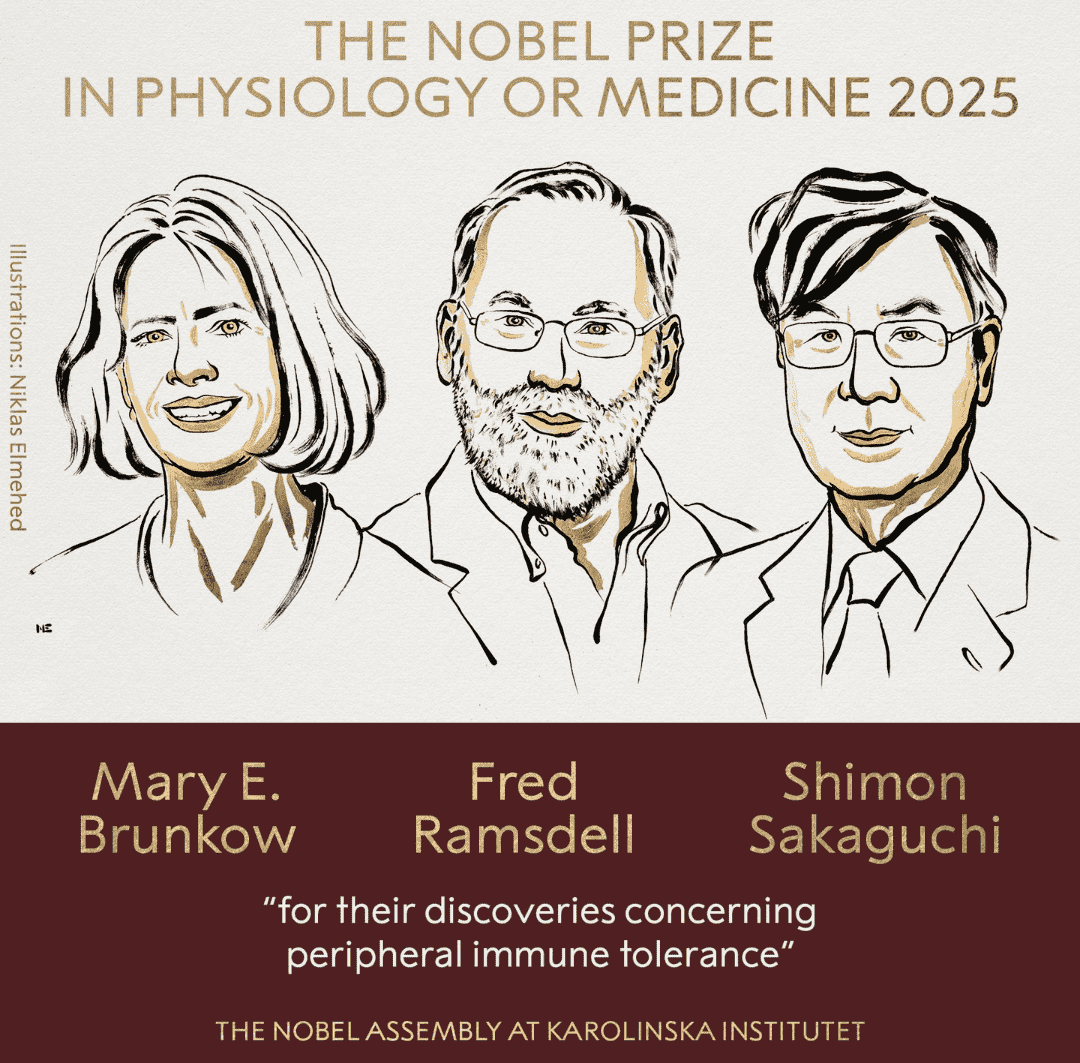
Your immune system carries enough firepower to kill you. Every day it chooses not to. The 2025 Nobel Prize in Physiology or Medicine was awarded for discovering the cells that enforce that restraint.
On 6 October 2025 the Nobel Assembly at the Karolinska Institutet awarded the prize to Mary E. Brunkow of the Institute for Systems Biology in Seattle, Frederick J. Ramsdell, a scientific adviser to Sonoma Biotherapeutics in San Francisco, and Shimon Sakaguchi of Osaka University. The citation reads: “for their discoveries concerning peripheral immune tolerance”. The prize of 11 million Swedish kronor was shared equally.
“Their discoveries have been decisive for our understanding of how the immune system functions and why we do not all develop serious autoimmune diseases,” said Olle Kämpe, chair of the Nobel Committee, announcing the award.
Their work explains one of biology’s deepest puzzles: how an immune system built to destroy almost anything foreign manages, almost always, to spare the body’s own tissues. The answer — a specialised population of cells that act as the immune system’s peacekeepers — is now reshaping how medicine approaches autoimmune disease, cancer and transplantation.
This article traces the discovery: the puzzle it solved, the two threads of research that came together to solve it, who the laureates are, and why their findings may change the treatment of some of the most stubborn diseases we face.
It is, at heart, a story about balance. An immune system too weak lets infection and cancer take hold; one too aggressive turns on the body it defends. The laureates revealed the delicate machinery that holds these two dangers in equilibrium, and in doing so gave medicine a new way to intervene when the balance tips.
A Nobel citation is a claim about importance, and the public trial registry offers a way of checking it. The registry listed 1,108 registered studies involving regulatory T cells when we searched it on 1 September 2026, 455 of them completed. On 6 October 2026, a year after the prize, the same search found 1,116, of which 458 had completed and 142 were recruiting.
That is an unusually large clinical footprint for a discovery still being honoured as recent. It is also the reason the 2025 prize reads differently from most: the cells Sakaguchi identified in 1995 are already the subject of hundreds of finished human studies, in autoimmunity, transplantation and cancer.
A registration count says nothing about whether those studies worked. It does show that this is not a laboratory curiosity awaiting translation. The translation has been under way for two decades.
What the 2025 Nobel was awarded for
The prize honours the discovery of peripheral immune tolerance and the cells that maintain it. In plain terms, the laureates identified a mechanism that actively holds the immune system back from attacking the body it is meant to protect. That restraint is not passive; it is enforced by dedicated cells working constantly in the background.
Before this work, immunologists knew the body removed many self-attacking immune cells early, during their development in the thymus. But that process, called central tolerance, is imperfect; some dangerous cells inevitably slip through into the body. The question was what stops those escapees from causing havoc.
The answer the laureates uncovered is peripheral tolerance: a second line of defence, operating throughout the body rather than in the thymus, that keeps self-reactive cells in check. At its centre is a population of cells now known as regulatory T cells, and a master-switch gene that gives them their identity.
The puzzle: an army that must not turn on its own
The immune system faces an almost impossible design problem. It must recognise and destroy an endless variety of invaders it has never seen before, which means it must generate immune cells capable of attacking almost any molecular target. But the body itself is made of molecular targets.
A system powerful enough to fight any pathogen is, by the same token, powerful enough to attack the heart, the pancreas, the nerves or the joints. When it does, the result is autoimmune disease: type 1 diabetes, rheumatoid arthritis, multiple sclerosis and many others, each a case of the body’s defences turning inward.
For much of the twentieth century, immunologists assumed the main safeguard was simply the deletion of self-reactive cells before they matured. That explanation was incomplete, and the gap it left is exactly what the 2025 laureates filled — showing that tolerance is also maintained actively, out in the body, for the whole of life.
A discredited idea, brought back from the cold
The notion that some immune cells might actively suppress others was not new in 1995. In the 1970s, researchers had proposed “suppressor T cells” performing exactly this role. For a time the idea was popular, then it collapsed: the experimental evidence proved unreliable, the proposed molecular basis did not hold up, and the whole concept fell into disrepute.
For roughly two decades, suggesting that suppressor cells existed was a good way to damage a scientific reputation. This is the climate in which Sakaguchi worked. To revive the idea, he could not simply assert it; he had to prove it with a rigour that left no room for the doubts that had sunk the earlier work.
His starting point was an older, puzzling result. In 1969 two Japanese researchers, Yasuaki Nishizuka and Teruyo Sakakura, reported that removing the thymus from mice shortly after birth caused the animals’ ovaries to waste away. It was later understood as an autoimmune attack: something leaving the thymus in the first days of life normally kept self-attack in check. The Nobel committee describes this as the experiment that inspired Sakaguchi.
That context makes the achievement sharper. The 2025 prize honours not just a discovery but a rehabilitation — the transformation of a discredited hunch into one of immunology’s foundational truths, backed by evidence solid enough to convince a sceptical field.
1995: Sakaguchi finds the peacekeeper cells
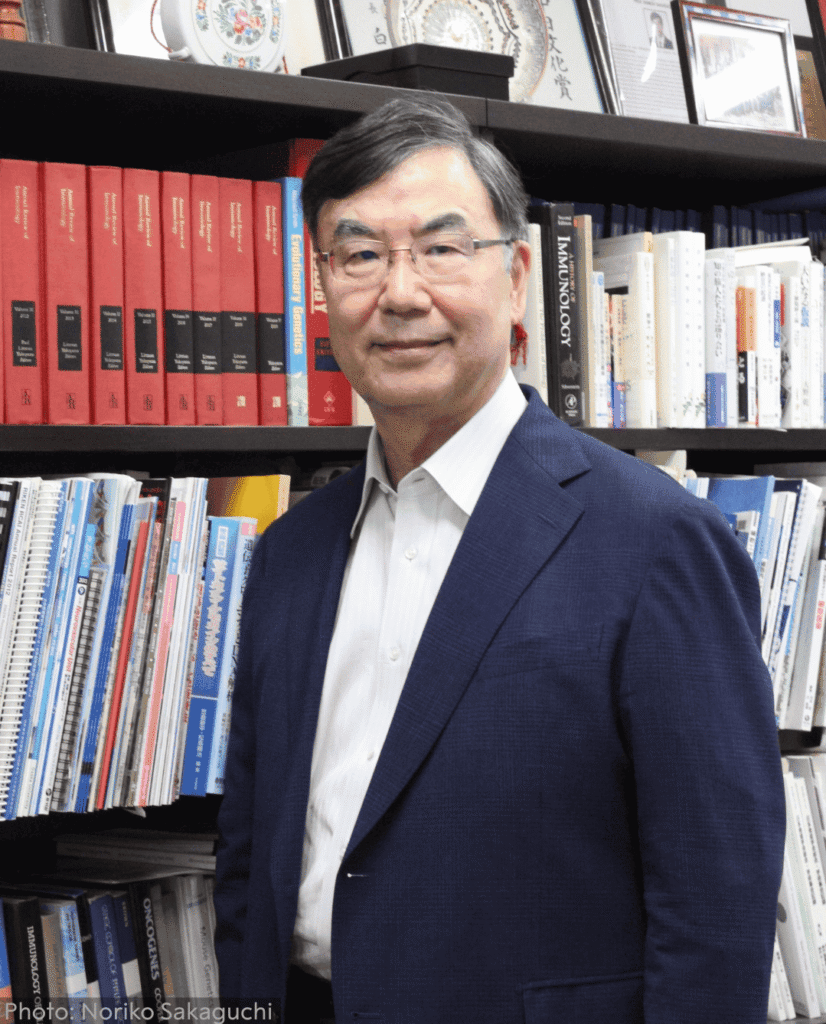
In 1995, working against the prevailing view, Shimon Sakaguchi identified a distinct class of immune cells that actively suppress the immune response. He tracked them by a protein on their surface called CD25, which gave his landmark paper its title. At the time, many researchers doubted such “suppressor” cells existed at all; earlier claims had collapsed under scrutiny, and the idea had fallen out of favour. The Nobel committee later described him as “swimming against the tide”.
Sakaguchi’s achievement was to show, rigorously, that a specific subset of T cells carried out this suppressive role. Remove them, and animals developed severe autoimmune disease as their unchecked immune cells attacked healthy tissue. Restore them, and the damage was prevented. These cells became known as regulatory T cells, or Tregs.
The finding revived a discredited idea and put it on solid experimental ground. It established that the immune system contains a built-in braking mechanism — a population of cells whose entire job is to restrain their more aggressive colleagues. What it did not yet explain was what made these cells what they were.
2001: Brunkow and Ramsdell find the master switch

The second thread came from an entirely different direction. Mary Brunkow and Fred Ramsdell were investigating a strain of mice, known as “scurfy”, whose immune systems ran catastrophically out of control, causing lethal autoimmune disease. In 2001 they traced the cause to a mutation in a single gene, which they named Foxp3.
The discovery had an immediate human parallel, and Brunkow and Ramsdell were among those who drew it. They showed that mutations in the equivalent human gene, FOXP3, cause a rare and devastating condition called IPEX syndrome, in which affected boys suffer severe autoimmune attack across multiple organs from very early in life. The gene was clearly central to keeping the immune system in check, but how it did so was not yet clear.
IPEX is as instructive as it is tragic. Because the gene sits on the X chromosome, boys, who carry a single copy, are most severely affected. The condition shows in the starkest possible way what happens when peripheral tolerance fails from birth: the immune system, lacking its brakes, attacks the gut, the endocrine glands and the skin, often within the first months of life.
The power of the Foxp3 discovery was that it pointed to a genetic root cause. Immune self-tolerance was not a vague, diffuse property of the system; it depended on a specific gene, and when that gene failed, tolerance collapsed. The stage was set for the two threads to be tied together.
Tying it together: the gene that builds the peacekeepers
The final connection came two years later, in 2003. Sakaguchi’s team showed that the Foxp3 gene identified by Brunkow and Ramsdell was the master regulator controlling the development of the very regulatory T cells he had discovered. Other groups, including one led by Alexander Rudensky, reached the same conclusion independently that year. The two lines of research, pursued independently, turned out to describe the same system from opposite ends.
Foxp3 acts as a genetic switch: when it is active in a T cell, that cell becomes a regulatory T cell, adopting its peacekeeping role. Without a working copy of the gene, these cells fail to develop properly, and the immune system loses its brakes — which is why the scurfy mice and the affected human infants suffer such overwhelming autoimmune disease.
This was the moment the field cohered. A cell type, a gene and a disease phenotype were shown to be three views of one mechanism: peripheral immune tolerance. That unified picture is what the 2025 Nobel Prize recognises, and it has become one of the central pillars of modern immunology.
How regulatory T cells keep the peace
Regulatory T cells do not enforce order in a single way. They deploy several overlapping tactics, which is part of why they are so effective and so difficult to imitate with a simple drug.
Some of their restraint is chemical: they release signalling molecules that dampen the activity of nearby immune cells, calming an inflammatory response before it spreads. Some is competitive: they soak up growth signals that other immune cells need to multiply, effectively starving an over-eager response of fuel.
They also act directly on the cells that instruct the immune system, turning down the “attack” signals those cells would otherwise broadcast. The overall effect is a constant, local negotiation, cell to cell, that keeps immune activity proportionate — vigorous against genuine threats, restrained toward the body itself.
Who the laureates are
Shimon Sakaguchi, born in 1951, trained in medicine at Kyoto University, earning his medical degree in 1976 and a doctorate in 1983, and is now a Distinguished Professor at Osaka University’s Immunology Frontier Research Center. His decades of work established regulatory T cells as a genuine and essential part of the immune system. He pursued the idea of suppressor cells through a period when it was deeply unfashionable, and was vindicated.
Mary E. Brunkow, born in 1961, earned her doctorate at Princeton University and is a senior programme manager at the Institute for Systems Biology in Seattle. Frederick J. Ramsdell, born in 1960, earned his doctorate at the University of California, Los Angeles, in 1987. Their work on the scurfy mouse led to the identification of the Foxp3 gene, supplying the molecular explanation that the cellular biology needed.
Together the three laureates represent a common pattern in modern biology: a discovery assembled from independent lines of research, cellular and genetic, that only reveal their full meaning when combined. The prize was shared equally between them.
The hidden burden this research speaks to
The importance of peripheral tolerance is easier to grasp against the scale of the diseases it governs. Autoimmune conditions are not rare curiosities. A 2023 study of the health records of 22 million people in the United Kingdom found that 19 of the most common autoimmune diseases together affected about one person in ten: 13.1 per cent of women and 7.4 per cent of men.
The same study found that between 2000 and 2019 the overall rate of new diagnoses edged upwards, and that some conditions rose sharply. New cases of coeliac disease, Sjögren’s syndrome and Graves’ disease roughly doubled. For several conditions it also found more disease in poorer areas, a pattern no single biological mechanism can explain on its own.
They are also strikingly varied. Type 1 diabetes destroys the insulin-producing cells of the pancreas; multiple sclerosis attacks the insulation around nerves; rheumatoid arthritis inflames the joints; and many more target the thyroid, the gut or the skin. What unites them is a failure of the immune system to tolerate the body’s own tissue.
Many of these conditions disproportionately affect women, and most are managed today with drugs that suppress the immune system broadly, blunting harmful and protective responses alike. A therapy that could restore tolerance selectively — calming only the mistaken attack — would be a fundamental improvement, and that is precisely what understanding regulatory T cells makes conceivable.
An unexpected reach: allergy and pregnancy
The influence of regulatory T cells extends beyond the classic autoimmune diseases. They help regulate allergic responses, in which the immune system overreacts to otherwise harmless substances such as pollen or food proteins. A better grasp of how Tregs restrain these reactions may inform future approaches to allergy.
Perhaps the most striking example is pregnancy. A developing fetus carries genes and proteins from both parents, so to the mother’s immune system it is, in part, foreign tissue. In 2004 researchers in Cambridge, England, showed in mice that the pool of regulatory T cells expands during pregnancy and that, without these cells, the mother’s immune system rejected the fetus. Human pregnancy is harder to study directly, but the same principle is thought to apply: tolerance operating at the very threshold of new life.
These broader roles underline why the discovery was worth a Nobel Prize. Peripheral tolerance is not a niche mechanism relevant to a handful of diseases; it is a general principle of how the immune system negotiates the difference between self and other, threat and harmless, throughout the body and across a lifetime.
Why it matters: autoimmune disease, cancer and transplants
Understanding the immune system’s brakes opens the possibility of adjusting them deliberately — loosening them where the immune system is too weak, and tightening them where it is too aggressive. That single idea runs through three very different areas of medicine.
In autoimmune disease, the goal is to strengthen or restore regulatory T cell function, so the immune system stops attacking healthy tissue. Rather than broadly suppressing immunity, as many current drugs do, a Treg-based approach could in principle restrain only the harmful response while leaving normal defences intact.
In cancer, the logic reverses. Tumours often recruit regulatory T cells to shield themselves from immune attack, hiding behind the very peacekeepers meant to prevent autoimmunity. Weakening Treg activity within a tumour could help the immune system recognise and destroy it, complementing the immunotherapies already transforming cancer care.
The evidence for this is direct. In a 2004 study of 104 women with ovarian cancer, researchers found that regulatory T cells collected inside tumours and in the fluid around them, drawn there by a chemical signal the tumour and its surrounding cells produce. The cells suppressed the patients’ anti-tumour immune responses, and women with more of them in their tumours tended to die sooner.
In transplantation, the dream is tolerance without lifelong immunosuppression. If regulatory T cells could be trained to accept a donated organ as part of the self, transplant recipients might one day avoid the drugs that currently leave them vulnerable to infection and other harms for the rest of their lives.
The cancer immunotherapy connection
This prize does not stand alone. It extends a story that the 2018 Nobel Prize in Physiology or Medicine had already begun, when James Allison and Tasuku Honjo were honoured for showing that releasing the immune system’s brakes could unleash it against cancer.
Those checkpoint-inhibitor therapies work by blocking molecular “off switches” that tumours exploit to evade attack, and they have become a mainstay of modern oncology. The 2025 discoveries deepen the same theme from the cellular side: regulatory T cells are among the most powerful brakes a tumour can co-opt for its protection.
Read together, the two prizes sketch a coherent strategy. Cancer survives by hiding behind the immune system’s safeguards; effective immunotherapy means selectively removing those safeguards where the tumour sits, without dismantling the tolerance that protects the rest of the body. Regulatory T cells are central to getting that balance right.
The therapeutic frontier
Turning this biology into treatment is now an active field. Researchers are exploring ways to expand a patient’s own regulatory T cells outside the body and return them, to engineer Tregs that target a specific tissue or organ, and to design drugs that tune their activity up or down as a disease requires.
Clinical trials are under way across several of these strategies, and the first larger results are encouraging but modest. The most instructive so far is the ONE Study, published in The Lancet in 2020, which ran seven coordinated trials in kidney transplant recipients in France, Germany, Italy, the UK and the USA. Thirty-eight patients received regulatory cell products, including regulatory T cells, in place of one of the standard drugs given at transplant.
Rejection rates in the first year were similar to standard care, 16 per cent against 12 per cent, but patients given the cells had fewer infections, and 15 of the 38 were successfully reduced to a single anti-rejection drug. The trials were small and not randomised, so they show that the approach is safe and feasible rather than that it is better.
The newest strategy borrows from cancer medicine. CAR-Treg therapies give regulatory T cells an engineered receptor that steers them to a particular tissue, much as CAR-T cancer therapies steer attacking T cells to a tumour. On 6 October 2026 the registry listed eight CAR-Treg studies. One, in rheumatoid arthritis, is run by Sonoma Biotherapeutics, the company Ramsdell advises; another, in liver transplant recipients, is run by the British company Quell Therapeutics. Both are early-stage safety trials.
A simpler approach uses drugs rather than cells. Low doses of the immune signalling molecule interleukin-2 tend to favour regulatory T cells over the cells they restrain, and the approach has been tested in conditions including lupus, type 1 diabetes, graft-versus-host disease and motor neurone disease. None has yet produced an approved treatment for them.
The appeal, though, is clear enough to sustain the effort. A treatment that works with the immune system’s own regulatory machinery, rather than crudely shutting the whole system down, promises fewer side effects and more precision. That is a different philosophy of medicine from the blunt immunosuppression that has dominated for decades.
What is not in doubt is the foundation. The recognition that the immune system has a dedicated, gene-controlled system of restraint has already reshaped immunology, and it gives medicine a precise target to aim at. The 2025 prize honours the discovery of that target, and the decades of patient work behind it.
There is a human story in the timeline, too. Sakaguchi held to an unpopular idea for years; Brunkow and Ramsdell chased the cause of a lethal condition in a laboratory mouse strain. Neither line of work announced itself as a future revolution in medicine. Only in hindsight, and only combined, did their significance become clear.
That is often how the deepest advances arrive: not as a single dramatic breakthrough, but as separate, patient investigations that converge. The immune system’s peacekeepers were hiding in plain sight for decades. Their discovery, now crowned with a Nobel Prize, may in time change how we treat some of medicine’s most intractable diseases.
Frequently asked questions
Who won the 2025 Nobel Prize in Medicine?
Mary E. Brunkow of the Institute for Systems Biology in Seattle, Frederick J. Ramsdell, a scientific adviser to Sonoma Biotherapeutics in San Francisco, and Shimon Sakaguchi of Osaka University. The Nobel Assembly at the Karolinska Institutet announced the prize on 6 October 2025, and the 11 million Swedish kronor were shared equally between the three.
What was the prize awarded for?
The official citation is “for their discoveries concerning peripheral immune tolerance” — the mechanism, maintained by regulatory T cells, that stops the immune system from attacking the body’s own tissues.
What are regulatory T cells?
A subset of immune cells, discovered by Sakaguchi in 1995, whose role is to suppress immune responses and prevent the system from attacking healthy tissue. They are sometimes described as the immune system’s peacekeepers or security guards.
What is the Foxp3 gene?
The master gene that controls the development of regulatory T cells, identified by Brunkow and Ramsdell in 2001 through work on “scurfy” mice. When Foxp3 is faulty, these cells fail to form and severe autoimmune disease follows.
How could this help cancer treatment?
Tumours often use regulatory T cells to shield themselves from the immune system. Selectively weakening Treg activity within a tumour could help immune cells recognise and attack it, complementing existing cancer immunotherapies.
Are there treatments based on this yet?
Not yet as routine therapies. The ONE Study, published in 2020, showed that regulatory cell therapy was safe in kidney transplant recipients, with fewer infections and similar rejection rates, and allowed some patients to reduce their drugs. Engineered CAR-Treg therapies for rheumatoid arthritis and liver transplantation are in early trials, and no regulatory T cell treatment has yet been approved.
What is the difference between central and peripheral tolerance?
Central tolerance removes many self-attacking immune cells as they develop in the thymus. Peripheral tolerance — the subject of this prize — is a second system that keeps the cells that escape in check throughout the rest of the body.
What is IPEX syndrome?
A rare, severe inherited disease caused by mutations in the human Foxp3 gene. Because the gene is on the X chromosome, boys are most affected, suffering widespread autoimmune damage from early life — a stark illustration of what happens when peripheral tolerance fails from birth.
How does this relate to the 2018 medicine Nobel?
The 2018 prize honoured checkpoint-inhibitor cancer therapy — releasing the immune system’s brakes to fight tumours. The 2025 prize illuminates the cellular side of those brakes, the regulatory T cells that tumours exploit for protection, deepening the same broad story.
How common are autoimmune diseases?
More common than most people think. A 2023 UK study of 22 million health records found that 19 common autoimmune diseases together affected about one person in ten, 13.1 per cent of women and 7.4 per cent of men, with some conditions, including coeliac disease, becoming markedly more common since 2000.
Do regulatory T cells protect pregnancy?
Animal studies suggest so. In 2004 researchers showed that in pregnant mice the pool of regulatory T cells expands, and that without them the mother’s immune system rejects the fetus. Their role in human pregnancy is thought to be similar but is harder to test directly.
What experiment inspired Sakaguchi?
A 1969 study by Yasuaki Nishizuka and Teruyo Sakakura, who found that removing the thymus from newborn mice caused their ovaries to waste away. The damage turned out to be autoimmune, suggesting that cells leaving the thymus early in life normally prevent self-attack. Sakaguchi set out to find those cells.
Are regulatory T cells harmful in cancer?
They can be. In a 2004 study of 104 women with ovarian cancer, tumours attracted regulatory T cells that suppressed anti-tumour immunity, and patients with more of them tended to survive for less time. That is why researchers want to weaken these cells inside tumours while leaving them working elsewhere in the body.
Further reading on Web News For Us
Sources
Primary peer-reviewed research (the foundational papers):
- Sakaguchi, S., et al. (1995). Immunologic self-tolerance maintained by activated T cells expressing IL-2 receptor α-chains (CD25). The Journal of Immunology, 155, 1151. doi.org/10.4049/jimmunol.155.3.1151
- Brunkow, M. E., et al. (2001). Disruption of a new forkhead/winged-helix protein, scurfin, results in the fatal lymphoproliferative disorder of the scurfy mouse. Nature Genetics, 27, 68. doi.org/10.1038/83784
- Hori, S., Nomura, T., & Sakaguchi, S. (2003). Control of regulatory T cell development by the transcription factor Foxp3. Science, 299, 1057. doi.org/10.1126/science.1079490
- Fontenot, J. D., Gavin, M. A., & Rudensky, A. Y. (2003). Foxp3 programs the development and function of CD4+CD25+ regulatory T cells. Nature Immunology, 4, 330. doi.org/10.1038/ni904
- Conrad, N., et al. (2023). Incidence, prevalence, and co-occurrence of autoimmune disorders over time and by age, sex, and socioeconomic status: a population-based cohort study of 22 million individuals in the UK. The Lancet, 401, 1878 (DOI: 10.1016/S0140-6736(23)00457-9).
- Sawitzki, B., et al. (2020). Regulatory cell therapy in kidney transplantation (The ONE Study): a harmonised design and analysis of seven non-randomised, single-arm, phase 1/2A trials. The Lancet, 395, 1627 (DOI: 10.1016/S0140-6736(20)30167-7).
- Aluvihare, V. R., Kallikourdis, M. & Betz, A. G. (2004). Regulatory T cells mediate maternal tolerance to the fetus. Nature Immunology, 5, 266 (DOI: 10.1038/ni1037).
- Nishizuka, Y. & Sakakura, T. (1969). Thymus and reproduction: sex-linked dysgenesia of the gonad after neonatal thymectomy in mice. Science, 166, 753 (DOI: 10.1126/science.166.3906.753).
- Curiel, T. J., et al. (2004). Specific recruitment of regulatory T cells in ovarian carcinoma fosters immune privilege and predicts reduced survival. Nature Medicine, 10, 942 (DOI: 10.1038/nm1093).
- ClinicalTrials.gov. Study of single doses of SBT777101 in subjects with rheumatoid arthritis (Sonoma Biotherapeutics). NCT06201416.
- ClinicalTrials.gov. Safety and clinical activity of QEL-001 in A2-mismatch liver transplant patients (Quell Therapeutics). NCT05234190.
Nobel Prize documentation:
- The Nobel Prize in Physiology or Medicine 2025 — official press release (Nobel Assembly, Karolinska Institutet)
- NobelPrize.org — Medicine 2025 summary and citation
- NobelPrize.org — Popular science background: the immune system’s security guards
Scientific background and laureate facts:
- Nobel Assembly — Scientific background to the 2025 medicine prize
- NobelPrize.org — Laureate facts: Sakaguchi, Brunkow and Ramsdell
Baryon. (2025, October 9). 2025 Nobel Prize in Medicine: The Immune Peacekeepers That Could Transform Cancer Care. Web News For Us. https://webnewsforus.com/2025-nobel-prize-in-medicine-cancer/
Baryon. “2025 Nobel Prize in Medicine: The Immune Peacekeepers That Could Transform Cancer Care.” Web News For Us, 9 October 2025, https://webnewsforus.com/2025-nobel-prize-in-medicine-cancer/. Accessed 11 October 2026.