
Ask a physicist how the universe began and you get a careful answer about the first fraction of a second. Ask what came before, or why there is anything at all, and the careful answer runs out. That is not a smaller question. It is the largest one we have, and physics has not answered it.
So we measured how hard we are trying. Searching arXiv year by year for papers whose abstracts mention quantum cosmology, counted by the date each was first submitted, returns 86 in 2010 and 67 in 2025. In between: 75, 91, 65, 67, 74, 79, 53, 91, 94, 70, 82, 64, 66 and 69. Sixteen years, an average near 75 a year, no trend either way.
That flat line is the most interesting number here, because over the same years arXiv as a whole grew about fourfold, from 70,131 submissions in 2010 to 284,486 in 2025. The question did not stop mattering. It stopped receiving new data, and a field without new data does not grow; it circulates.
What Physicists Mean When They Say “Nothing”

The word does most of the damage. In ordinary speech, nothing means the absence of everything. In physics it means something narrower and stranger: the quietest state the fields can settle into. That state has structure and measurable effects. It is not an absence.
Fields, not particles, are what actually exist
Physics describes the world as fields rather than objects. An electron is not a tiny ball but a ripple in a field that exists everywhere, and empty space is the state where all the fields are as quiet as they can be. Quantum mechanics will not let them be perfectly still, so some residual jitter, known as zero-point energy, always remains; it attracts confusion, some of it commercial, which our linked piece separates from the physics.
Virtual particles are bookkeeping, not weather
Popular accounts describe the vacuum as boiling with particles popping in and out of existence. That picture misleads. Those “virtual particles” are bookkeeping entries in a calculation, not objects that could be photographed. What is real is their effect: calculations of how an electron behaves only match experiment when those entries are included.
The Evidence That the Vacuum Is Real
Three measurements carry most of the weight, because “the vacuum has energy” sounds speculative and is not.
The first is the Lamb shift. In hydrogen, two states that theory says should have identical energy do not. Lamb and Retherford found the splitting in 1947, measurable by microwave spectroscopy. The gap exists because the electron interacts with vacuum fluctuations of the electromagnetic field, and quantum electrodynamics predicts its size correctly.
The second is the Casimir effect. Place two uncharged metal plates very close together and the space between them can hold less field activity than the space outside, so they are pushed together. Steven Lamoreaux measured it directly in 1997 between roughly 0.6 and 6 micrometres, matching theory to within a few per cent.
The third is the electron’s magnetism. The simplest quantum theory says a number describing how strongly an electron responds to a magnetic field should be exactly 2. The measured value is about a tenth of a per cent larger because of the electron’s interactions with the vacuum, and with those included, theory matches the best measurement, published in 2023, to about the twelfth decimal place.
The Ledger: Why a Universe Might Sum to Zero

If the universe began with no stock of energy, the books have to balance. Everything you can point at carries positive energy, so something must carry an equal negative amount.
Gravity is the candidate. Pulling two objects apart takes energy, which means a bound system holds less than a scattered one — gravitational energy counts as negative. Extend that to every mass in the observable universe and the negative total is enormous.
The zero-energy idea says the two sides cancel exactly, so creating a universe would break no conservation law, because there would be nothing to conserve. Elegant, and it has a serious problem.
Pair production makes the principle concrete
Turning energy into matter is not theoretical. An energetic photon passing near an atomic nucleus routinely becomes an electron and a positron. Paul Dirac predicted antimatter from his equation before anyone saw it, a story we tell in our piece on Dirac and the prediction of antimatter.
Why “The Total Energy” Is Harder to Define Than It Sounds
The argument rests on adding two quantities and getting zero. In general relativity that addition is not straightforward and may not even be well defined. It is the weakest joint in the chain, and popular accounts rarely mention it.
Energy conservation is not a free-standing law. It follows from the rules of physics staying the same over time, and an expanding universe breaks that sameness because space itself is changing. We can total the energy of an isolated star against the empty space around it, but the universe has no outside to measure against.
So “the total energy of the universe is zero” is not straightforwardly true or false. On some reasonable ways of setting up the sum the total is undefined, and several physicists treat the claim as a suggestive idea rather than a proven one.
The Measurement That Makes the Idea Testable
In its popular form, the cancellation needs a particular geometry. A universe expanding at exactly the critical rate, where the energy of expansion just balances the pull of gravity, is in general relativity a spatially flat one: Euclidean at large scales, parallel lines staying parallel, triangles closing at 180 degrees.
The Planck 2018 cosmological results, combined with baryon acoustic oscillation data, give ΩK = 0.001 ± 0.002. The universe is flat to within about a fifth of one per cent. That single number is the strongest observational support the zero-energy hypothesis has. It was not a confirmed prediction, though: Edward Tryon’s 1973 paper in Nature, which launched the idea, predicted a closed universe made of equal amounts of matter and antimatter.
Two cautions belong beside it. Consistent with zero is not the same as zero; the data still allow a very slight curve too small to detect. And inflation predicts flatness for its own reasons, so a flat universe supports both ideas without separating them.
Inflation: The Mechanism That Would Have Done It
Two features of our universe resist explanation by ordinary expansion. It is remarkably even, the same temperature everywhere, including regions that could never have exchanged anything. And it is flat, which in ordinary cosmology is unstable: any early deviation grows, so flat today means impossibly flat at the start.
Alan Guth’s proposal, set out in his 1981 paper, solves both. If the early universe briefly expanded at an enormous rate, one tiny connected patch was stretched to cover everything we see. Evenness follows because it was all in contact beforehand; flatness follows because stretching any surface far enough makes it look flat.
Inflation earns its keep on a third count, the one that made it dominant. The quantum jitter would have been stretched too, leaving faint denser and thinner patches that gravity later pulled into galaxies. The predicted pattern matches what Planck measured: everything we see, including the stars that formed, traces back to that magnified noise.
What the Microwave Background Actually Shows
For its first few hundred thousand years the universe was too hot for atoms to hold together, and loose electrons scattered light so relentlessly that it glowed like fog. As it cooled, electrons and protons joined into hydrogen, the fog lifted and light travelled freely. That light is the cosmic microwave background: not a picture of the Big Bang but of the moment the universe turned clear, about 380,000 years in, and the earliest thing we can see.
The background is the same temperature in every direction to about one part in a hundred thousand; the interest lies in the tiny variations. Before the fog lifted, gravity pulled matter into clumps while trapped light pushed back, setting off sound waves that froze mid-swing when it cleared. Their spacing across the sky reveals what the early universe was made of and what shape it has, because curvature would magnify or shrink them. This is where the flatness figure comes from.
The Planck 2018 release fits six numbers to this pattern and derives the rest: the age of 13.8 billion years, how much matter and dark energy there is, and the slight tilt inflation predicted. Impressive physics, with an important limit. It tells us what the universe held at 380,000 years, and reaches earlier only through models.
The Low-Entropy Problem Nobody Has Solved
There is a deeper puzzle than what caused the beginning. Entropy, a measure of disorder, increases over time. Run that backwards and the past must have had lower entropy than the present, lower the further back you go. The beginning must therefore have been extraordinarily low-entropy, which is to say extraordinarily improbable, picked from an overwhelmingly larger set of possibilities.
This sounds backwards, because a hot, even gas looks as disordered as it gets. Gravity reverses that: when gravity dominates, smooth is the orderly state and clumpy the disordered one, so the smooth early universe was extraordinarily orderly.
Roger Penrose has pressed this hardest, arguing in The Emperor’s New Mind that the odds against such a starting state are so long the number could not be written out inside a universe this size. The figure is debated; that the fine-tuning is severe is widely accepted.
Inflation is often credited with fixing this; Penrose and others argue it does not. It explains why our region is smooth given a patch that was already inflating, but that patch had to start orderly for inflation to begin. On that view the puzzle moves rather than dissolving.
We go deeper in our piece on the arrow of time. The point here is narrow: no proposal in this article explains why the initial state was so special.
The Problem With Inflation: 118 Models, One Universe
Inflation is a framework rather than a theory in the sense general relativity is. General relativity has no dials; inflation needs a field with a particular shape to its energy, and nothing fixes that shape.
Cosmologists have taken this seriously enough to count. The Encyclopædia Inflationaris, first published in 2014 and updated in 2024, works through the simplest family of inflation models one by one, and its companion software now supports 118 of them. The trouble is what would tell them apart.
The number that would settle it has never been measured
Inflation makes one prediction that could separate the models sharply: gravitational waves from the first instant. That violent expansion should have shaken space itself, leaving a faint twist in the microwave background. Its strength is written r, and different models predict values differing enormously.
No such twist of primordial origin has been detected. BICEP/Keck’s 2021 analysis, combining its own data with WMAP and Planck maps, places r below 0.036 at 95% confidence: a bound, not a measurement. That already excludes the simplest textbook model, which predicts r of roughly 0.13 to 0.16, and leaves many others standing.
Inflation’s most distinctive prediction has been squeezed downward for twenty years without being confirmed, and each squeeze kills models rather than the framework. A sceptic calls that unfalsifiable; a defender calls it normal science narrowing the field. Both readings come from the same data.
The nearest miss came in March 2014, when the BICEP2 collaboration announced a detection of those primordial gravitational waves at a press conference, before peer review. It was reported worldwide as direct evidence of inflation and a probable Nobel Prize.
It was dust. Polarised emission from aligned dust grains in our own galaxy mimics the signal, and BICEP2 had underestimated it. A joint analysis with Planck in 2015 showed the signal was consistent with galactic dust alone.
The correction came from the field itself, quickly, and was published in the same journal as the claim. The hard part was judging the dust, not building the instrument, and it still is.
What would change this
Detecting those primordial gravitational waves would turn inflation from a framework into a measured fact. The Simons Observatory and LiteBIRD are built to look. If they find nothing, only versions of inflation predicting an undetectable signal survive, a much weaker position.
Did Time Itself Have a Beginning?
Popular cosmology often says inflation removes the need for a beginning: if inflation is eternal, universes bubble off forever and the question dissolves. The mathematics does not support this so cleanly.
Borde, Guth and Vilenkin showed in 2003 that any spacetime expanding on average throughout its history cannot be extended infinitely into the past. The theorem assumes neither Einstein’s equations nor any particular matter content, and it covers inflationary models, eternal ones included.
It does not prove the universe began to exist, and it does not prove a creator. It shows that one kind of description cannot run backwards forever. What replaces it at that point, nobody knows: the theorem marks the edge of a map, not the edge of reality.
The Quantum Proposals, and Their Standing
Two serious attempts to describe the origin quantum-mechanically date from the early 1980s. Both are mathematically substantial; neither has been tested.
The no-boundary proposal
James Hartle and Stephen Hawking’s Wave Function of the Universe (1983) treats the whole universe as a quantum system and finds that it has no edge. Near the origin, time behaves like a direction of space, so there is no first moment, just as there is no point south of the South Pole.
It dissolves the question of what came before rather than answering it: no boundary, no before. Hawking spent much of his later career on the consequences, covered in our piece on A Brief History of Time, and the same instinct runs through his work on black hole radiation.
Tunnelling from nothing
Alexander Vilenkin’s Creation of Universes from Nothing (1982) takes another route: a universe appearing the way a particle sometimes slips through a barrier it has no business crossing. The starting state contains no space or time at all.
The two rest on different starting conditions and favour different kinds of universe. Neither has yet produced a prediction that a planned experiment could check, and both depend on a quantum theory of gravity nobody has finished writing.
These are not fringe ideas; they come from physicists of the first rank. They are also, forty years on, unsupported by a single measurement. The flat arXiv line at the top of this article is what that looks like from outside.
The Number That Refuses to Behave
If the vacuum has energy, that energy should gravitate, because general relativity says every form of energy curves spacetime. Calculating the vacuum’s contribution is therefore a direct test of whether we understand it.
We fail it comprehensively. Add up what the known fields should contribute and the answer is vastly larger than what is measured — the gap is roughly a one followed by 120 zeros. Weinberg’s 1989 review laid out the problem, and nothing fundamental has changed since.
It is often called the largest disagreement between theory and observation in physics, and it sits underneath every claim in this article: the vacuum invoked to explain the origin of the universe is the same vacuum whose energy we cannot calculate.
Nor is the measured value zero, which would at least hint at a hidden rule. It is small and positive, and it drives the accelerating expansion we call dark energy. Any full account owes us both why it is so small and why it is not quite zero.
How We Would Know If We Were Wrong
A claim that cannot fail any test is not doing scientific work. Here, for each proposition, is what observation would count against it, and where nothing would.
Claims with live tests
- The universe is flat. A measurement of curvature clearly different from zero would disprove it. Current limits are tight, and future surveys will tighten them.
- Inflation happened. Detecting those primordial gravitational waves would strongly support it; failing to find them down to r of about 0.001 would kill the simplest models and leave the framework in trouble.
- The vacuum has real structure. Tested repeatedly and passed. A failure of quantum theory at higher precision would count against it; none has appeared.
- Galaxies grew from quantum ripples. Testable through how galaxies cluster and how the microwave background varies. The wrong statistical signature would rule out the simplest models.
Claims with no current test
- The universe’s total energy is exactly zero. No experiment is proposed, and part of the difficulty is that the sum may not be definable.
- The no-boundary proposal, or tunnelling from nothing. Both predict in principle; neither predicts anything we could tell apart with foreseeable instruments.
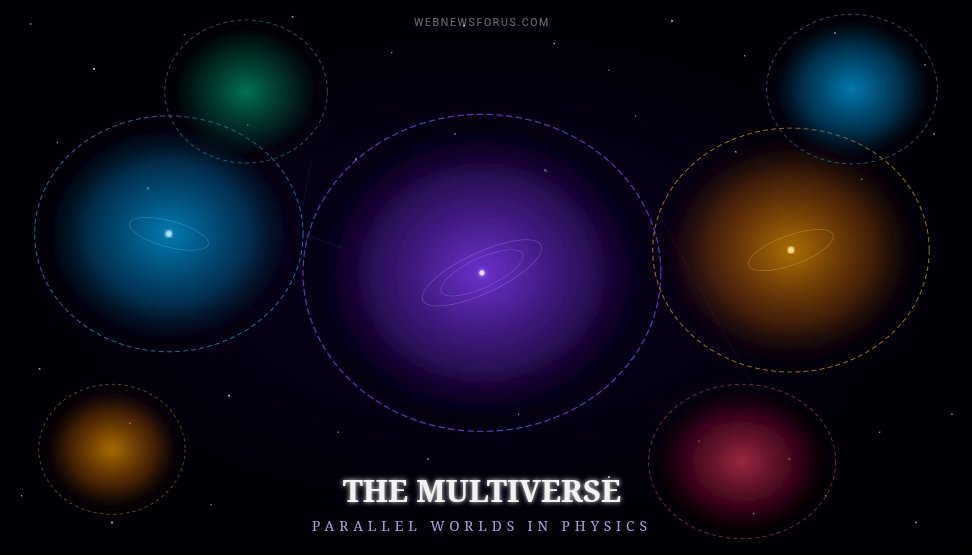
- A multiverse of other regions. Some inflation models imply endless other universes. No proposed observation has found one.
- Why there is something rather than nothing. No observation bears on it. This is the one the older traditions identified correctly as being of a different kind.
The first list is science in progress. The second holds ideas that may well be true, held by serious people for serious reasons, but currently doing philosophical rather than scientific work. Presenting the second as the first is the central failure of popular cosmology.
What “Nothing” Meant Before Physics
The question of why anything exists is older than the equipment, and the answers people gave are more varied and careful than their reputation suggests. They did not anticipate modern cosmology; claims that some scripture encoded the Big Bang work backwards from the answer. But they are the most sustained attempts made before measurement was possible.
The hymn that ends in doubt
The most striking is the Nāsadīya Sūkta, the creation hymn at Rigveda 10.129, composed somewhere in the second millennium BCE. It opens by refusing both alternatives: neither existence nor non-existence, neither death nor immortality, no distinction between day and night. What existed, it says, was breathing without breath.
What makes it extraordinary is its epistemology. It ends by asking who could possibly know, notes that the gods came after the creation and so cannot have witnessed it, and closes on the possibility that even the highest overseer does not know. In Ralph Griffith’s 1896 translation:
“Who verily knows and who can here declare it, whence it was born and whence comes this creation? The Gods are later than this world’s production. Who knows then whence it first came into being?”— Rigveda 10.129, translated by Ralph T. H. Griffith, 1896. For a modern scholarly rendering see Jamison and Brereton’s Oxford translation.
Three thousand years later, that is close to where the physics sits. The hymn names the structural problem exactly: any witness to the origin is part of what originated, so there is no outside vantage point.
Creation from nothing was a late and contested idea
Creation from nothing at all is often assumed to be the default religious position, but it was neither default nor early. Genesis opens on a formless earth with waters already present. The doctrine of creation from nothing was worked out in the first centuries CE, partly against Greek philosophy, which broadly held that nothing comes from nothing.
Greek thought split. Parmenides argued that non-being cannot coherently be spoken of; Aristotle held that the cosmos had always existed; the atomists proposed everlasting particles in an everlasting void. Each move is still made today: something is taken as given, and the argument is about what.
Buddhist tradition largely declined the question. Several Buddhist texts list whether the world is eternal among the questions the Buddha left unanswered, set aside as not conducive to liberation. Jain thought gave a definite answer: the universe was never created and has always existed, without beginning or end.
Four more answers, and the shape they share
Chinese cosmology took another route. The Daodejing describes something undifferentiated and complete existing before heaven and earth; the Dao gives rise to one, one to two, two to three, and three to the ten thousand things. The emphasis falls on differentiation out of an undivided state, closer in structure to a phase transition than to a manufacture.
Egyptian cosmogony began with Nun, the primordial waters, an inert chaos from which a mound emerges. Norse accounts start with Ginnungagap, a yawning void between realms of fire and ice. Both begin from a formless something rather than an absence, as Genesis does, and as the quantum vacuum does.
Medieval Islamic thinkers developed the opposite argument: an endless chain of past events is impossible, so the universe must have had a beginning and therefore a cause. Al-Ghazālī pressed it in the eleventh century against philosophers such as Avicenna, who held the world eternal, and modern philosophers of religion have revived it, often citing the Borde-Guth-Vilenkin theorem, which does not carry that weight. Whether an infinite past makes sense is still open.
Read together, the traditions cluster around a few answers: something has always existed; something outside time holds up what is inside it; the question is badly posed; or nobody can know. Modern cosmology, with the mathematics stripped away, offers the same short list. That is not evidence the ancients were doing physics. It suggests the constraint is logical: whatever an explanation starts from is itself unexplained, and better instruments move that line without removing it.
Where Science Stops and Something Else Begins
The most useful criticism of Lawrence Krauss’s 2012 book A Universe from Nothing, and the genre it represents, came from a philosopher of physics rather than a theologian. David Albert, reviewing the book in The New York Times, made a point that is difficult to answer.
A vacuum in physics, he wrote, is as much a particular arrangement of physical stuff as a giraffe or a refrigerator; the true equivalent of nothing at all is the fields not being there. A theory that starts with fields and derives a universe has explained how this universe arose from an earlier physical state, not why there is any.
This is not an anti-science argument. It is a claim about the scope of a kind of explanation: physics explains transitions between states, and why there is any state at all is not a transition.
Two responses are respectable. One is that the question is malformed, as “what is north of the North Pole” is. The other is that it is real but beyond the reach of experiment. What is not respectable is presenting the first as a finding, or the second as physics.
The Honest Position
What can be said with confidence: the vacuum has real, measurable structure; the universe is flat to within a fifth of a per cent; matter and energy convert into each other; and the universe was hot and dense 13.8 billion years ago and has expanded since.
What cannot: whether the total energy is exactly zero; which of the 118 inflation models is right, if any; what preceded the earliest moment we can model; why the vacuum energy has the value it does; and whether ultimate origin has a physical answer at all.
The gap between those two lists has barely narrowed in forty years, and the flat publication record measures it. That is not a failure of the people doing the work; it is what a question looks like when the deciding observations are out of reach. The Hubble tension shows what progress looks like when data arrive.
The universe may well have emerged from a quantum vacuum, through a process that breaks no law of physics. That story is coherent and supported by real measurements along the chain. It is also not established, and “nothing” in the popular telling does not mean what readers assume. Holding all of that at once is the accurate position.
Frequently Asked Questions
Does the Borde-Guth-Vilenkin theorem prove the universe had a beginning?
It proves that a universe expanding on average cannot be traced back forever, so the description fails at some finite point in the past. It does not establish what happens there, or whether anything caused it.
Do ancient scriptures describe the Big Bang?
No. Such claims work backwards from the modern answer to a reading the text will not support. What some ancient texts do contain, the Nāsadīya Sūkta most notably, is a careful statement of why the question is hard.
If the universe has zero total energy, where did the energy for stars come from?
Mostly from nuclear fusion, which turns a little of a star’s mass into light; that energy was already on the positive side of the ledger. Gravity squeezes and heats gas until fusion can start, and the energy released as matter falls together is matched by the gravitational side growing more negative.
Further reading on this site
This connects to several others: zero-point energy, dark energy, the multiverse, the arrow of time, A Brief History of Time, and quantum entanglement.
Sources
- Planck Collaboration — Planck 2018 results VI: Cosmological parameters, Astronomy & Astrophysics (2020)
- Martin, Ringeval & Vennin — Encyclopædia Inflationaris, Physics of the Dark Universe (2014)
- BICEP/Keck Collaboration — Improved Constraints on Primordial Gravitational Waves, Physical Review Letters 127 (2021)
- BICEP2/Keck and Planck Collaborations — Joint Analysis of BICEP2/Keck Array and Planck Data, Physical Review Letters 114 (2015)
- Alan H. Guth — Inflationary universe: A possible solution to the horizon and flatness problems, Physical Review D 23 (1981)
- Borde, Guth & Vilenkin — Inflationary Spacetimes Are Incomplete in Past Directions, Physical Review Letters 90 (2003)
- Hartle & Hawking — Wave function of the Universe, Physical Review D 28 (1983)
- Alexander Vilenkin — Creation of universes from nothing, Physics Letters B 117 (1982)
- Steven Weinberg — The cosmological constant problem, Reviews of Modern Physics 61 (1989)
- Gibbons & Hawking — Cosmological event horizons, thermodynamics, and particle creation, Physical Review D 15 (1977)
- S. K. Lamoreaux — Demonstration of the Casimir Force in the 0.6 to 6 µm Range, Physical Review Letters 78 (1997)
- Lamb & Retherford — Fine Structure of the Hydrogen Atom by a Microwave Method, Physical Review 72 (1947)
- David Albert — On the Origin of Everything, The New York Times (25 March 2012)
- Roger Penrose — The Emperor’s New Mind, Oxford University Press (1989)
- Simons Observatory Collaboration — The Simons Observatory: science goals and forecasts, JCAP 02 (2019) 056
- Jamison & Brereton — The Rigveda: The Earliest Religious Poetry of India, Oxford University Press (2014)
- CERN — The early universe
- CERN — Antimatter
- European Space Agency — Planck mission
- Edward P. Tryon — Is the Universe a Vacuum Fluctuation?, Nature 246 (1973)
- Fan, Myers, Sukra & Gabrielse — Measurement of the Electron Magnetic Moment, Physical Review Letters 130 (2023)
- Martin, Ringeval & Vennin — Encyclopædia Inflationaris, updated edition, arXiv:1303.3787v5 (2024)
- arXiv — Monthly submission statistics
Baryon. (2026, September 9). From Nothing to Everything: How Our Universe Emerges from the Dance of Vacuum & Energy. Web News For Us. https://webnewsforus.com/origin-of-the-universe-from-nothing-energy/
Baryon. “From Nothing to Everything: How Our Universe Emerges from the Dance of Vacuum & Energy.” Web News For Us, 9 September 2026, https://webnewsforus.com/origin-of-the-universe-from-nothing-energy/. Accessed 18 October 2026.
2 Responses