The universe is accelerating. Every galaxy beyond our local group is rushing away from us, and the farther away it is, the faster it recedes. Something is pushing space apart — and physicists do not know what it is.
The leading placeholder is called dark energy, a name that essentially means “we do not know.” It accounts for roughly 68% of the total energy of the observable universe, yet it has never been directly detected.
Now a study in the journal Physical Review D proposes a radical candidate: microscopic wormholes, ceaselessly born and destroyed in the quantum vacuum of space.
If correct, it would be one of the most consequential ideas in the history of cosmology — connecting the largest structures in the universe to the smallest scales of quantum gravity.
Wormholes themselves have a large literature and a very small traversable one. Of the 2,315 arXiv papers with “wormhole” in the title on 1 September 2026, 343 say “traversable”. Re-run on 5 October 2026, the counts were 2,348 and 347.
Roughly one wormhole paper in seven concerns the kind that anything could pass through. The rest are mathematical solutions, black-hole interiors and entanglement geometry — objects that exist in equations and are not doorways.
The proposal below, that microscopic wormholes in the vacuum account for dark energy, sits inside that larger literature rather than the small traversable corner of it. That distinction is the first thing most coverage loses.
What Is Dark Energy, and Why Is It a Problem?
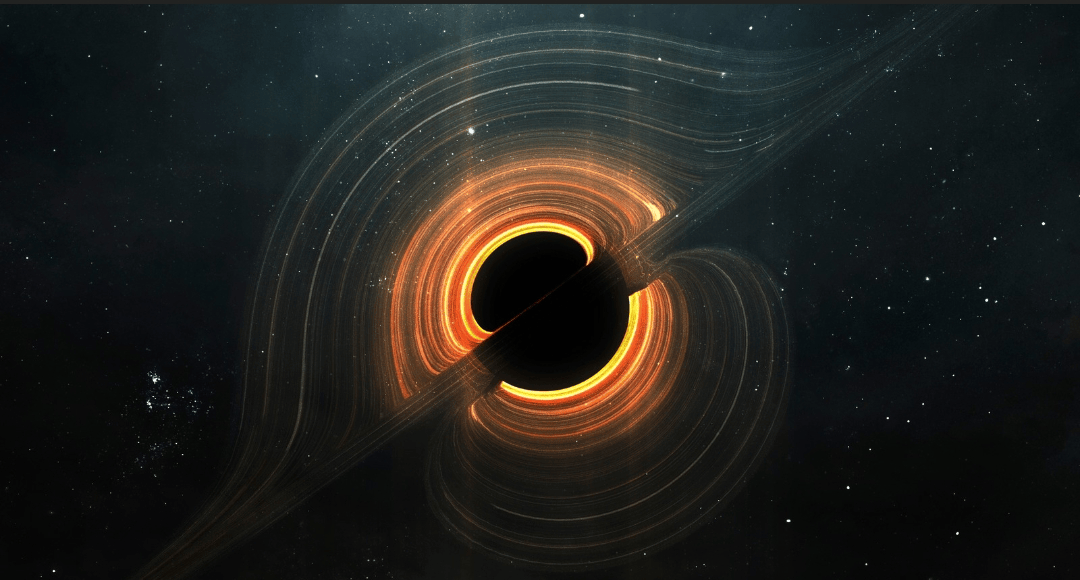
Two years after formulating general relativity, in 1917, Einstein added a term called the cosmological constant — a built-in repulsive energy of space — to keep the universe static, which he then believed it was.
When Edwin Hubble showed in 1929 that galaxies were receding in every direction, Einstein dropped the term, reportedly calling it his greatest blunder.
Then, in 1998, two independent teams studying distant Type Ia supernovae discovered that the expansion is not merely continuing but accelerating. The cosmological constant was brought back from the dead.
Renamed dark energy, it became the most economical explanation for what the observations demanded. But a deep problem lurked beneath it.
When physicists calculate the vacuum energy from quantum field theory, they get a value about 10¹²⁰ times larger than what is observed — the largest gap between theory and experiment in the history of science.
The observed dark energy is astonishingly dilute. Using the Planck satellite’s 2018 measurements of the expansion rate and the share of dark energy, it works out to about half a billionth of a joule in every cubic metre of space, the energy equivalent of three or four hydrogen atoms per cubic metre. The naive quantum estimate, which counts vacuum fluctuations all the way down to the Planck length, gives something like 10^113 joules per cubic metre. The exact size of the gap depends on where that calculation is cut off, which is why estimates run from about 10^120 to 10^123, but every version misses by a factor far larger than the number of atoms in the observable universe.
This is the cosmological constant problem, which the physicist Steven Weinberg set out in a classic 1989 review. Alternatives such as quintessence and modified gravity have been proposed over the years. The wormhole model is among the most recent and most intriguing. The force it seeks to explain is covered in our article on dark energy, the invisible force.
What Is a Wormhole?
A wormhole is a hypothetical structure in spacetime connecting two separate regions through a shortcut that bypasses ordinary geometry. The best-known example in the mathematics is the Einstein-Rosen bridge.
Wormholes emerge naturally from the mathematics of general relativity. Einstein and Nathan Rosen described one such structure in 1935. Later work showed that a bridge of this kind would pinch shut before anything could pass through it.
The traversable wormholes of science fiction — stable tunnels a spaceship could cross — would require exotic matter with negative energy density to hold them open. Small negative energy densities do appear in quantum effects such as the Casimir effect, but nothing remotely like the amount a wormhole would need.
But the wormholes in this new proposal are not those grand structures. They are subatomic — vanishingly small fluctuations at the Planck scale, around 10⁻³⁵ metres, where quantum effects on gravity are expected to become as strong as gravity itself.
At that scale, spacetime itself is thought to foam and bubble with transient geometric structures. The physicist John Wheeler named this idea “quantum foam” in the 1950s.
What the new research adds is a calculation of how such wormholes, present at a given density, would alter the equations of gravity — and a proposal that the result acts like the energy of the vacuum.
A Short History of the Wormhole
The idea is older than its name. In 1916, months after Karl Schwarzschild found the first exact solution to Einstein’s equations, the Austrian physicist Ludwig Flamm noticed that it could describe a tunnel joining two regions of space. Einstein and Rosen revisited the geometry in 1935, hoping it might describe particles; it became known as the Einstein-Rosen bridge.
The word wormhole came from Charles Misner and John Wheeler in 1957. Five years later, Robert Fuller and Wheeler showed that an Einstein-Rosen bridge pinches shut too quickly for anything, even light, to cross it.
In 1978 Stephen Hawking described spacetime at the very smallest scales as a foam of ever-changing shapes, including microscopic wormholes — the picture the new dark-energy paper builds on. A decade later, Michael Morris and Kip Thorne worked out what a wormhole would need for a person to pass through: a throat held open by exotic matter with negative energy density. Their 1988 paper drew on Carl Sagan’s novel Contact, which used a wormhole as its shortcut between stars.
None of these has ever been observed. Every wormhole in this history lives in mathematics, and the proposal below is no exception.
The New Research: Wormholes as Dark Energy
The study, led by Stylianos Tsilioukas of the University of Thessaly with Emmanuel Saridakis and Charalampos Tzerefos, uses an approach called Euclidean quantum gravity to model wormhole creation in the vacuum.
In ordinary quantum theory, virtual particles constantly appear and disappear, borrowing existence from Heisenberg’s uncertainty principle. Their fluctuations contribute to the vacuum energy of space.
The wormhole model extends this idea to fluctuations not just in particle fields but in the geometry of spacetime itself — quantum gravitational effects that produce transient wormhole structures.
A crucial technical detail is that the effect does not arise from Einstein’s equations alone. It appears only when a higher-order term, called the Gauss-Bonnet term, is included in the gravitational action.
Why that term? In four dimensions it measures the shape of space in the topologist’s sense: added up over a closed space, it counts holes and handles, a number that does not change when space is stretched or bent. Ordinarily that makes the term invisible in the equations of motion. The authors’ argument is that when wormholes keep changing the topology of spacetime at the smallest scales, the term stops being invisible and leaves behind an effective cosmological constant. The same term also appears in the equations of some versions of string theory.
With that term, the continuous birth and death of microscopic wormholes changes the topology of spacetime and induces an effective cosmological constant — one that behaves, on large scales, like dark energy.
The numbers are staggering. The authors estimate that around ten billion wormholes forming per cubic centimetre of space every second would supply enough energy to drive the observed acceleration — a rate they describe as “quite reasonable” by existing estimates of how foamy spacetime is.
Because the density of wormholes can change as the universe expands, the resulting dark energy need not be constant. The paper does not, however, work out how it would change; it leaves that, together with any comparison with observations, to future work.
Wormholes Have Been Tried on This Problem Before
Linking wormholes to the cosmological constant is not new, and the paper says so. In his 1978 work on spacetime foam, Stephen Hawking treated the vacuum as a gas of tiny structures of different shapes and obtained a cosmological constant from them — but a negative one, the opposite sign to the one later observed.
Ten years later the Harvard physicist Sidney Coleman proposed, in a paper titled “Why there is nothing rather than something”, that wormholes and other changes in the shape of spacetime would turn the constants of nature into quantities with a spread of possible values. For the cosmological constant, that spread peaked sharply at zero.
Approaches of this kind, the new paper notes, typically drive the cosmological constant towards zero as the universe ages. The universe turned out to have a small positive value instead. The new proposal’s distinguishing feature is that it yields a positive effective cosmological constant whose size depends on how many wormholes there are and, since that number can change as the universe expands, an effective dark energy that need not stay fixed.
Why This Differs From Other Quantum Effects
It helps to compare the idea with better-known quantum effects in empty space.
Hawking radiation — the slow evaporation of black holes — and the Schwinger effect — pair creation in a strong electric field — both involve quantum fields operating on a fixed spacetime background.
The wormhole mechanism is fundamentally different. It requires quantum effects in gravity itself, where the geometry of spacetime must be treated quantum mechanically, not as a fixed stage.
This places the proposal firmly in the domain of quantum gravity — the not-yet-completed theory that would unify general relativity with quantum mechanics.
The team used Euclidean quantum gravity, a technique in which time is treated as an imaginary number, converting the problem into a more tractable geometric form.
This method has been productive since the 1970s, most famously in the no-boundary proposal for the universe’s origin — an idea explored in our article on the origin of the universe from nothing.
Has the Model Been Tested Against Data?
It has not. The paper itself makes no comparison with observations, and it does not claim to fit the data better than the standard Lambda-CDM model. Its conclusions list testing the idea against supernovae, baryon acoustic oscillations, the cosmic microwave background and direct measurements of the expansion rate as work for future projects.
That test matters more now than when the paper was written, because the data have moved. The Dark Energy Spectroscopic Instrument (DESI) measures expansion with what astronomers call baryon acoustic oscillations. Sound waves rippling through the hot young universe left galaxies with a slight preference to sit a characteristic distance apart, roughly 500 million light-years today. Measuring that ruler at different distances, and so at different moments in cosmic history, shows how fast the universe was expanding at each stage.
In March 2025 DESI published its second major analysis. Combined with the cosmic microwave background and supernovae, it prefers dark energy that changes over time to a constant one, at a strength of 2.8 to 4.2 sigma depending on which supernova sample is used.
The second data release draws on more than 14 million galaxies and quasars gathered over three years. On its own, DESI’s map still fits the standard model, but the parameters it prefers sit in mild tension, at 2.3 sigma, with those from the cosmic microwave background. Letting dark energy evolve relieves that tension, which is where the stronger preference comes from. Even so, the result is not yet a discovery; physicists usually wait for five sigma before claiming one. But it has made models with changing dark energy far more interesting than they were in 2024.
A model whose dark energy can vary is the kind of idea that result invites. Whether this one varies in the right way, by the right amount, has not been calculated, let alone checked. The question connects to the wider Hubble tension in cosmology.
Until that comparison is made, the model is a mechanism, not a measurement. What is needed is a distinctive prediction that future observations can test.
The Challenge: Can It Be Tested?
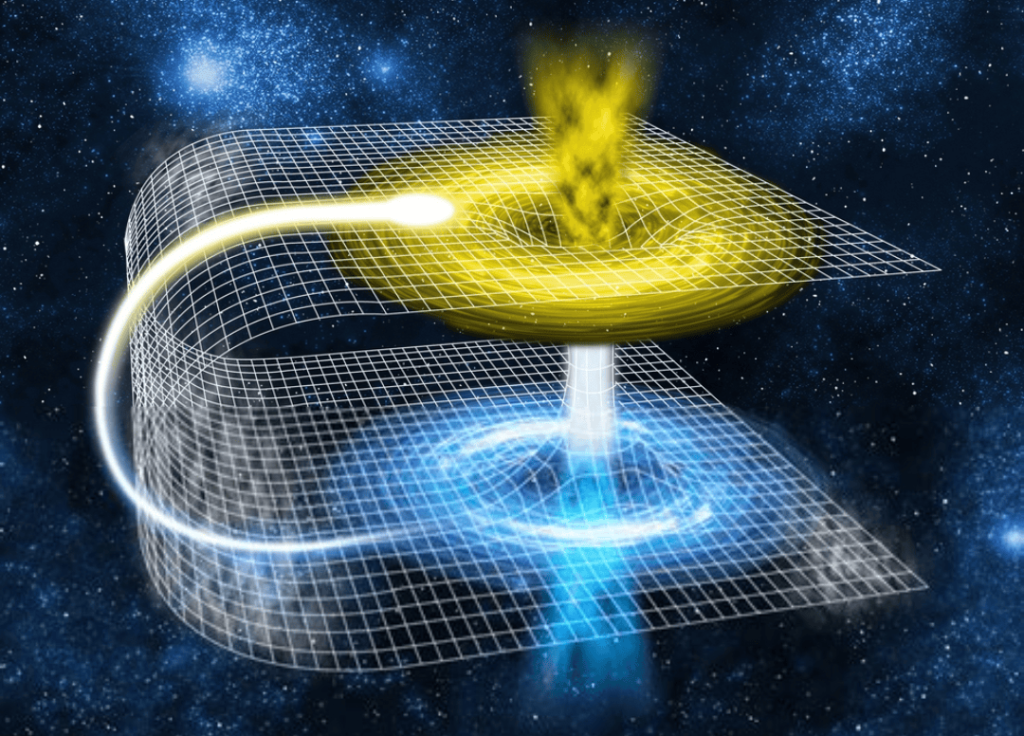
This is where the proposal faces its most serious limitation. For now, the theory has not been turned into a prediction that existing instruments could check.
The wormholes are far too small to observe directly, so any test has to come through their combined effect on how the universe expands.
The researchers acknowledge this openly and frame it as a target for future work. The next generation of surveys is designed for exactly this kind of question.
The European Space Agency’s Euclid mission, now operational, and the Vera C. Rubin Observatory, which began its ten-year Legacy Survey of Space and Time on 30 June 2026, will map cosmic structure with unprecedented precision.
If the model can be developed to predict how dark energy evolves, and those predictions match what these observatories see, it would be a powerful sign that quantum gravity leaves a real imprint on the largest scales of the cosmos.
Has Anyone Seen Spacetime Foam?
Not directly. The Planck length is about twenty orders of magnitude smaller than an atomic nucleus, far beyond any microscope or particle collider. Physicists have instead looked for indirect signs, and the most cited test came from the sky.
Some models of quantum foam predict that light should cross it at very slightly different speeds depending on its energy, the way glass slows colours of light unevenly. Across cosmic distances even a tiny difference would add up. In 2009 the team operating NASA’s Fermi Gamma-ray Space Telescope reported a short gamma-ray burst, GRB 090510, in which a photon carrying 31 billion electronvolts of energy arrived within the first second of the burst.
That near-simultaneous arrival ruled out the simplest version of the effect, a speed that changes in proportion to energy, unless the scale of quantum gravity lies significantly above the Planck scale, the natural place to expect it. The result, published in Nature, does not rule out spacetime foam; it rules out one way foam might have shown itself. The dark-energy paper makes no prediction of this kind, so the Fermi limit neither supports nor contradicts it. It does show that Planck-scale ideas can sometimes be tested after all.
Did Scientists Make a Wormhole in 2022?
In late 2022 headlines announced that physicists had created a wormhole. The source was a paper in Nature by researchers from Harvard, MIT, Caltech, Google and Fermilab, led by Daniel Jafferis, who used Google’s Sycamore quantum processor to run a nine-qubit circuit of 164 two-qubit operations.
The circuit simulated a simplified model whose behaviour, in a theory of quantum gravity, mirrors a traversable wormhole. The team reported observing the corresponding wormhole dynamics: information passed between two halves of the processor in the way the wormhole description predicts. No tunnel in space was made; what ran was a calculation.
Other physicists pushed back. Bryce Kobrin, Thomas Schuster and Norman Yao argued that the small model the team had machine-learned did not behave like the full theory beyond the particular signals it had been trained on, and in July 2025 Nature published their critique under the title “Experiments implementing small commuting models lack gravitational features”.
The episode carries the same lesson as the dark-energy proposal. In physics papers, wormholes are usually mathematical objects or simulations, and the interesting question is always what, if anything, they predict about the real universe.
Connecting the Very Small to the Very Large
Beyond cosmology, the proposal carries a deeper significance. It is one of the few concrete ideas for how quantum gravitational effects might leave observable traces at cosmic scales.
These effects operate roughly twenty orders of magnitude smaller than an atomic nucleus, yet the model suggests they could shape the expansion of the entire universe.
Bridging the very small and the very large is a central goal of physics. General relativity and quantum mechanics, the two pillars of modern science, remain incompatible in their current forms.
It does not, however, solve the deepest part of the puzzle. In the paper’s own terms, the observed dark energy needs about 10^16 wormholes per cubic metre per second, while the theoretical maximum — one in every Planck-sized volume — would give a value about 10^124 times too large. The question of why dark energy is so small becomes the question of why such wormholes are so rare.
Quantum entanglement may be connected too. The ER=EPR conjecture, proposed by Juan Maldacena and Leonard Susskind in 2013, suggests entangled particles are linked by microscopic wormholes.
If correct, entanglement and spacetime geometry would be two faces of the same phenomenon. For a full introduction, see our article on quantum entanglement, the mystery at the heart of quantum mechanics.
Richard Feynman, in his 1964 Messenger Lectures, said: “I think I can safely say that nobody understands quantum mechanics.” The wormhole proposal is a reminder that the deepest quantum mysteries may be written across the sky, not confined to the laboratory. His story is told in our article on Richard Feynman, the Nobel Prize physicist.
What Comes Next
The wormhole dark energy proposal is a young idea in a fast-moving field. Its authors have set out a clear mathematical mechanism; turning it into a prediction that observations could test is, by their own account, the next step.
The Euclid mission is already returning data. The Rubin Observatory began its decade-long survey of the southern sky on 30 June 2026, and NASA’s Nancy Grace Roman Space Telescope launched on 30 August 2026 to add further precision.
Together, these instruments will assemble the most detailed picture ever made of how the universe’s expansion has evolved — and whether dark energy is constant or changing.
If the data match the wormhole model, it will open a new chapter: one in which quantum gravity is no longer only a theoretical aspiration but an observationally confirmed part of cosmic evolution.
If it does not, the idea will join the long list of elegant proposals that nature declined to adopt — and the search for dark energy’s true identity will go on.
Why This Matters
Dark energy is the single largest component of the universe and its deepest mystery. Any credible new idea about its nature is worth taking seriously.
What makes the wormhole proposal compelling is not that it is proven — it is not — but that it is testable in principle, and that it ties dark energy to quantum gravity in a specific, calculable way.
It is a reminder that the boundary between the quantum and the cosmic may be far thinner than it appears — and that the answer to the universe’s greatest mystery might lie at its very smallest scale.
Frequently Asked Questions
What is a wormhole?
A wormhole is a hypothetical structure in spacetime that connects two separate regions through a shortcut bypassing ordinary geometry. It arises from Einstein’s general relativity, and the best-known example is the Einstein-Rosen bridge. The large traversable wormholes of science fiction would need exotic matter to stay open, but the microscopic quantum wormholes in this research are a separate concept operating at the Planck scale.
What is dark energy?
Dark energy is the name given to whatever is driving the accelerated expansion of the universe. It makes up roughly 68% of the total energy content of the observable universe. It has never been directly detected and interacts so weakly that it leaves no trace in laboratory experiments, making its nature one of the deepest unsolved problems in physics.
How could wormholes cause the universe to expand faster?
According to the research, microscopic wormholes are constantly created and destroyed in the quantum vacuum. When a higher-order Gauss-Bonnet term is included in the equations, this process induces an effective cosmological constant — energy that behaves like dark energy on cosmic scales, producing the repulsive pressure that accelerates expansion.
What is Euclidean quantum gravity?
Euclidean quantum gravity is a mathematical technique in which time is treated as an imaginary number, converting the equations of quantum gravity into a more tractable form involving Euclidean geometry. Used since the 1970s, most famously by Hawking and Hartle, it is not a complete theory of quantum gravity but a productive framework for specific calculations.
Has this theory been confirmed by observations?
Not yet. The paper does not compare the model with observations at all; its authors list that, and working out how the dark energy would change over time, as future work. Surveys from DESI, Euclid, the Rubin Observatory and the Roman Space Telescope should provide data precise enough to test it once the model makes a specific prediction.
What links wormholes and quantum entanglement?
The ER=EPR conjecture, proposed by Maldacena and Susskind in 2013, suggests that entangled particles are connected by microscopic wormholes — that quantum entanglement and Einstein-Rosen bridges are two descriptions of the same underlying phenomenon. It remains a theoretical conjecture but has generated significant research and may be relevant to the wormhole dark energy proposal.
Did scientists create a wormhole in 2022?
No. A team using Google’s Sycamore processor ran a nine-qubit simulation of a simplified model whose behaviour mirrors a traversable wormhole in a theory of quantum gravity. No tunnel in space was made, and in 2025 other physicists argued in Nature that the small model used lacked the key gravitational features.
Is dark energy really changing?
Possibly. In March 2025 the DESI collaboration reported that its measurements, combined with other data, prefer dark energy that changes over time at a significance of 2.8 to 4.2 sigma, depending on the supernova sample. That is suggestive but short of the five-sigma standard physicists use to claim a discovery, and new surveys will test it.
Could a person ever travel through a wormhole?
Not on any known physics. Morris and Thorne showed in 1988 that a wormhole wide enough to cross would need a throat held open by exotic matter with negative energy density, in amounts nobody knows how to produce. The microscopic wormholes in the dark-energy proposal are vastly smaller than an atomic nucleus and last only an instant.
What would it take to test the wormhole dark energy idea?
First the theory has to say exactly how its dark energy changes as the universe expands, which the authors list as future work. Then that prediction can be checked against maps of cosmic expansion from DESI, Euclid, the Rubin Observatory and the Roman Space Telescope. A model adjusted to fit after the data arrive counts for much less.
What is the Planck scale?
The Planck length, about 1.6 × 10⁻³⁵ metres, is the scale at which quantum effects on gravity are expected to become as important as gravity itself. It is built from three constants of nature: the speed of light, Newton’s gravitational constant and Planck’s constant. No experiment comes close to probing it directly, and the microscopic wormholes in this research would live there.
Why does the model need the Gauss-Bonnet term?
With Einstein’s equations alone, the authors find that microscopic wormholes leave no trace on gravity. The Gauss-Bonnet term, a combination of curvature terms that in four dimensions reflects the overall shape of spacetime rather than its local bending, is what lets changes in topology feed into the equations. The term also appears in some versions of string theory, one reason physicists take it seriously.
Further Reading
Sources
- Tsilioukas, S. A., Saridakis, E. N. & Tzerefos, C. (2024). “Dark energy from topology change induced by microscopic Gauss-Bonnet wormholes.” Physical Review D, 109, 084010 (DOI: 10.1103/PhysRevD.109.084010). Preprint: arXiv:2312.07486.
- Einstein, A. & Rosen, N. (1935). “The Particle Problem in the General Theory of Relativity.” Physical Review, 48, 73 (DOI: 10.1103/PhysRev.48.73).
- Riess, A. G., et al. (1998). “Observational Evidence from Supernovae for an Accelerating Universe.” The Astronomical Journal, 116, 1009 (DOI: 10.1086/300499).
- Perlmutter, S., et al. (1999). “Measurements of Ω and Λ from 42 High-Redshift Supernovae.” The Astrophysical Journal, 517, 565 (DOI: 10.1086/307221).
- Maldacena, J. & Susskind, L. (2013). “Cool horizons for entangled black holes.” Fortschritte der Physik, 61, 781 (DOI: 10.1002/prop.201300020).
- Hartle, J. B. & Hawking, S. W. (1983). “Wave function of the Universe.” Physical Review D, 28, 2960 (DOI: 10.1103/PhysRevD.28.2960).
- DESI Collaboration — DESI DR2 Results II: Baryon Acoustic Oscillations and Cosmological Constraints, arXiv:2503.14738 (2025).
- ESA — Euclid Mission.
- Misner, C. W. & Wheeler, J. A. (1957). “Classical Physics as Geometry.” Annals of Physics, 2, 525 (DOI: 10.1016/0003-4916(57)90049-0).
- Fuller, R. W. & Wheeler, J. A. (1962). “Causality and Multiply Connected Space-Time.” Physical Review, 128, 919 (DOI: 10.1103/PhysRev.128.919).
- Hawking, S. W. (1978). “Spacetime Foam.” Nuclear Physics B, 144, 349 (DOI: 10.1016/0550-3213(78)90375-9).
- Coleman, S. (1988). “Why There Is Nothing Rather Than Something: A Theory of the Cosmological Constant.” Nuclear Physics B, 310, 643 (DOI: 10.1016/0550-3213(88)90097-1).
- Morris, M. S. & Thorne, K. S. (1988). “Wormholes in Spacetime and Their Use for Interstellar Travel.” American Journal of Physics, 56, 395 (DOI: 10.1119/1.15620).
- Weinberg, S. (1989). “The Cosmological Constant Problem.” Reviews of Modern Physics, 61, 1 (DOI: 10.1103/RevModPhys.61.1).
- Planck Collaboration (2020). “Planck 2018 Results. VI. Cosmological Parameters.” Astronomy & Astrophysics, 641, A6 (DOI: 10.1051/0004-6361/201833910).
- Abdo, A. A., et al. (2009). “A Limit on the Variation of the Speed of Light Arising from Quantum Gravity Effects.” Nature, 462, 331 (DOI: 10.1038/nature08574).
- Jafferis, D., et al. (2022). “Traversable Wormhole Dynamics on a Quantum Processor.” Nature, 612, 51 (DOI: 10.1038/s41586-022-05424-3).
- Kobrin, B., Schuster, T. & Yao, N. Y. (2025). “Experiments Implementing Small Commuting Models Lack Gravitational Features.” Nature, 643, E17 (DOI: 10.1038/s41586-025-08939-7).
- DESI Collaboration (2025). Guide to the DR2 results, 19 March 2025.
- Brookhaven National Laboratory (2026). Rubin Observatory begins the Legacy Survey of Space and Time.
- NASA (30 August 2026). Nancy Grace Roman Space Telescope launches.
Baryon. (2025, January 27). The Wormhole Solution: New Research Offers Fresh Insights into the Universe’s Greatest Mystery. Web News For Us. https://webnewsforus.com/the-wormhole-solution/
Baryon. “The Wormhole Solution: New Research Offers Fresh Insights into the Universe’s Greatest Mystery.” Web News For Us, 27 January 2025, https://webnewsforus.com/the-wormhole-solution/. Accessed 11 October 2026.
2 Responses